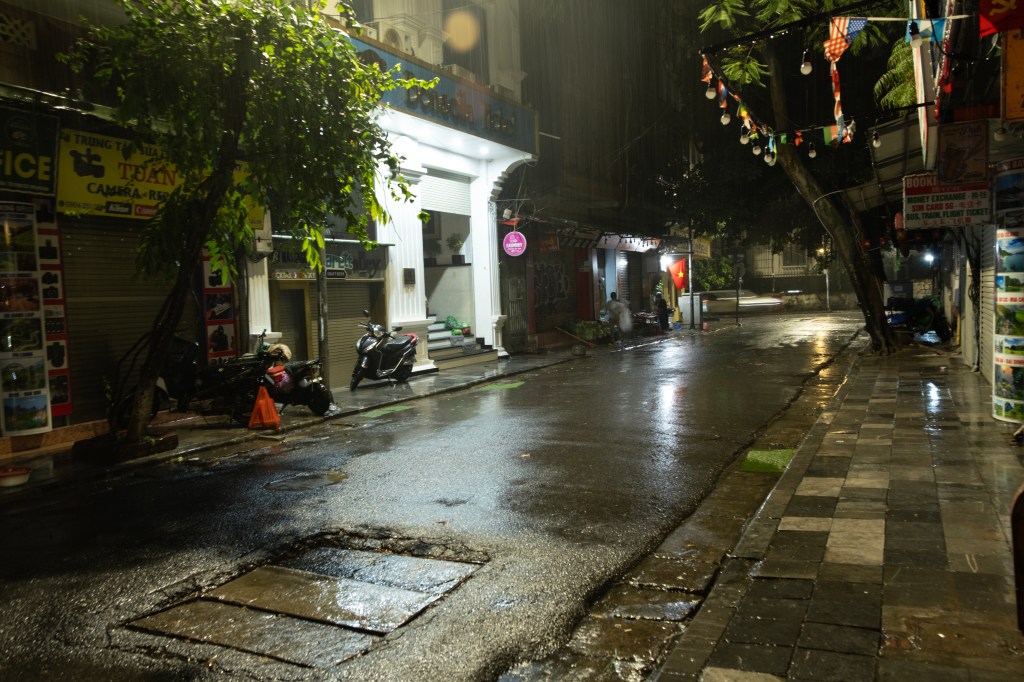
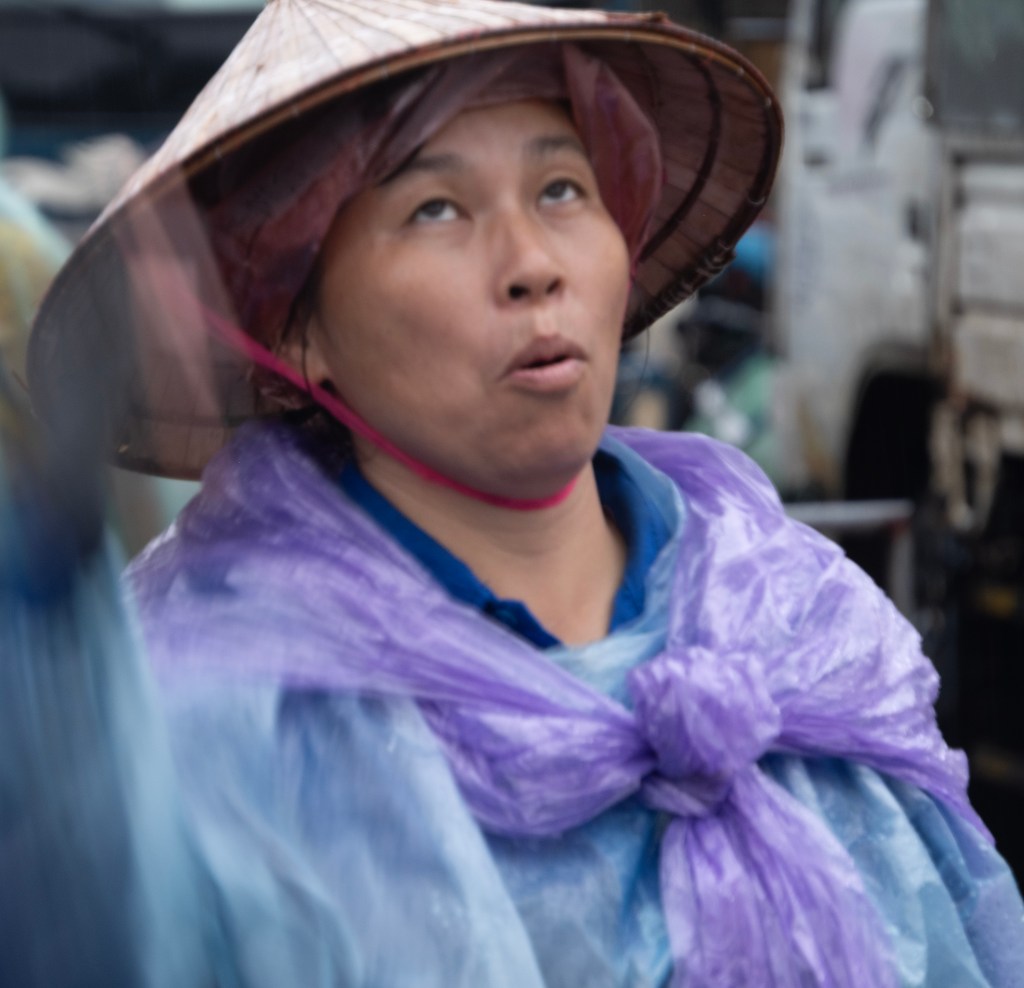
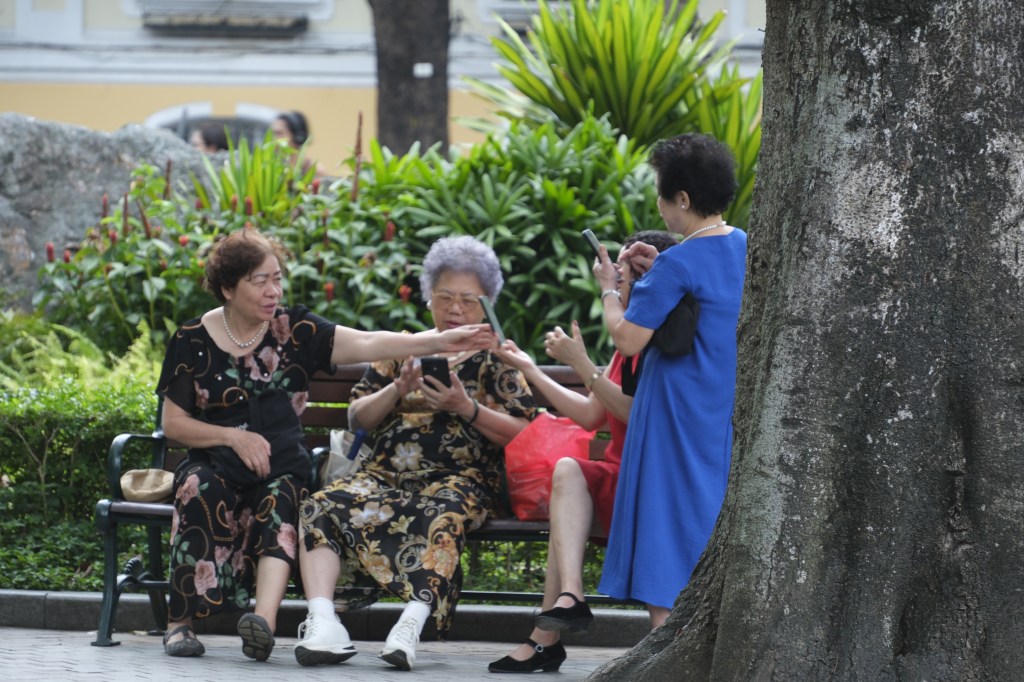
The alarm sounds at 4:30 AM, ready for the dawn patrol, and a 5AM meeting time. What’s Ap starts binging with messages of pouring rain and decisions of whether we should go to the market which is only partially covered. Pouring rain was an understatement, one could not hope to step outside without getting completely soaked. We had been provided with raincoats that would fit the average 6 ‘5″ man weighing 350 pounds. So coverage was not the issue, however, suffocating under them and having them drag in the mud proved to be a challenge. Yet,we stoic dedicated photographers loaded ourselves into the vans provided.
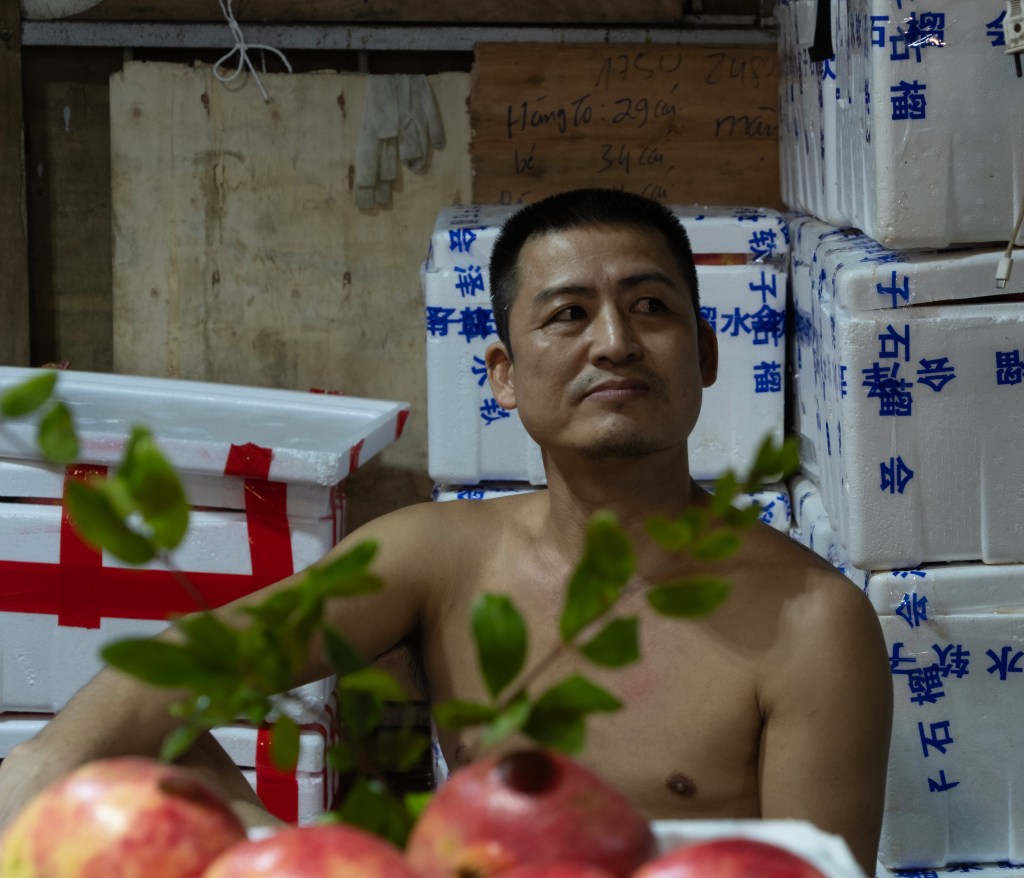
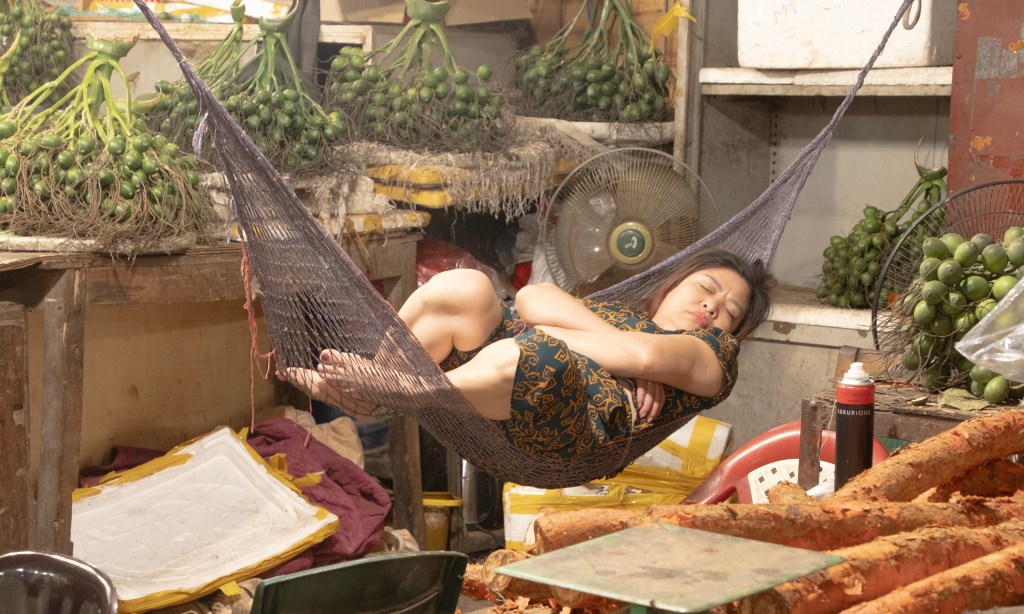
Off a just waking up market, we were warned to look in all directions as not to be annihilated by motor scooters with 100 pounds of cabbage, or plywood, or just about anything you can load on a truck. Narrow pathways divided the stalls. The motorbikes wove in and out between people pushing loaded hand carts. Meanwhile the tarps that were held up by bending poles were releasing the water weight like a waterfall, dumping pounds of water onto the muddy lanes. Where were we? Trying desperately to stay dry. Some of our cameras went on strike from the moisture, even the iphones refused to submit to the weather. The raincoats for the camera did not really fit, the plastic bag trick failed, and whatever head gear we were wearing also failed. Our feet sloshed around in our shoes, and the inside of the rain gear was just about as wet as the outside from our sweating from the humidity.
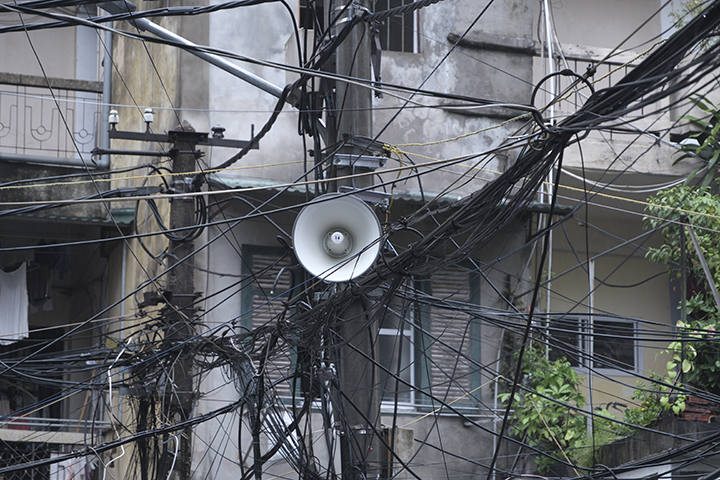
After two hours of shooting we got together and exchanged stories of our interactions with people, animals, trucks, motor scooters and the rain. Off to breakfast of Pho in a tiny restaurant, then back to the a another market called the Thief’s market. Full of mechanical tools, wires, rubber, saws, compressors both used, and stolen, anything you could want to fix something was found here. Finding pictures to take was interesting, my favorite being the millions of electrical wires tangled together on poles, trees, or just about anywhere you can use to attach something. How anyone could figure out where wires provided electricity to what, would be anyone’s nightmare. Despite the rain, we had a great experience.
We are now looking forward to our massages before we get on a night train to Lao Cai outside Sapa. Up north into a non tourist areas, where we are hopeful it stops raining.
Beginning on September 11th we started our journey, leaving Stowe to Burlington a forty five minute trio, then one hour to JFK, five hours waiting, seventeen hours from JFK to Singapore, 5 AM arrival, waiting until 9:30 AM for our plane to Hanoi, two and a half hours to Hanoi, one hour to our hotel, thirty-one hours in total, we arrive exhausted on September 13 at 1:00 PM. Lunch at 2:00 pm, and then our driver said he had plans to take us shopping. I looked at him like he was a creature from another planet. Seriously? Apparently, the purpose of this excursion was to acquaint me with the clothing shops that featured Vietnamese style clothing. Imagine my enthusiasm, as I could barely put one foot in front of the other. Why could this not be put off until the next day when I was rested. Answer: I was the tour guide for the rest of the group who would arrive on Monday the 14th. So off we go, me and three men who had not the slightest interest in this endeavor. Imagine a shop that is 12 feet wide and 100 feet long filled with beautiful silk and linen fabric all hand embroidered. Now imagine the clothes all hanging on various racks with the aisles being maybe 1.5 feet wide, add in three men standing waiting for you to decide what you may like. After about three stores I called it quits, stating that I could not stand up for one minute longer. Nor could I take 3 men standing and yawning.
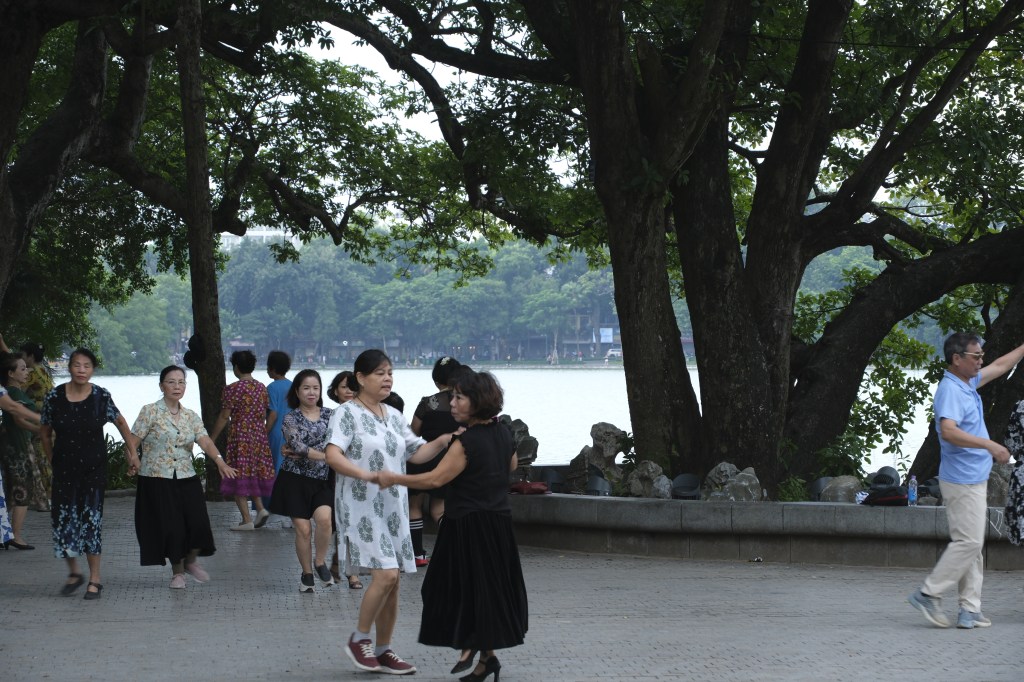
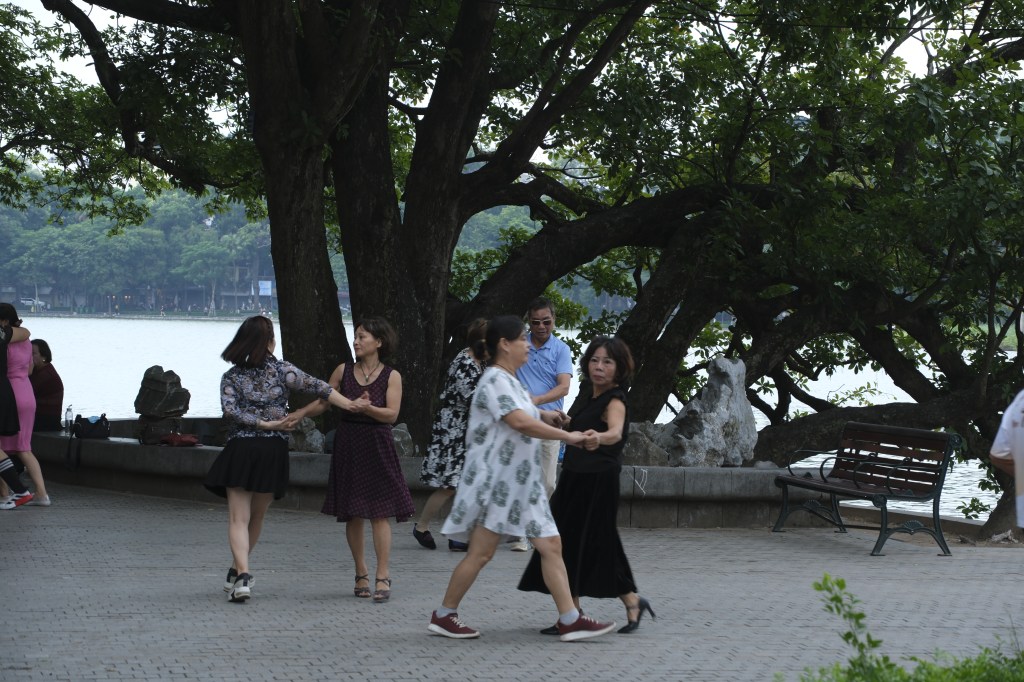
It was an early night, as we wanted to get up at 6 AM to go to the lake to see all the morning activity. Taking our lives in our hands, we crossed the busy streets with scooters and cars aiming for us. The word was. “Do not run across the street” as the cars and motor scooters steer around you and if you run they cannot judge how you plan to go. Once you get the hang of it, it is not difficult. The park around the lake wakes up to many activities. I joined a ti chi class of older people figuring I could move as much they were. What fun. The instructor smiled, gave me the thumbs up and was quite enthusiastic to have me as a pupil. After a bit, I bowed my good-by to him and continued on my way. A bit farther around the lake, I found a group of men and woman dancing. Again I joined in and had such a good time laughing and dancing with 5 women. All of them dressed to the nines and me with my “tourist” clothes.
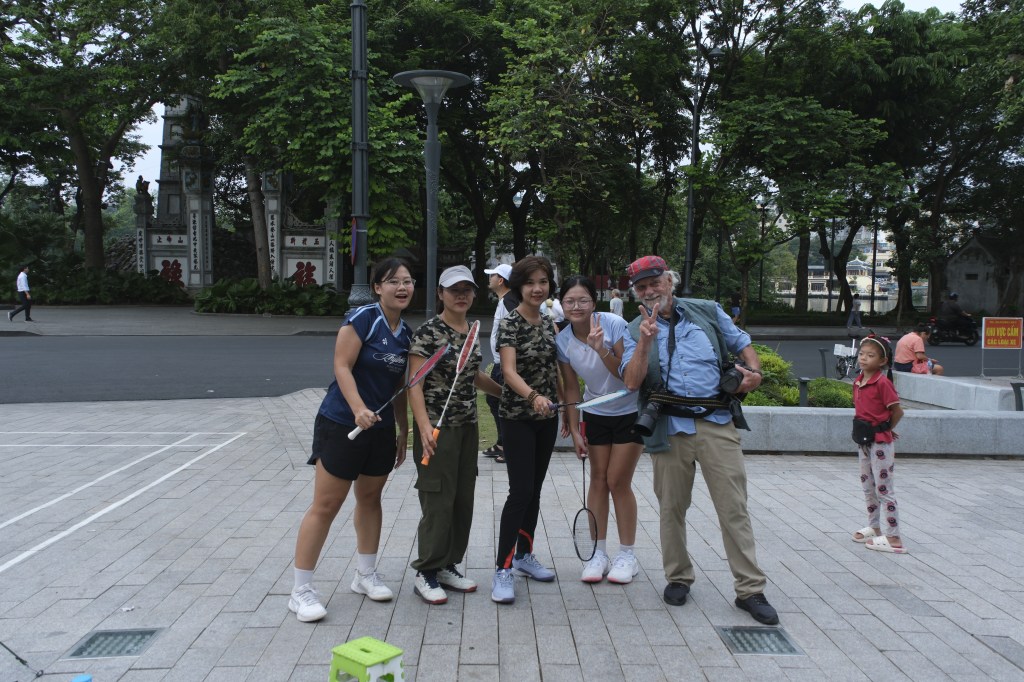
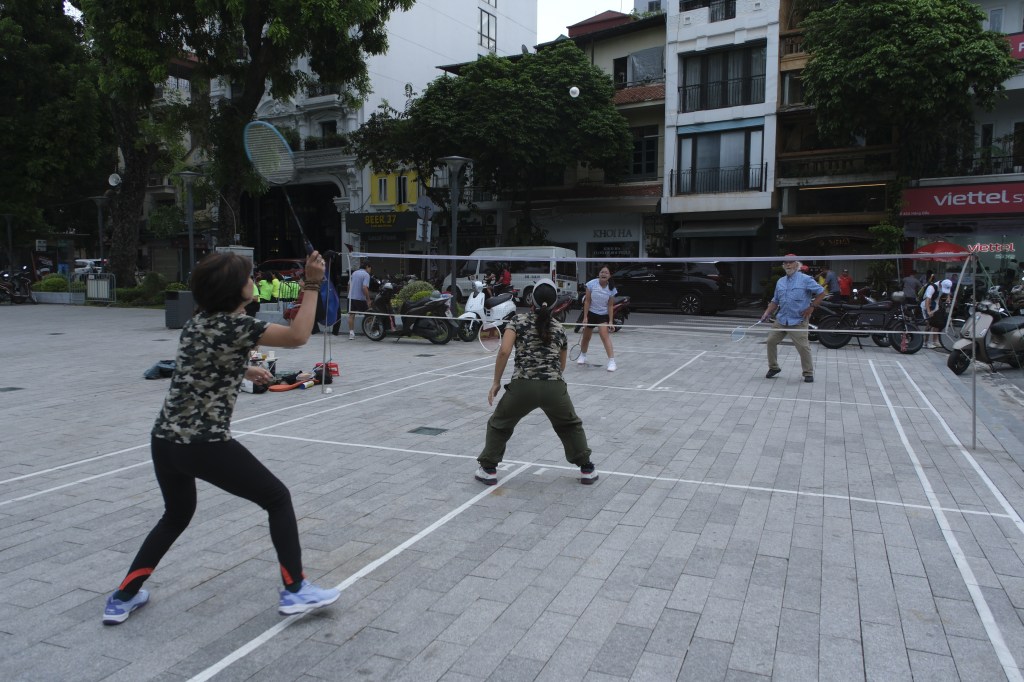
Shap meanwhile was missing, so I traced my steps back and found him playing badminton with three young girls. He definitely kept up his end of the game. And he was so happy to have found them. Hours later we headed back to the hotel.
The rest of the day was spent taking some of the woman shopping, a much different experience than the day before. Woman are so much more fun to be with when picking out clothes. Back to the hotel to meet the rest of the group, off to a fabulous lunch, then for a slide presentation by David Julian our instructor. This gave us a taste of where we were going and many ideas to mull over for photographing. Lastly we all trooped in the pouring rain for a half hour walk to “Train Street.: This is a street that is so narrow the train takes up the entire street. People line the sides crowding into a cafe, waiting for the train. When it is about to arrive, a whistle is blown and everyone is shoo’d off the tracks and told to tuck all feet under a chair. The whole event is quite spectacular and despite the fact it has become a tourist attraction it should not be missed.
Up at 5 AM, another day of pouring rains, we all have these enormous raincoats that envelope us so we look like blobs with feet,
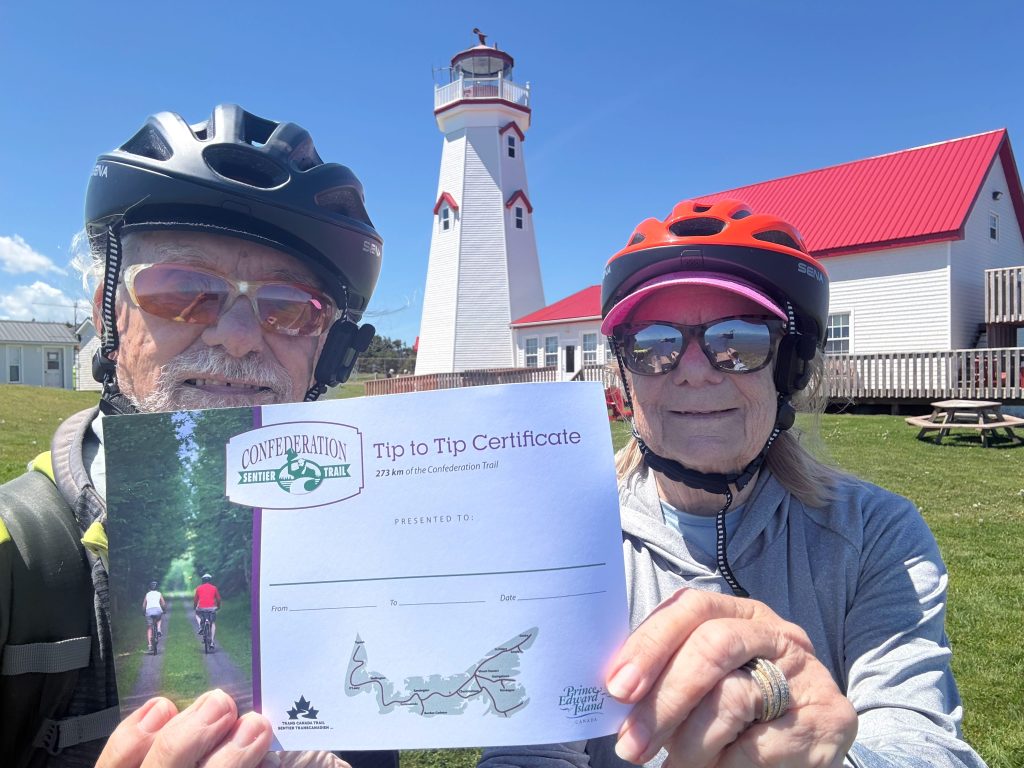
What happens when you finish tip to tip ? You get a diploma and two blue ribbons with West End and East End on them. Yes, it is suppose to be 199 miles, but that does not count going 12 miles out of your way before you discover you took the wrong turn, nor does it cover having to get on your damn bike to find lunch. But we are now sitting in our comfortable bed at the Hotel Holman in Charlottetown ready to make the 11 hour trip home tomorrow. All I can say is the truck seat is a lot more comfortable than the bike seat. By the end of the trip I was looking at it as some medieval torture instrument.
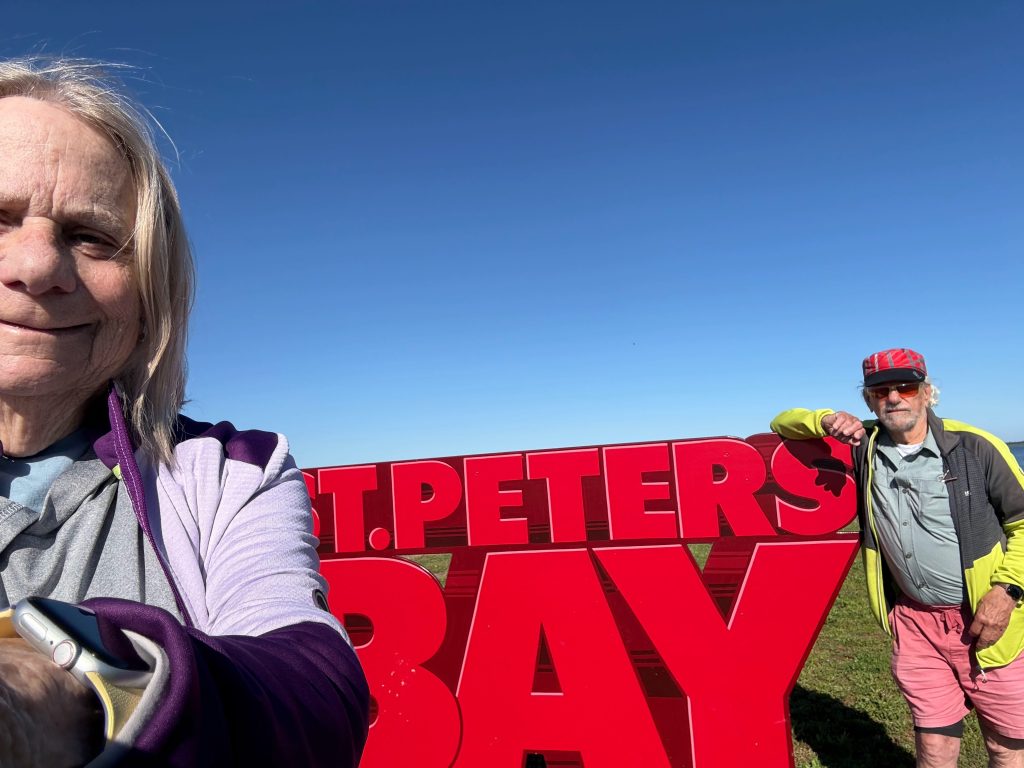
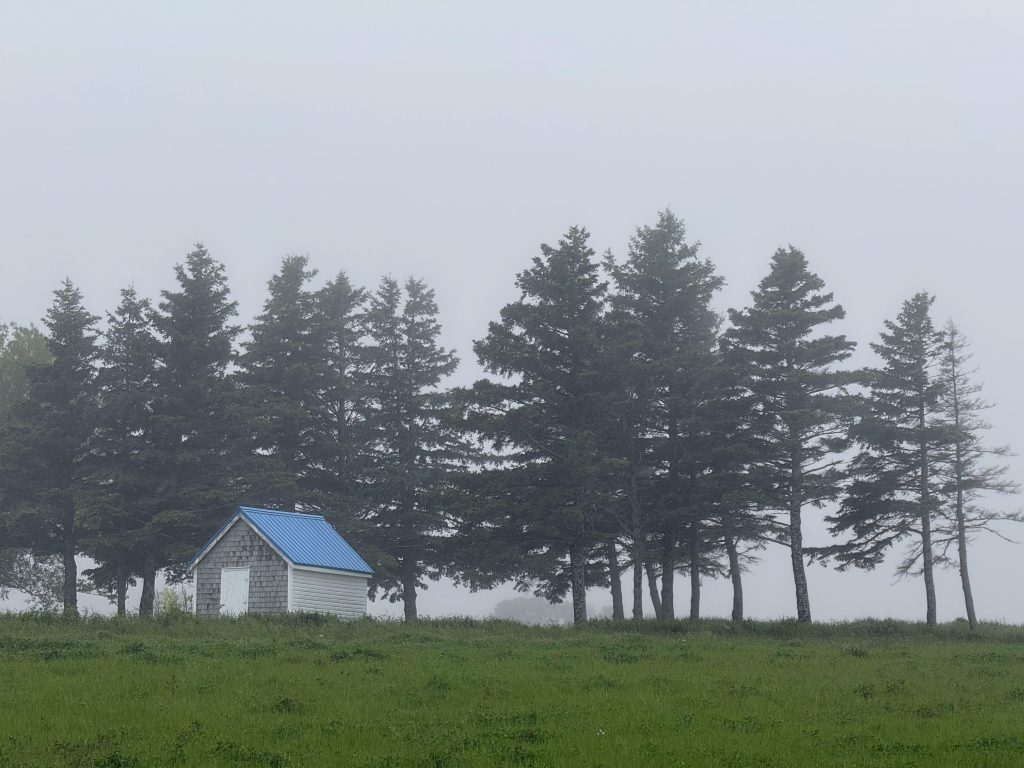
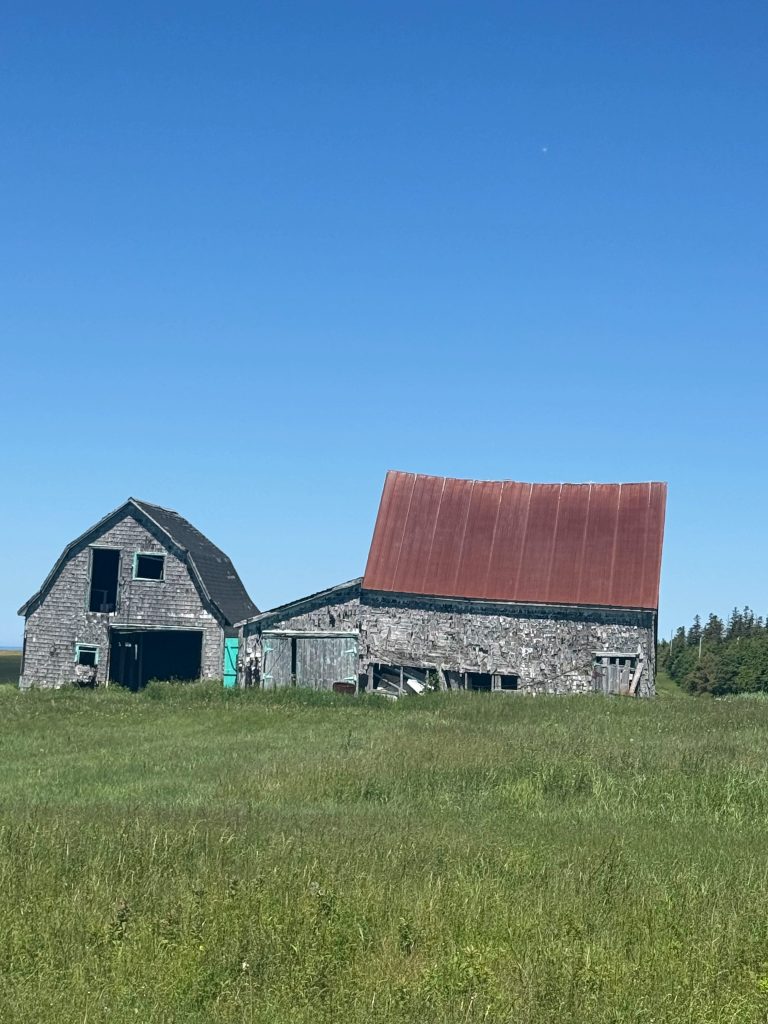
We rode from Cavendish to St. Peter’s Bay on a cloudy, overcast day yesterday. It was probably the most scenic part of the trip with lots of views of the water, harbors, and long vistas of farmland to the ocean. At one point the fog rolled in and created a dreamy landscape for our pictures.
Dinner last night was a double scoop ice cream. There was not one place open for dinner as it was Tuesday night. St. Peter’s bay has a General store, an ice cream shop, a fish market where I think you can get dinner, a take out stand, and a tourist information center where we ate lunch and supposedly they served dinner. I think dinner is a repeat of lunch. So we slipped into the ice cream parlor and got an ice cream just before they closed at 7.
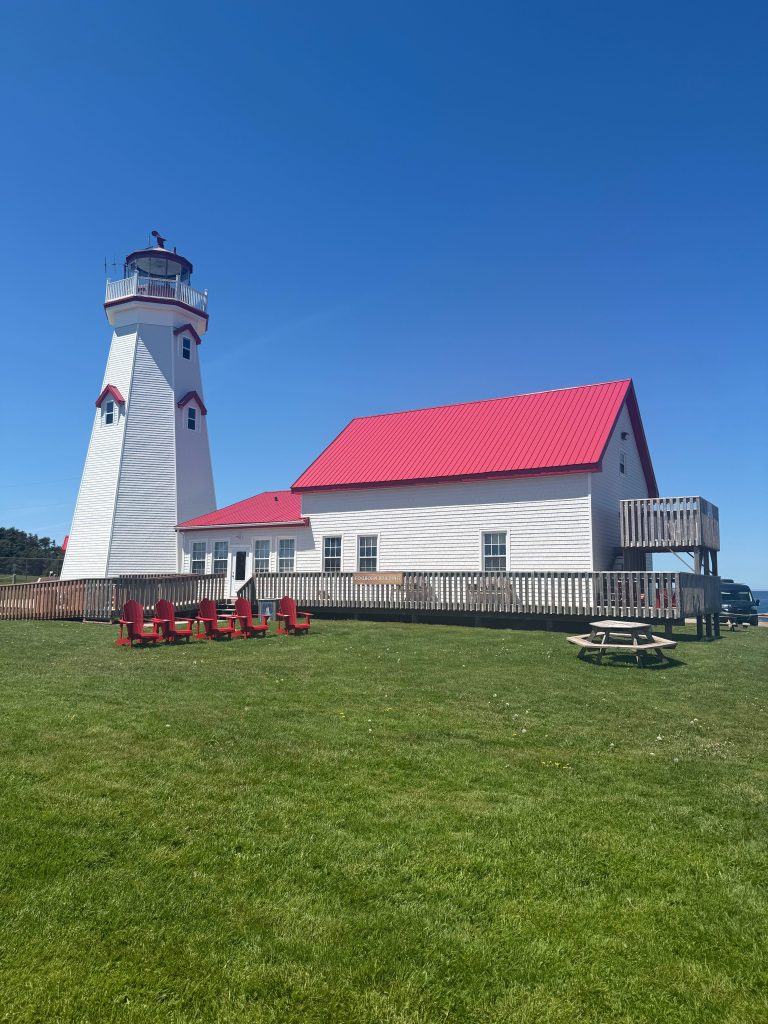
Today, our last day, we woke up to clear skies and bright sunlight. Of course, it would be our last day! This day was spent cycling along Route 16 the whole way to the Eastern tip. Except we took a wrong turn.We stopped at the interpretive center which was interesting and got a tip of a short cut to Route 16 without having to backtrack the entire way. This little mistake added 12 extra miles, but was worth it for the wonderful view.
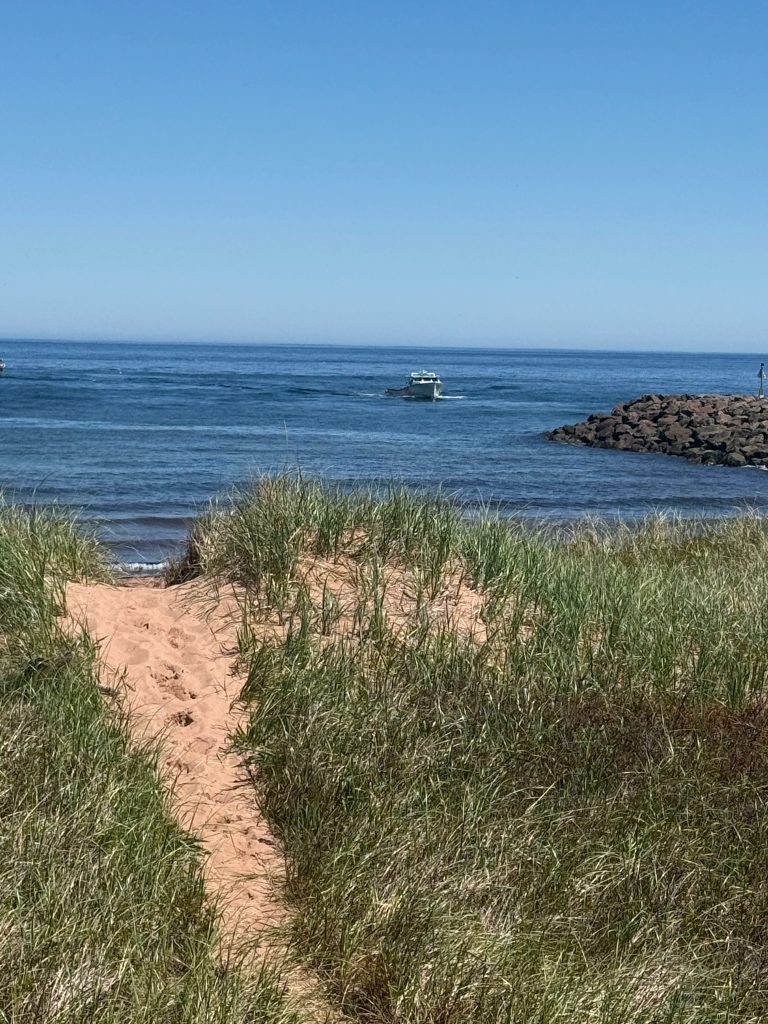
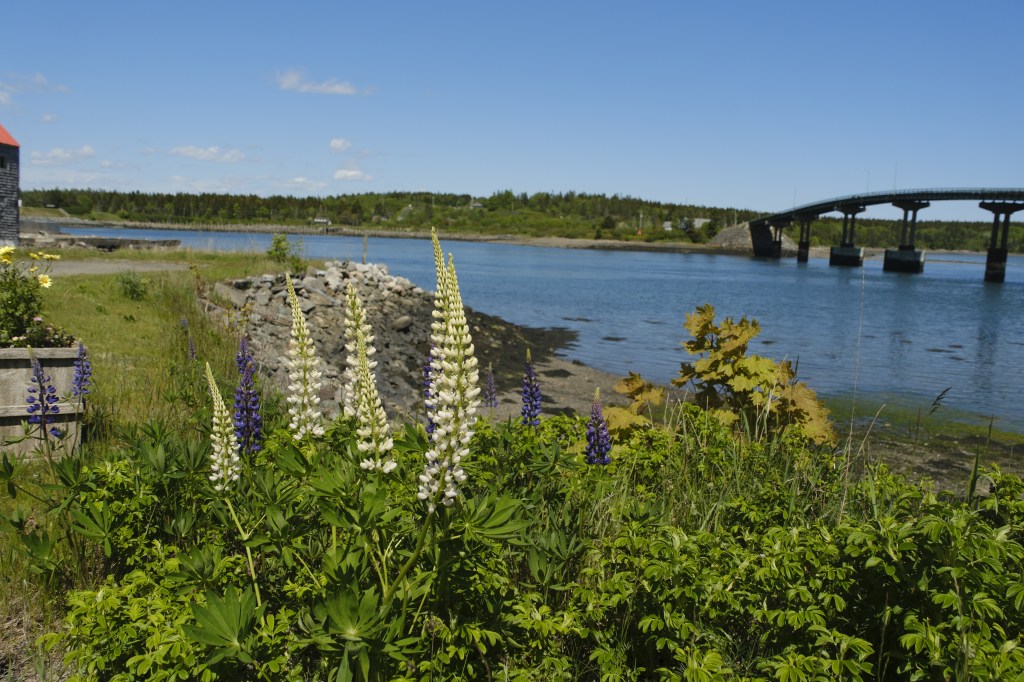
In six days, we have seen chipmunks, geese (at least 50 all together), a fox, the National flower the “lady slipper,” beautiful lupine along the trail, buttercups, Sweet Williams, and various bird species that I could not identify. Included in the sites, we have seen fields of potatoes, blueberries, strawberries, and more potato fields. Lobster boats bringing in the catch around noon, much of it ending up in small eateries serving the PEI famous lobster roll. Richard’s was the best with a toasted bun, all meat, mostly claws with mayo, onion, chive, celery all mixed together. I actually think I have my fill of lobster rolls since I had one at least 4 days out of 6.
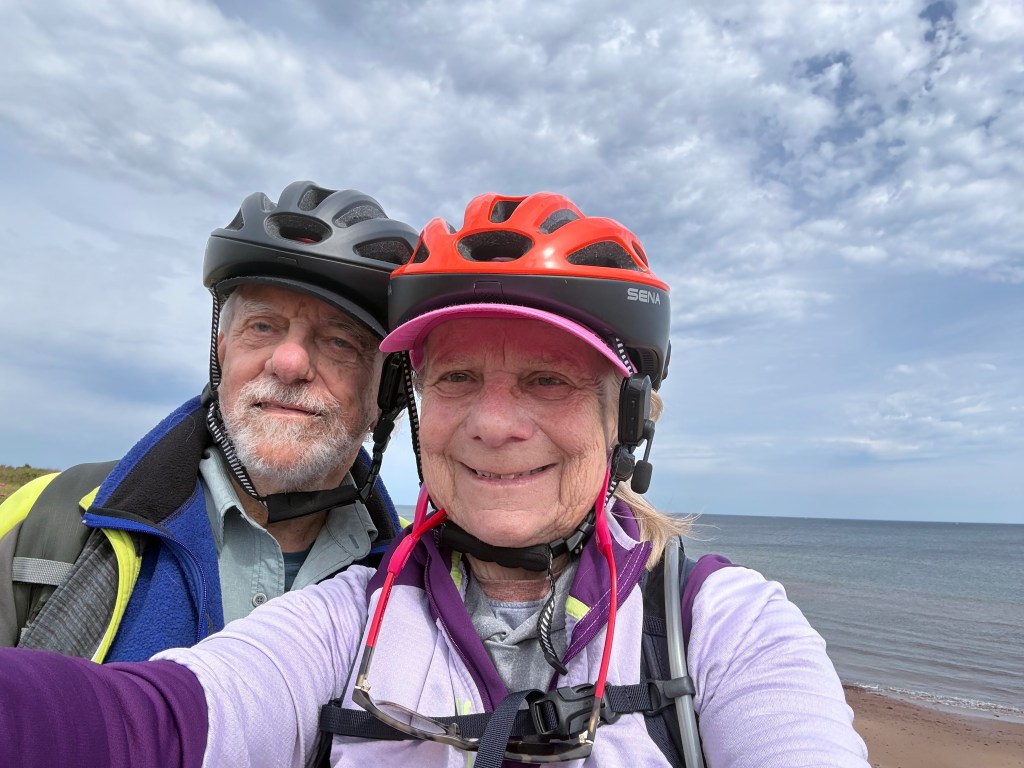
If I was asked how I liked the trip I would honestly say it was an accomplishment for me. Shap loved every bit. I have never been comfortable on a bike since I went over railroad ties onto my face when I was six, I am glad that I did it. I figure not many 81 year old women would do this unless they were extremely athletic, like my friend Carrie who bikes 100 miles like the wind. And so, the journey of this epic ride has ended, but there is always another adventure around the corner. As my father always said,”If I stop being curious, I hope I am 6 feet under.” A philosophy I hope always to live with.
After having breakfast with no less than a hundred or so families who were obviously staying at the hotel for a baseball tournament, we started the morning with overcast skies, but no rain. Not far into the Confederation trail we ran into the two couples from Ottawa coming out of their hotel. We could not have timed it better if we had planned it. They actually did ride the trail after all.
The directions on our ride GPS are not the easiest to follow. So the 6 of us got lost from the Confederation Trail at an intersection. Riding along route 2 was not fun, although there were shoulders. Lots of traffic. We finally found a street that connected to the trail, after that it was smooth sailing. We found that Shap and I rode faster than the other couples, we quickly passed them, would stop to take pictures and still be ahead of them. They commented when they were 80 they would ride in turbo hinting the reason we were faster was because we had it in turbo. I quickly made sure that we Smith’s are no slouches, we were in ECO 90% of the time. If we weren’t we would be out of battery quickly.
After about 7 miles we came into Kensington, a small quaint town with a stone railroad station, now a restaurant and a bakery. You are right – coffee and a pastry for Shap, water and a lemon cookie for me. Ivan, as we later found out, stopped to talk to us on his way passing on his morning bike routine. A very engaging man who lived in town and worked at the building supply company. He gave us a lay of the land ahead and warned of “HILLS” as he put it. Oh those hills can’t be compared to Vermont hills I thought. Later on, after 29 miles, those hills definitely could be compared to Vermont.
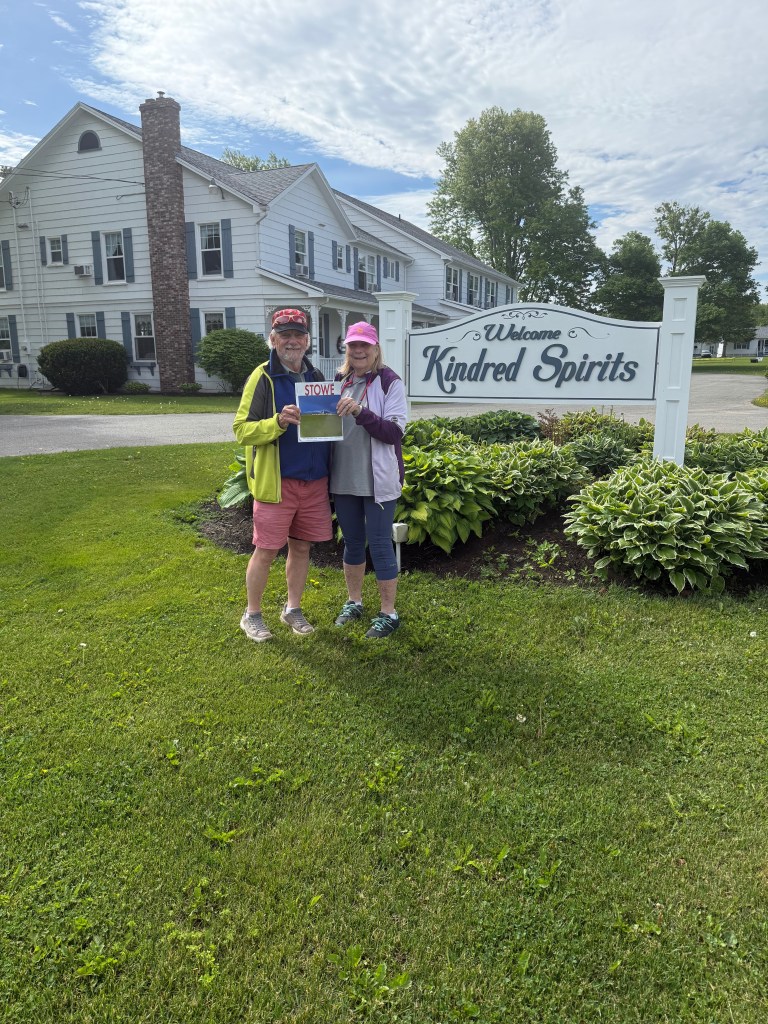
The Confederation Trail was much nicer with grass between the lanes, lupin blooming, scenic views of rolling fields, water ways and something we do not see, oyster traps in the bay laid out straight lines. I thought they were mussel traps until I saw all the oyster restaurants. Into Cavendish for the night in a lovely inn called the Kindred Spirits, old fashion style cottages and a friendly staff. Thirty-two miles total.
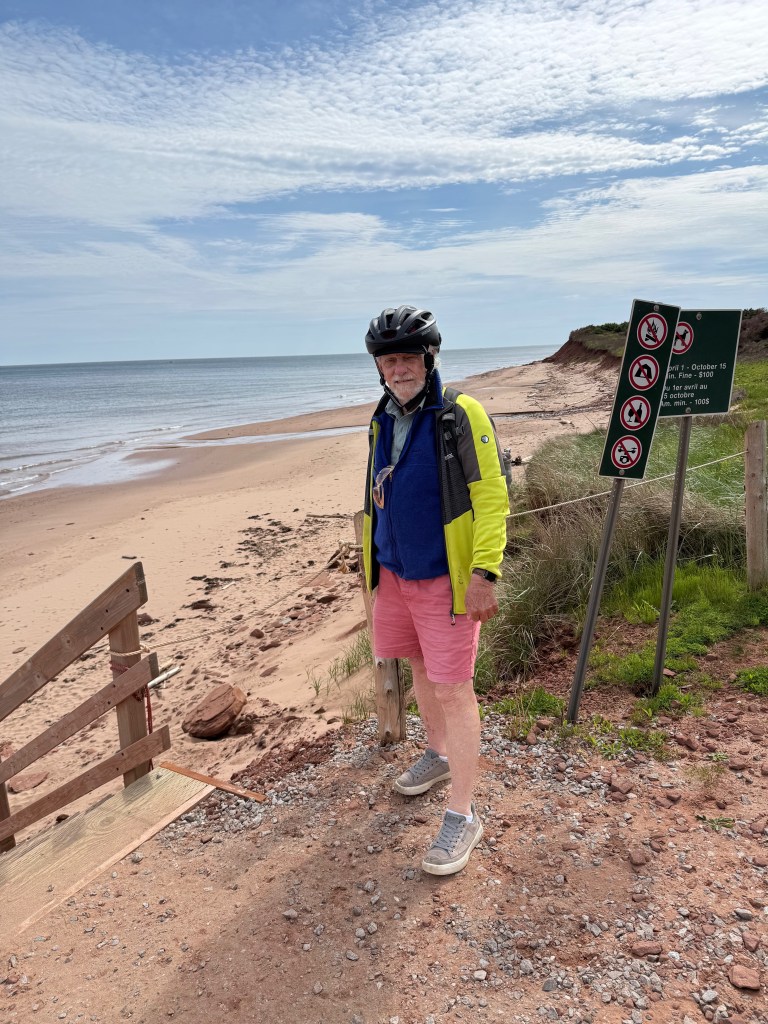
Today started with bright sunlight, quickly turned to grey weather with strong winds and only 18 miles to ride. The first part of the trip was on route 6, a busy highway but it had shoulders, so we had room. Then onto Gulfshore trail which is part of the Prince Edward National Park. There is a designated bike and walking path with views to the ocean, long beaches, mostly red sandstone and seaweed, not particularly attractive to swim and have a beach picnic. But the red cliffs are gorgeous. One of the most beautiful views we have had. Then back onto route 6, very unsettling riding with cars whizzing by, although people were respectful. Shortly we came into Brackley Beach and our hotel, Shaws Hotel, which is a historic building. Our rooms have been quaint with flowery wallpaper, old furniture and a blast from the past. Everyone greets us like long lost friends.
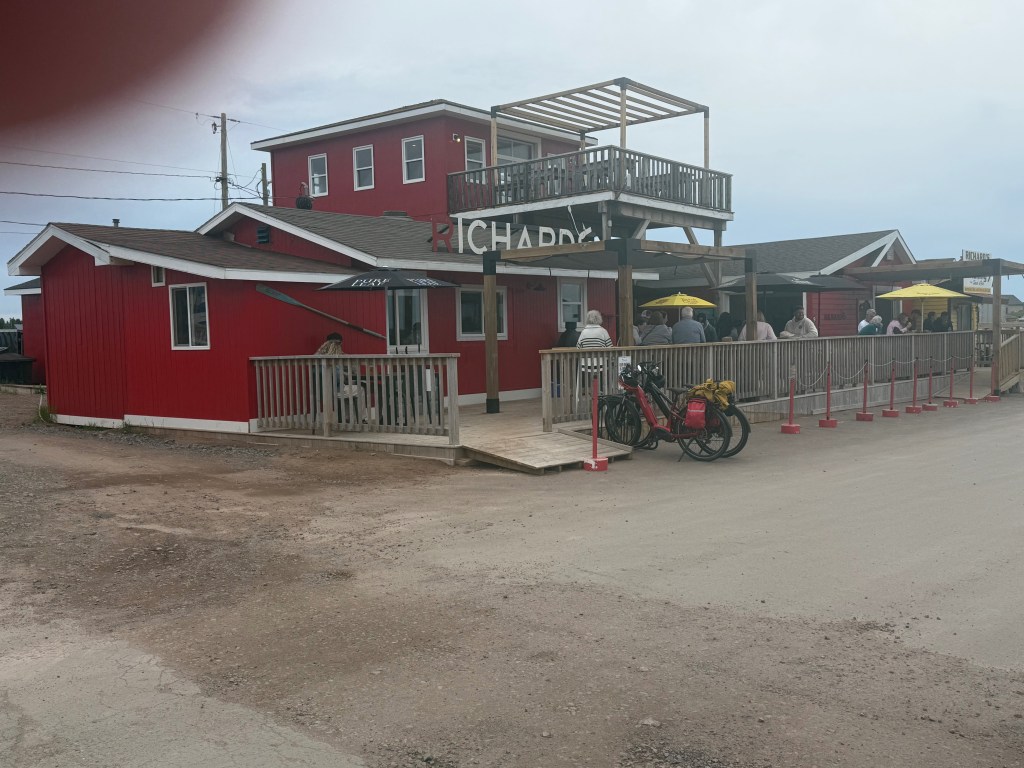
I asked why PEI seems to have only lobster rolls or lobster burgers but no lobster dinners. I really did not get a straight answer. Richard’s at the wharf was mentioned to us as “the best lobster rolls, better than anyone else, apparently people come from all around to eat there. It is housed in two small fishing style cottages connected by a deck. We were told in the summer the wait can be an hour and a half long. Being June, it was not busy in that sense, but cars were lined up, all the tables were full and people were still coming when we left. I had a lobster burger which I thought would be ground up lobster, like a fish cake. I now understand why they have the reputation as the best, my hamburger roll came with probably a pound of lobster meat. At least 4 sets of claw meet. Unbelievable, it was so good.
Back on the bikes to a lovely beach, still blowing like crazy, cool and cloudy. Then back to Shaw’s Hotel for a nap. Why can’t all our days be like this? 18 miles a day has a nice ring to it. Tomorrow back to 31 miles and rain. Two more days and we reach the Eastern most tip.
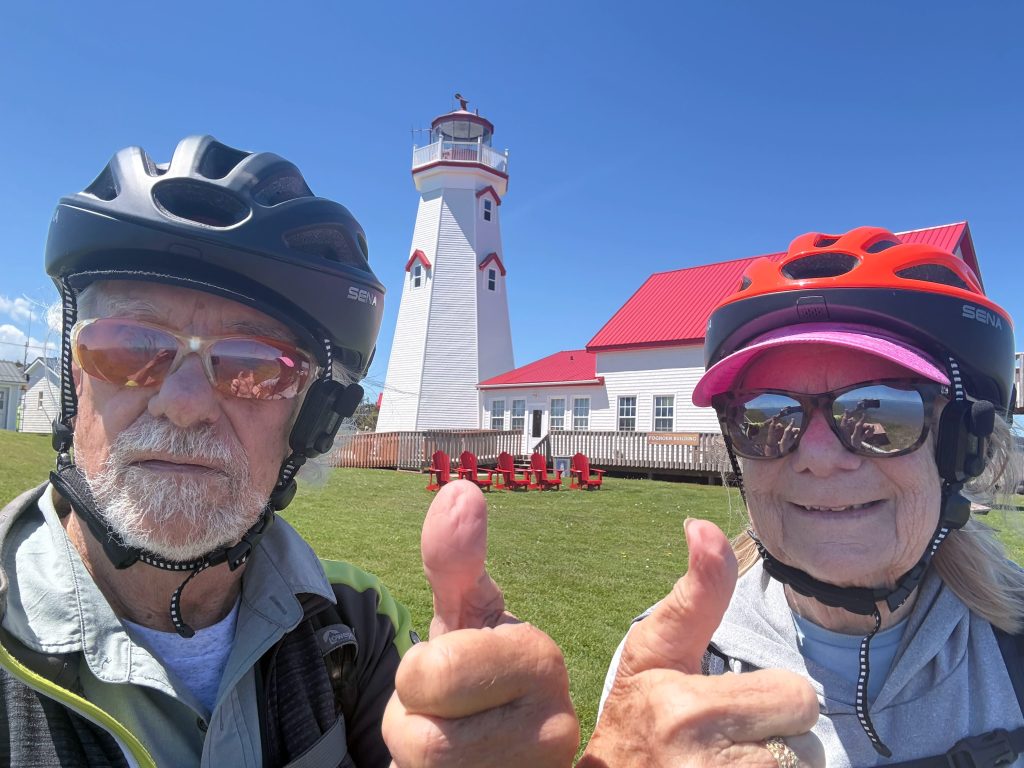
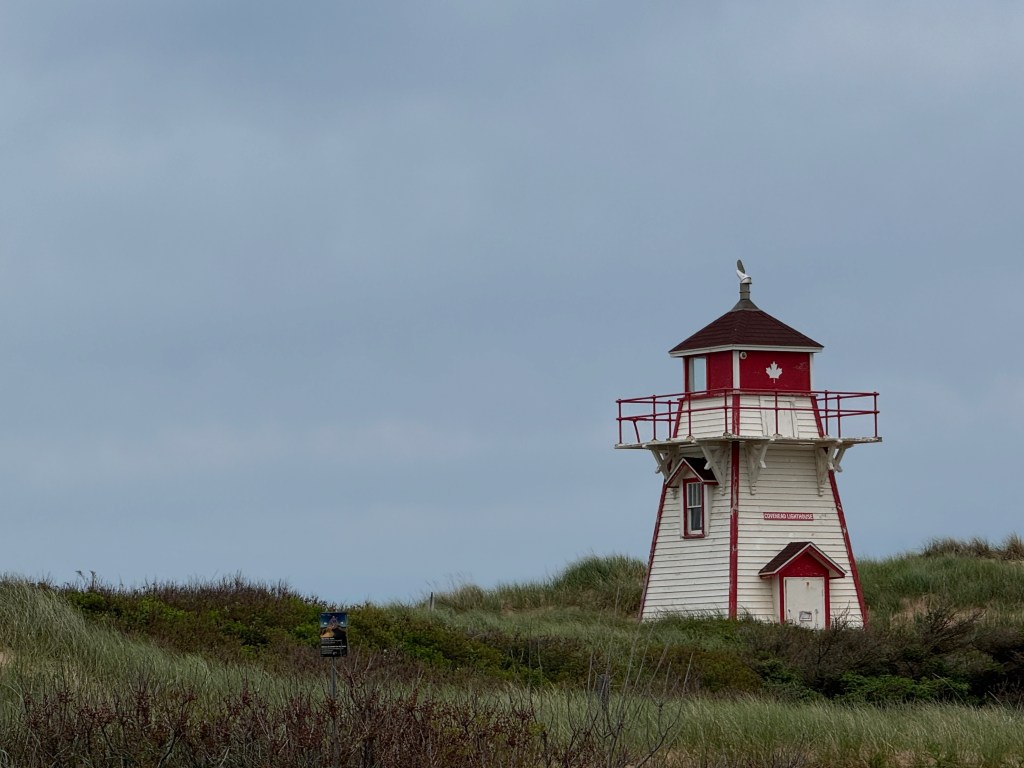
Oh, if it truly was summer in Summerside, but instead it is a dismal, dreary day, the temperature is around 48 degrees, and it rained most of the day. This is Day 2 of our trip. On Day 1 we were picked up at 8:45 AM, June 12th, in front of our hotel, zipped around the corner and picked up 4 more passengers from Ottawa. The day was cloudy with a promise of 100% rain starting around 11:00. As we road West to the North Cape it began to rain, then it began to pour, then it began to blow. The driver suggested we start in Tignish instead of going to the North Cape. The other four thought that was a very good idea, but, Oh No, the Smith’s aren’t about to let a bit of hurricane type weather deter them from any tip of a country. After all they went to Barrows, Alaska in June with snow falling as they landed onto the barren tip. Barrows is the furtherest most tip in the United States.
Back to North Cape, we got dropped off at a small building, grabbed our bicycle gear and ran to the building, getting almost soaked before we started. We had our trusty ponchos in our packs, plus raincoats, rain pants (or I had rain pants), rain ponchos for our gear, and hats so we were prepared. Of course, the bathroom is through the gift shop so we killed an hour waiting for the rain to abate. By killing an hour, I mean we bought two really fabulous rain jackets that looked like you could go out lobster fishing in a storm in them.
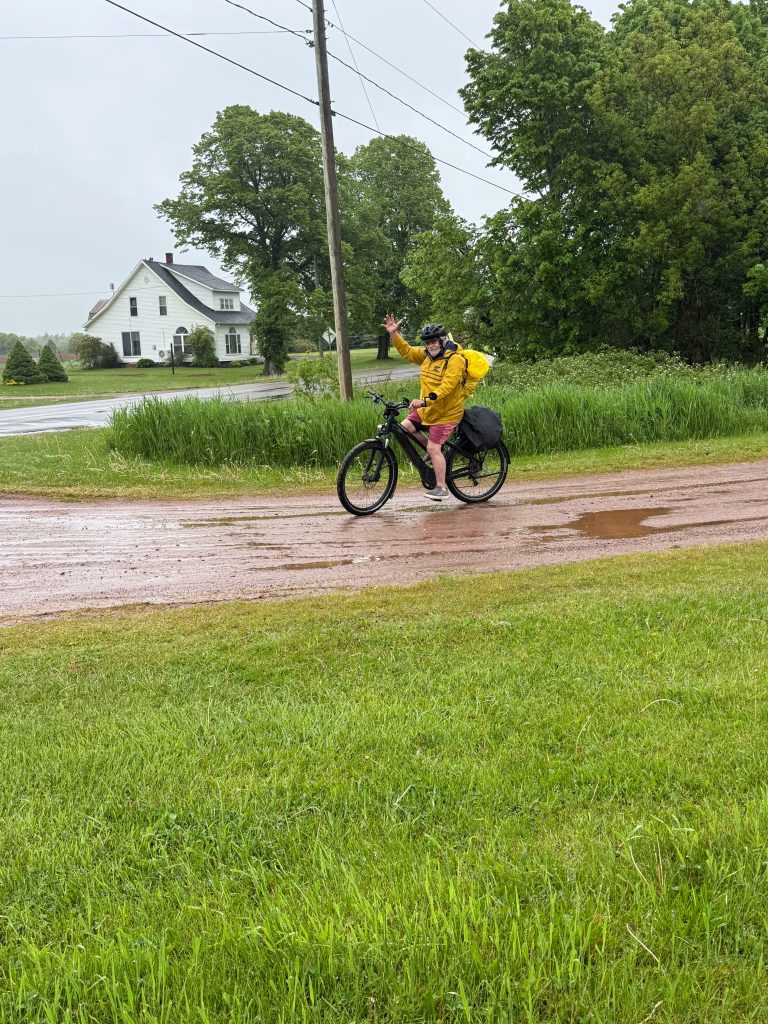
Finally, we set out after putting on jackets, vests, rain paints (for me, Shap had shorts), my camel back on under my jacket, Shap with rain jackets for his camera bag on his back, and rain jackets for our bike packs, adding to the attractive outfit, a helmet on top of our rain hoods, and gloves. I felt like a kid in a too big snowsuit. Off we went, down the road. Why is Shap turning around and going back? Of course, he forgot his coffee. For the ten miles to Tingnish, rain and wind poured down on us, then onto the Confederation Rail Trail with 30 miles of non-stop rain, red mud everywhere and two wet riders.
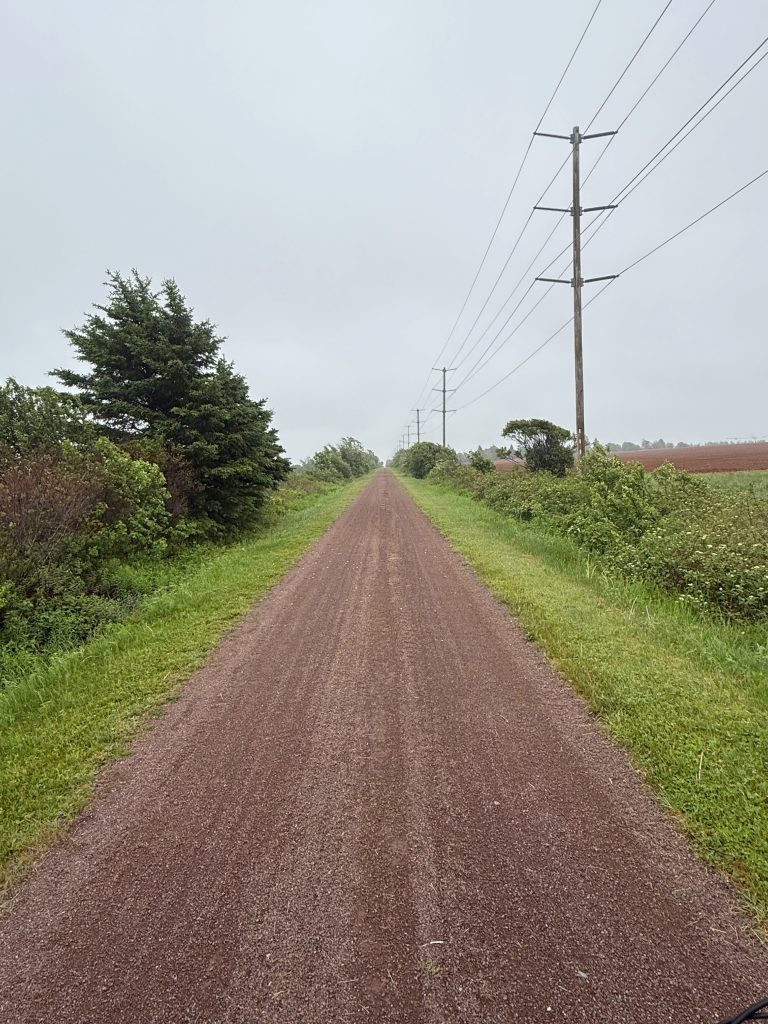
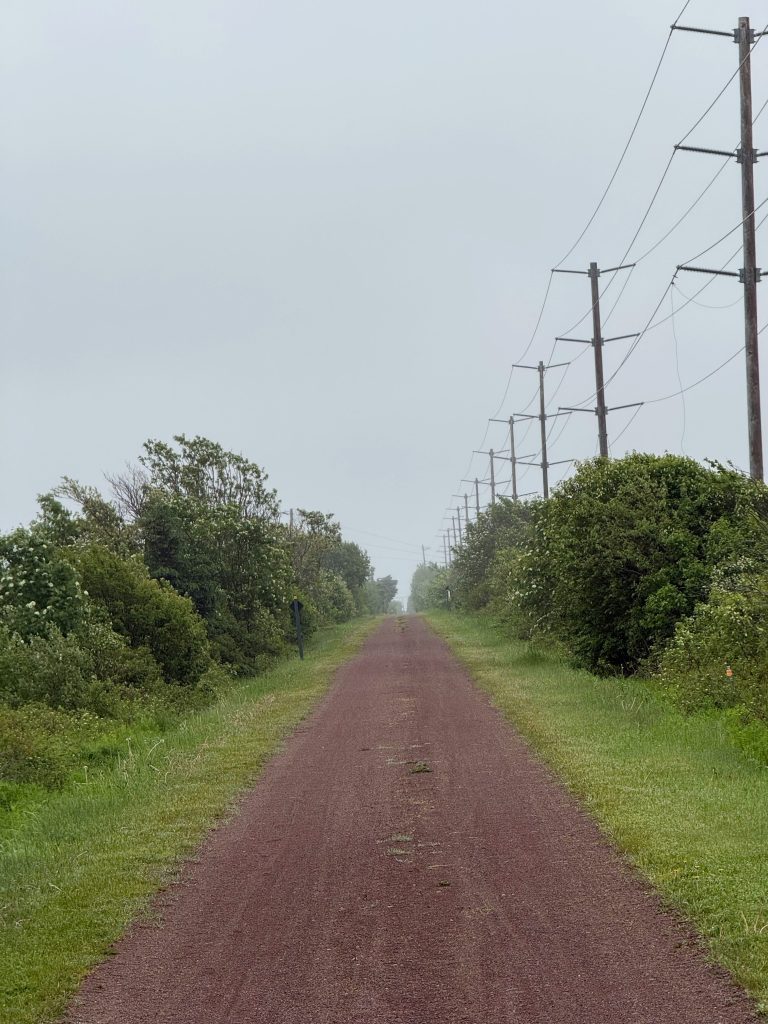
Doesn’t it sound wonderful to ride a rail trail? Imagine straight paths, with interesting scenery, no traffic, farmlands, brooks. wetlands? Now think of it with pouring rain, mud, (red mud not brown), mosquitos, and mile after mile of closed in trees. This was not my leisure ride, stopping at seaside restaurants, and long vistas to the water. Definitely not, just miles of the same thing over and over again. Finally we arrived, 40 miles later, never stopping along the way to a very nice resort hotel with a hot tub. After a dinner with about 50 golfing buddies, I took two Tylenol, rubbed evey inch of my body with Arnica, took a 1/2 an ambien, two Tums for my leg cramps and fell asleep.
Day three we woke to more pouring rain. We meet the other four bikers in the restaurant and they recounted their experience leaving from Tignish, running out of power, and getting completely soaked and dirty. They were opting to take the taxi to Summerside. But what do 80 year olds do? We ride, oh yes, those younger seniors are not going to smoke us. Off on the Confederation Rail Trail for the second day of rain, red dirt, and miles of the same boring scenery. One bright spot was finding a lady slipper that is the country’s flower and a bunch of cows laying down, munching away as if they were having dinner served in bed.
I think after this trip I will be done with rail trails. I should know the train never goes through interesting places but I had my hopes. Tomorrow 31 miles, a relief from the 49 today. And who ever said it was easier to bike West to East as it was downhill going East. Beats me, they definitely lied, it was all gradual uphill which is fine if you are 20 years old. Well here are some pics along the way.
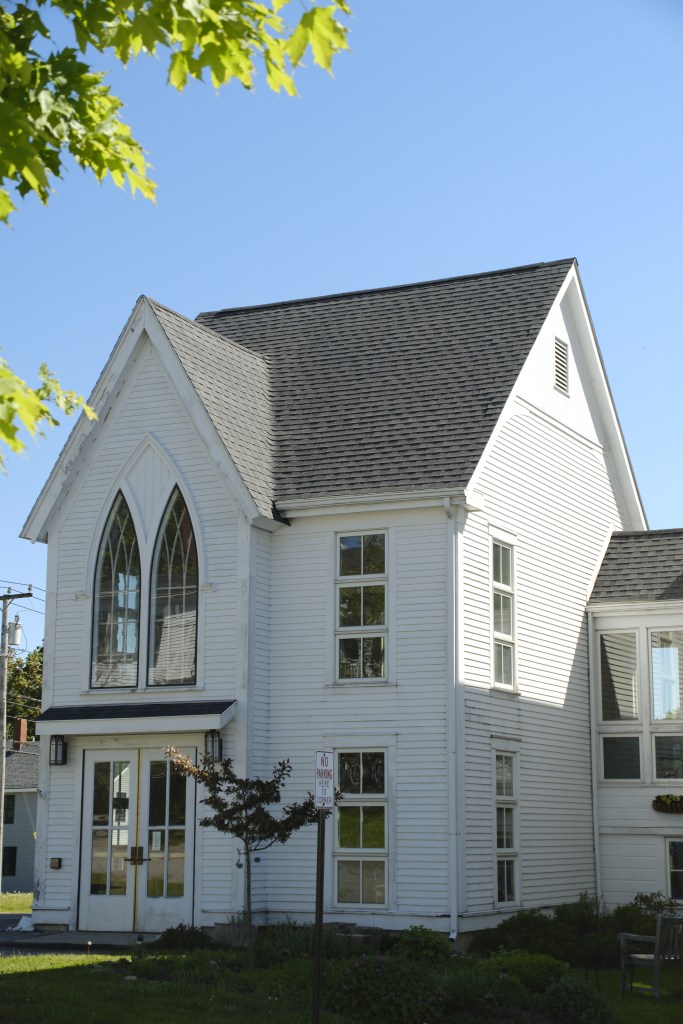
After leaving St. Andrew we meandered along the coast driving through towns that had the potential of ocean views, but mostly due to low tide, we only caught views of mud flats along the river. Most of the towns were small and not the quaint villages I had in my mind. The architecture was mostly ranches and small homes of newer vintage. However, the majority of the churches were Carpenter Gothic style. They brought a bit of interest in an otherwise uninteresting landscape. All along Route 1 were vast areas of forests.
We did go to St. John’s the day before and got to see the reverse falls but it was not during the dramatic tide times. The paper mill was impressive. Having grown up visiting my grandparents in Spring Grove, PA, where the paper mill spewed the obnoxious smell of sulphur, I was surprised, despite the amount of smoke coming out of the factory, it did not smell. I am hoping that they have taken better environmental measures.
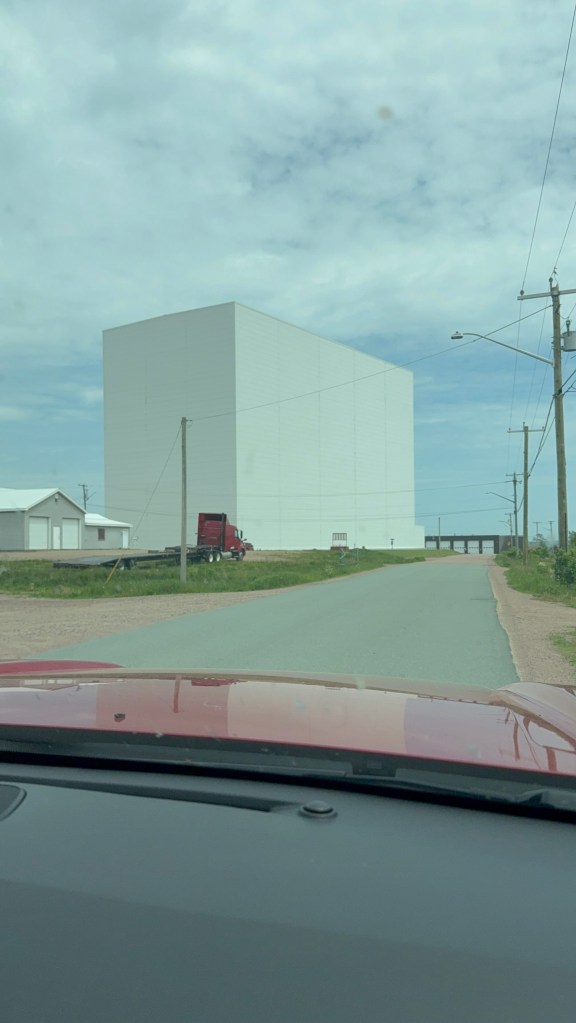
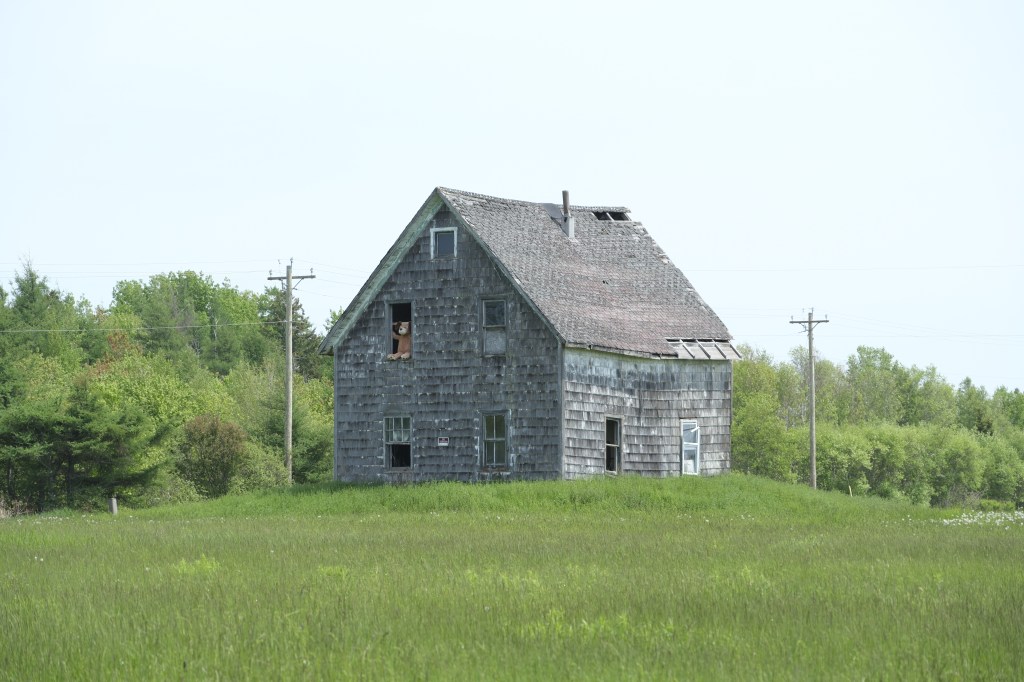
It is a long drive to PEI and much of it is on highway. We encountered the large white building (see below) with no windows and two doors. What it was used for is anyone’s guess but Shap thought it held all the Epstein files. I wish I could tell you about exciting events along the way, but the most I can share with you is, we are now on Chapter 41 of “Theo in Golden.” It is quite good and entertaining and does not consist of our usual blood, guts and murder choices.
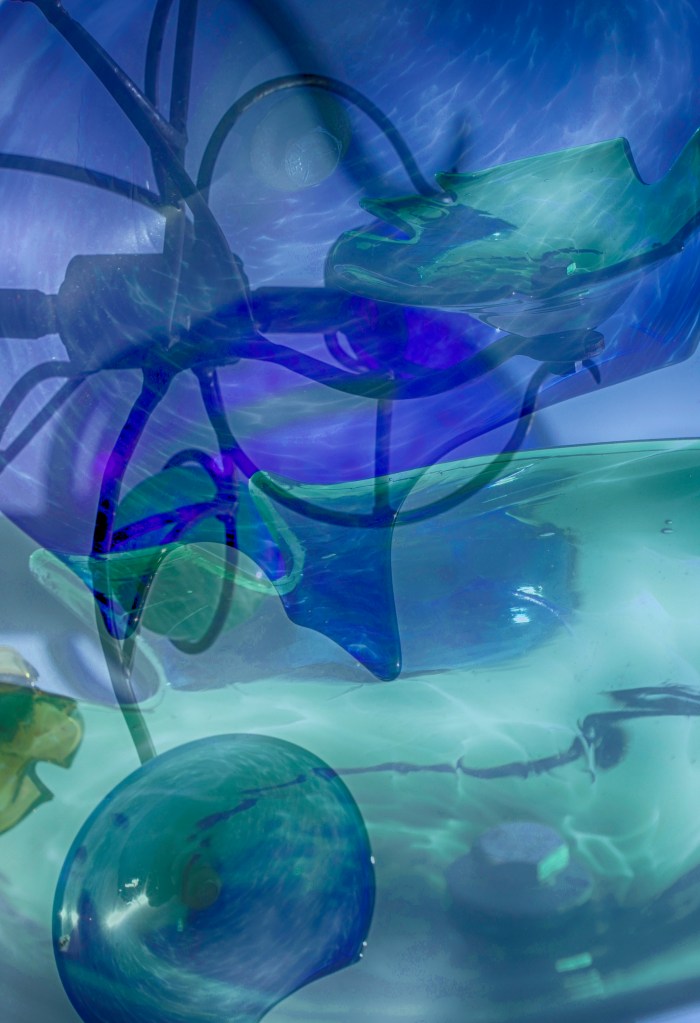
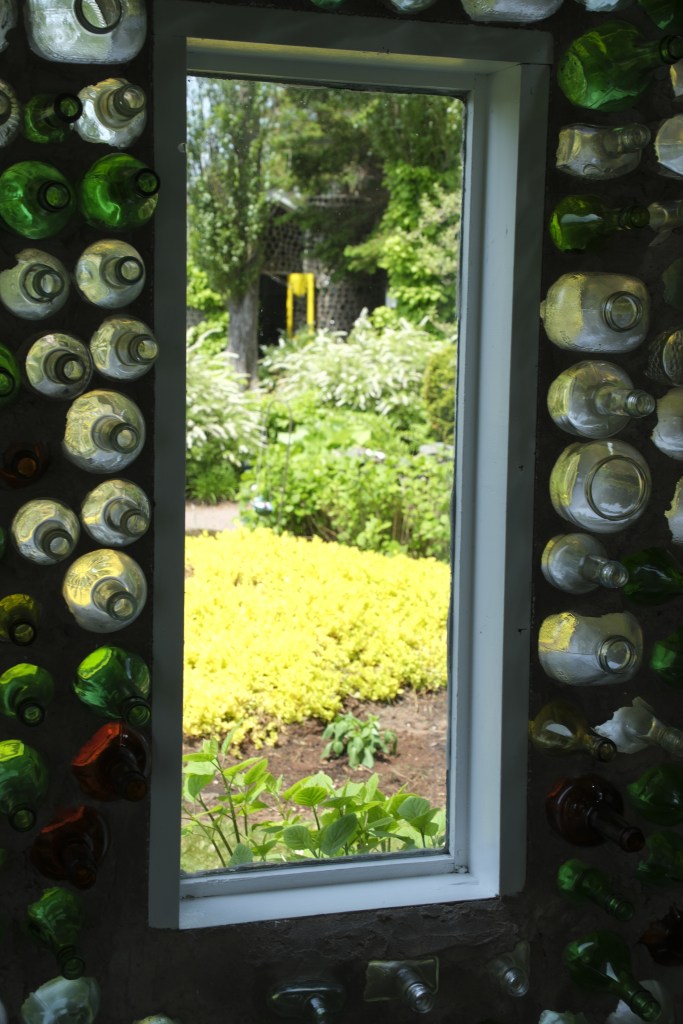
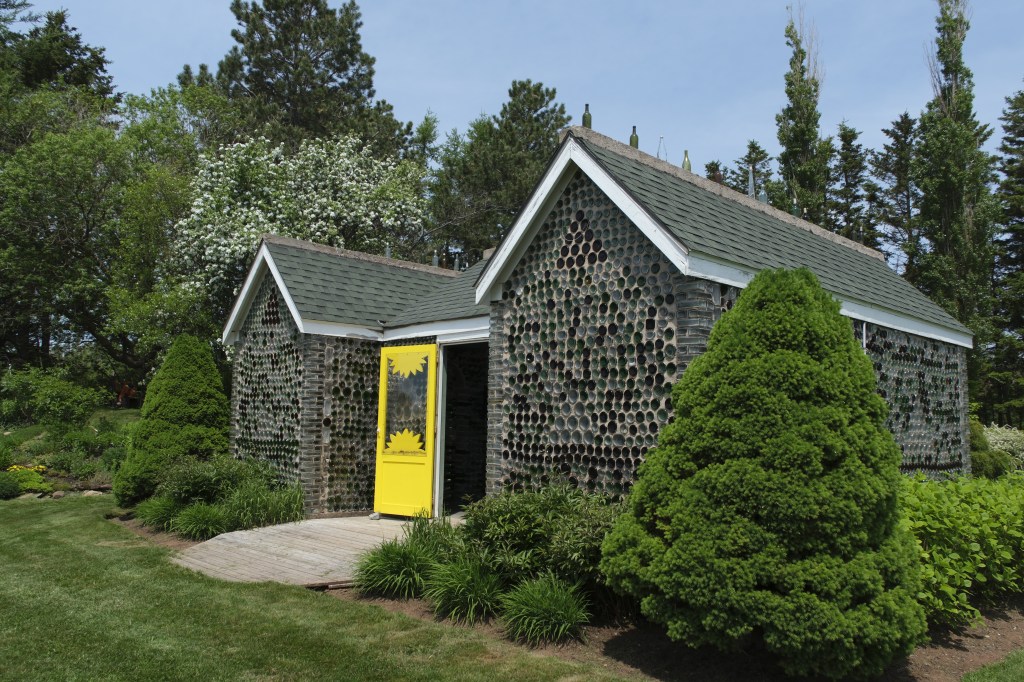
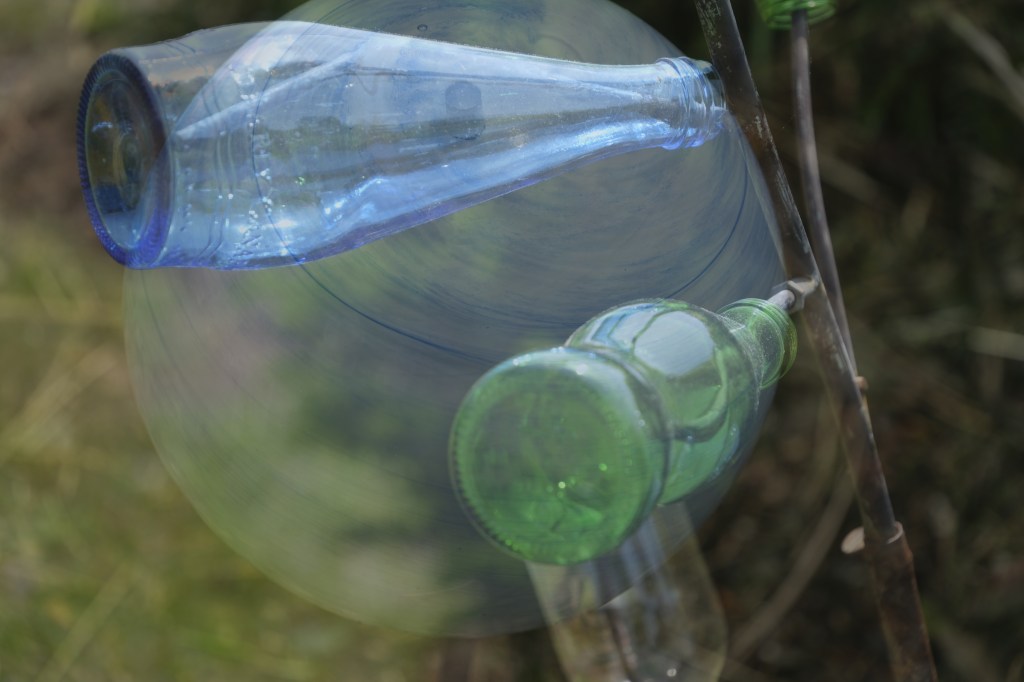
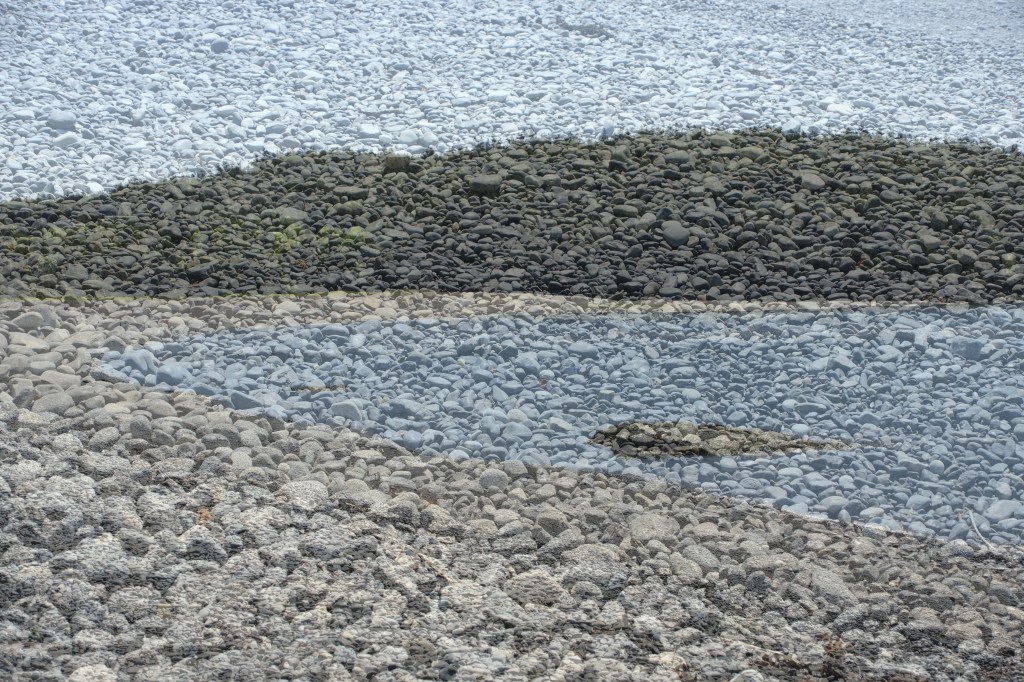
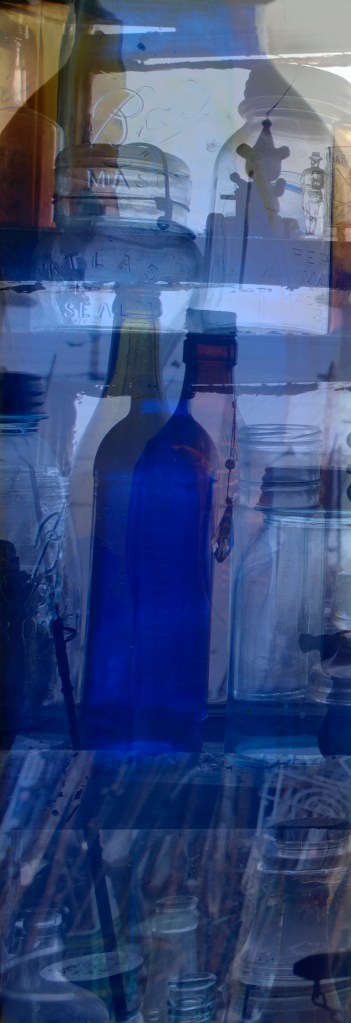
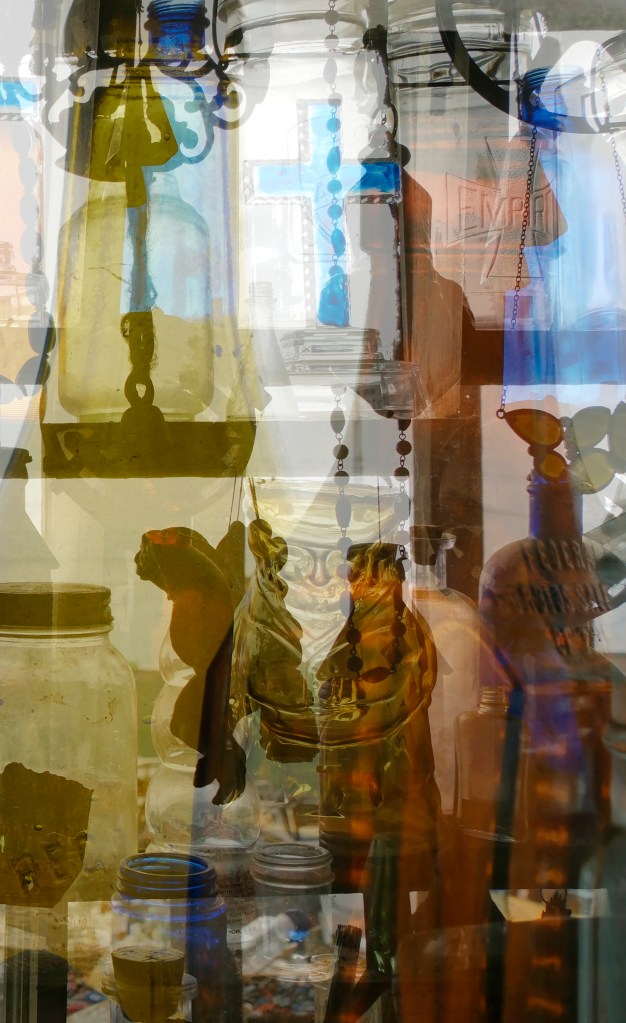
We arrived late in the afternoon into Charlottetown and settle into our hotel downtown which is quite nice, the Hotel Holman. It is located in the center of the town, an easy walk to the restaurants. This morning we took off to see the “Bottle Houses.” What to do in your retirement when you can think of nothing else while you are drinking bottle after bottle of blue, green, amber or white substance. The houses were started in 1980 by Edward Asenault. He used 25,000 bottles to build them and created a chapel, a tavern, and a house. They really are amazing and are a photographers dream, especially for me doing in-camera multiples. We spent most of the day getting there and back.
Our trip begins tomorrow at 9AM with a 2.5 hour ride out to the eastern tip of the island. We are packed and ready and prepared for rain. My poncho is large enough to fit 10 people in it. It spreads over the bike with a plastic window to see my gears, etc. and plastic mittens attached to the poncho so my hands will not get wet. A visor to stop the dripping into my face and enough material to go over the saddle bags. I will look like some hunch back creature plowing my way through the rain that is predicted to fall the entire 6 days we are riding. I will continue updating this blog if I do not melt in the meantime.
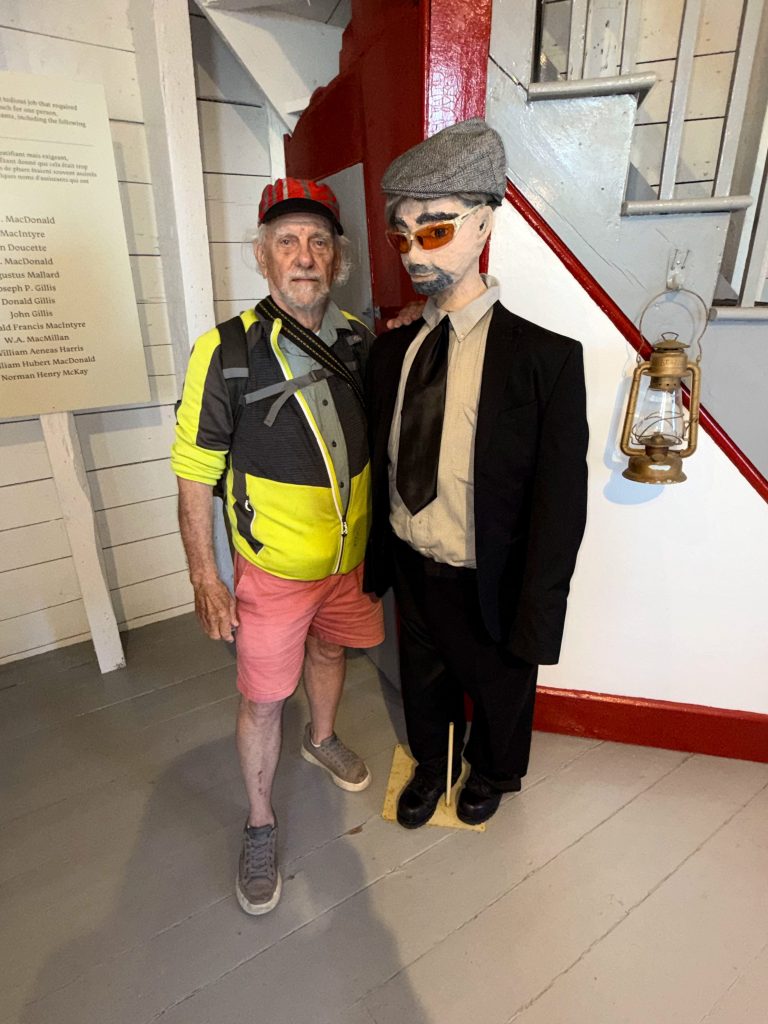
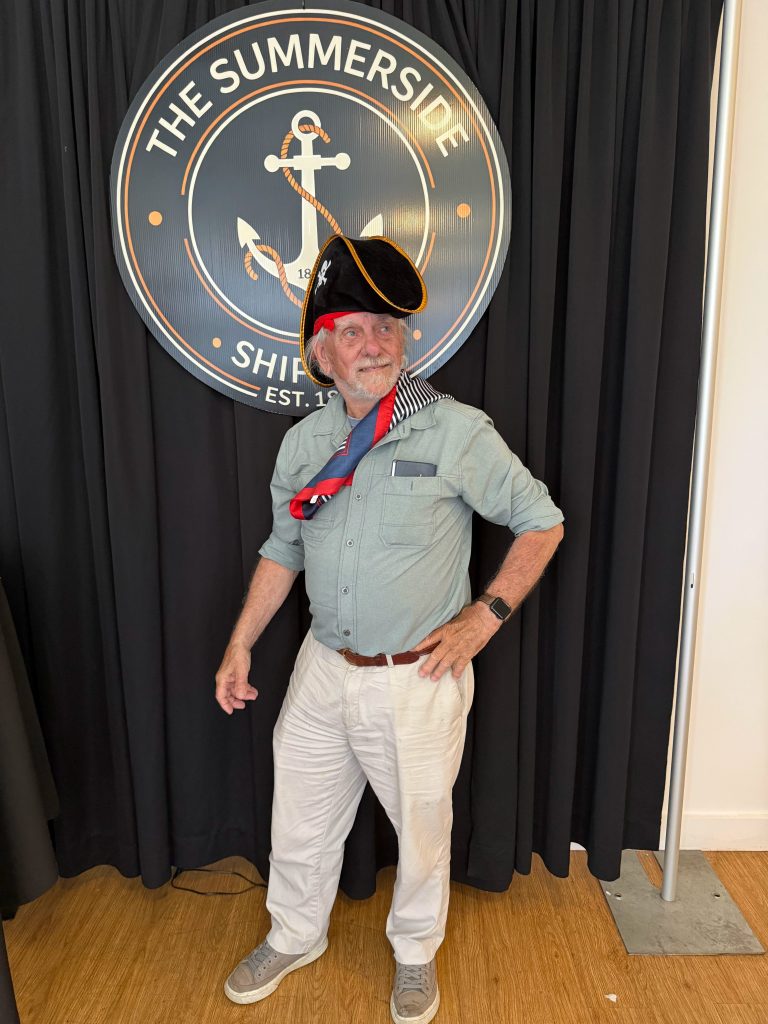
Pictures of the glass houses and of two of famous people we met along the way, plus the vault with the Epstein files.
We woke to bright sunlight, according to the forecast the only day of sun our whole trip, but we can dream. Off to find the “new French” bakery on a country road, far from the center of town. I mused that it seemed an odd place to have a cafe and bakery since no traffic would find it. Apparently I was right, as it was closed. Back to the main drag where coffee was found. We should write a book about coffee shops since we are always in search of good ones.
So that my friend Bessie did not think I judged her hometown by Route 1, we drove to the center to find a charming New England style town, It reminded me of my hometown, Gettysburg, as it had many of the same characteristics. A town placed in time from decades past with its town hall, library, churches, and schools within easy proximity, dotted with older houses, beautiful front lawns, gardens and mature trees.
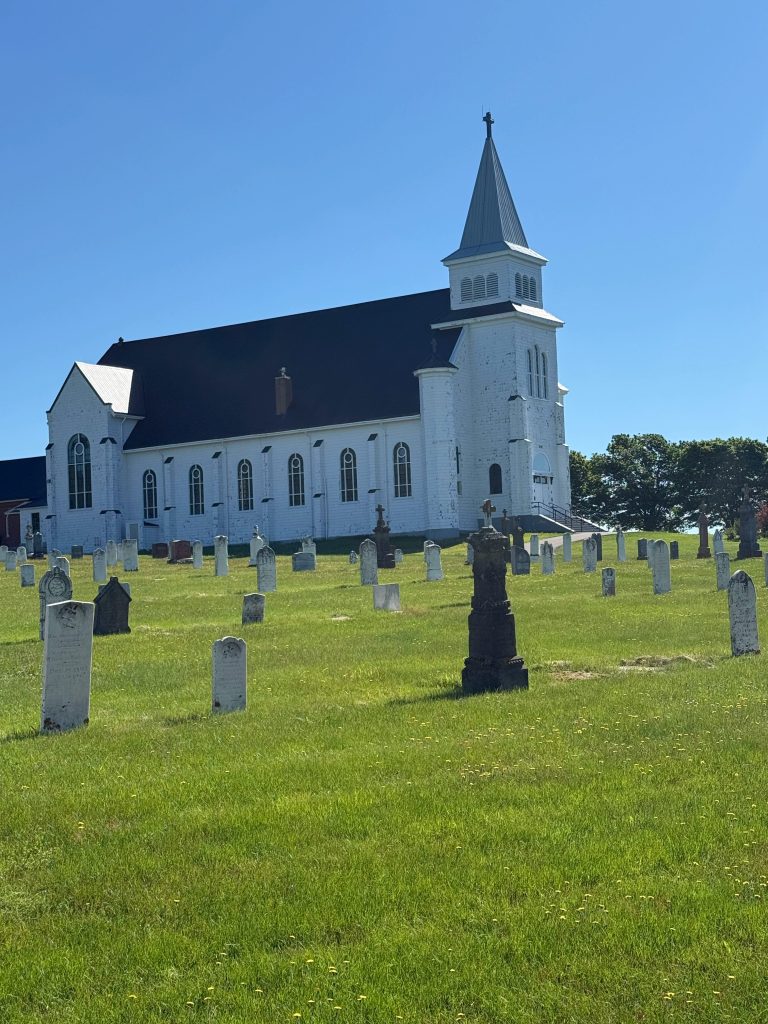
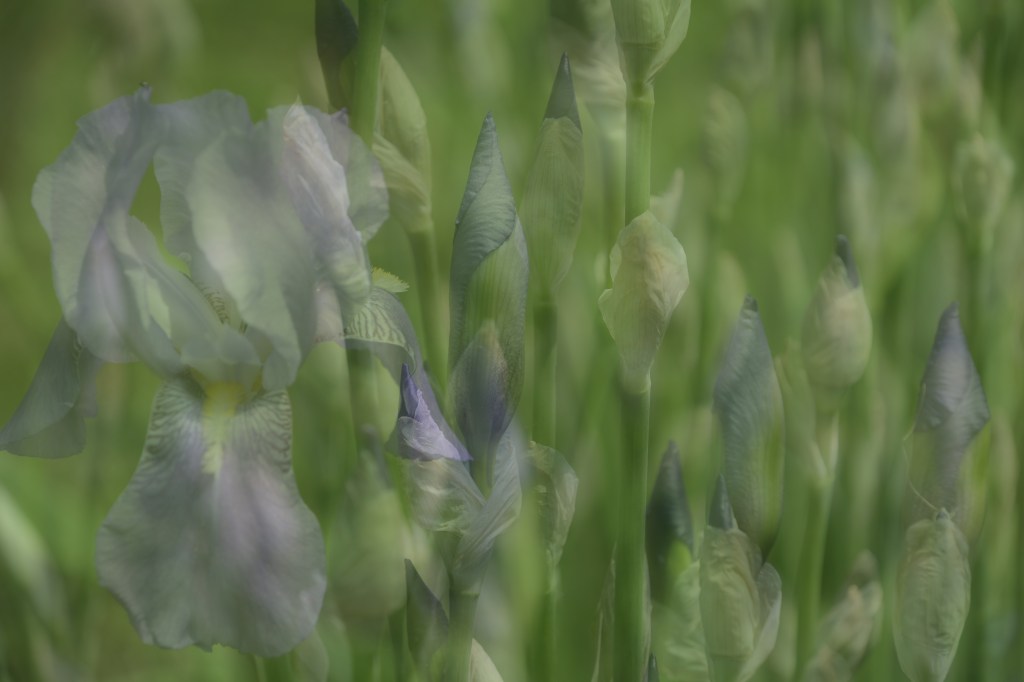
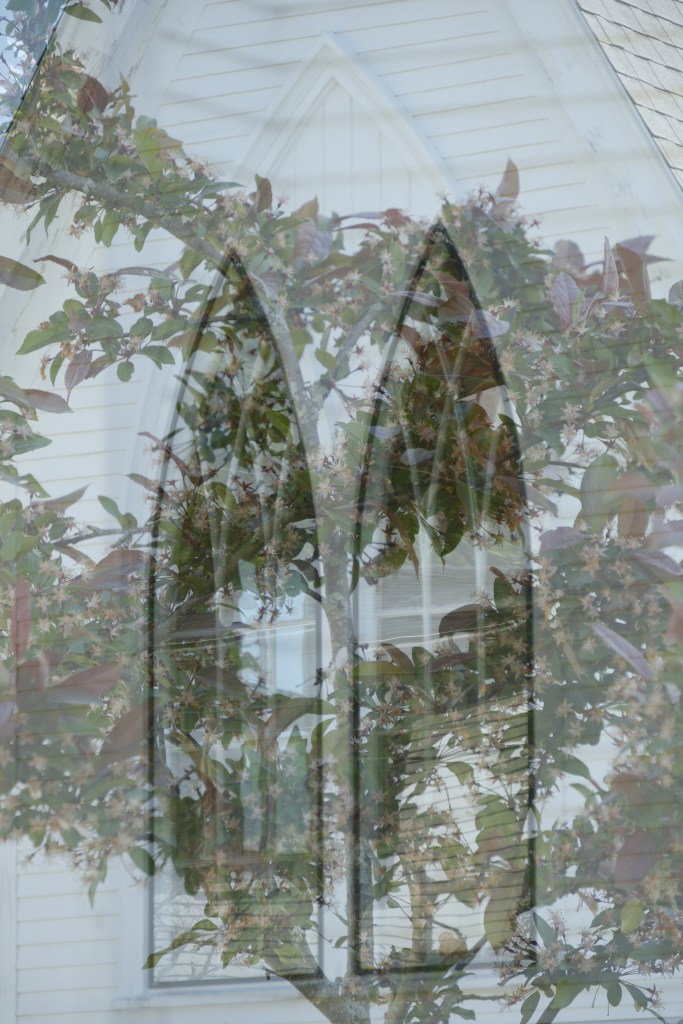
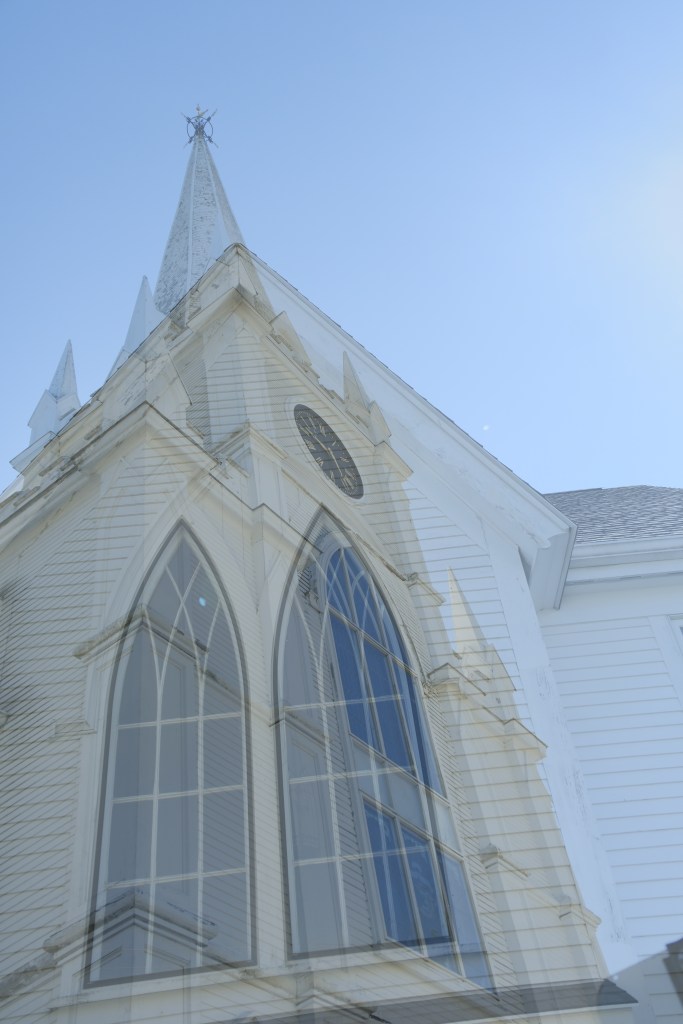
One of the outstanding features of the town was the white steepled church one could see from almost any point while driving aroudn the area. Shap is drawn to the architecture of churches, especially their steeples, so he was on a mission to photograph it. Upon arrival, a small annex sat to its left, duplicating the churches outstanding features. To me this was what attracted me. While he photographed the steeple, I began to create in camera multiples. You are not seeing double when you look at some of my photographs, as I am trying to learn a new technique.
Onward to Campobello where FDR summered while growing up. The “cottage” built by Grace Kuhn was sold to Sara Roosevelt with the stipulation it would pass to FDR when he came of age. In 1908 it became his home, a place where he and Eleanor raised their children in the summer months, until he became President. It is here where he became sick with polio which would restrict him from many of the activities he enjoyed as a child. The tour was conducted by an engaging man who was enjoying his retirement being a guide. A great storyteller, he brought to life the various rooms while conducting the tour. Views of the bay, expansive lawns, gardens, and paths to meander accentuated the property. A world that no longer exists where time was slower, families gathered, played outdoor and indoor games and took time to read.
We arrived in St. Andrews later in the afternoon at the Algonquin Hotel which was a Canadian-Pacific Railroad hotel. If you know these hotels, you know they are massive. A day of exploring the Bay of Fundy and the town of St. Andrews. Perhaps a bike ride to get out legs ready for the trip.
Is there anything better than opening a Christmas present in December with a trip to bike tip to tip in Prince Edward Island on June 11, 2026. You will have to ask Shap, cause that’s what I gave him. Heads together, we dreamt of ocean air, fabulous views, zipping along on bright sunny days, stopping to photograph, falling asleep exhausted but happy.
Skip to Sunday morning June 7th in Stowe. Vermont, 7 AM departure in pouring rain with Olive tearfully sitting on her bench looking out the driveway as we drive away. Well, we say, let’s take a look at the long range forecast in PEI (as everyone seems to call it). WHAT??? Rain the whole week with one day of possible sun!! Seriously, what happen to that dream we have been dreaming all winter.
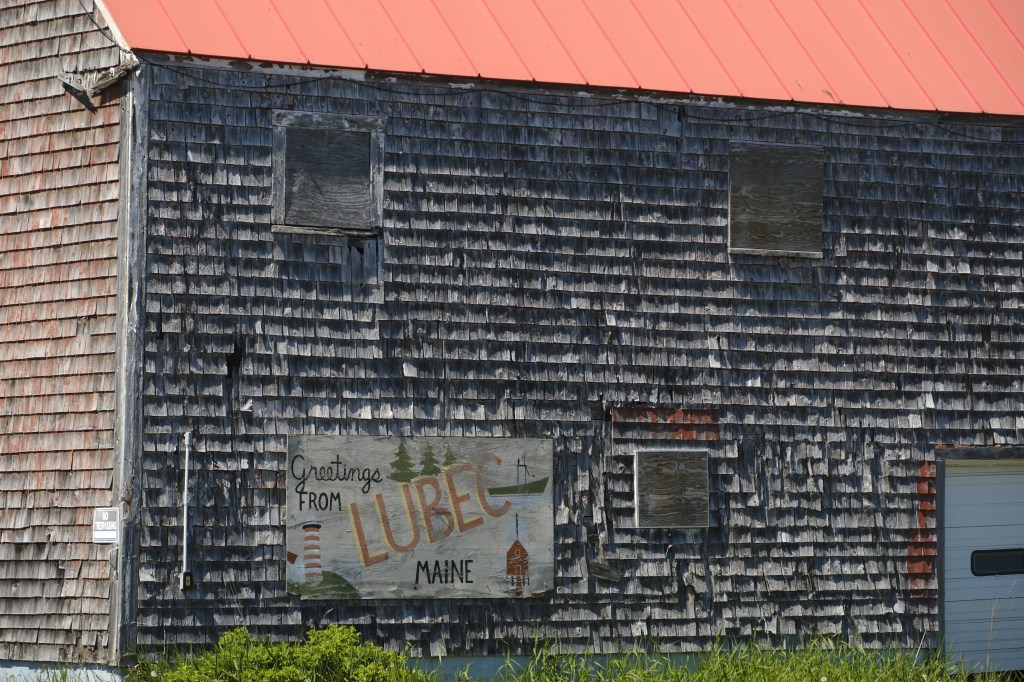
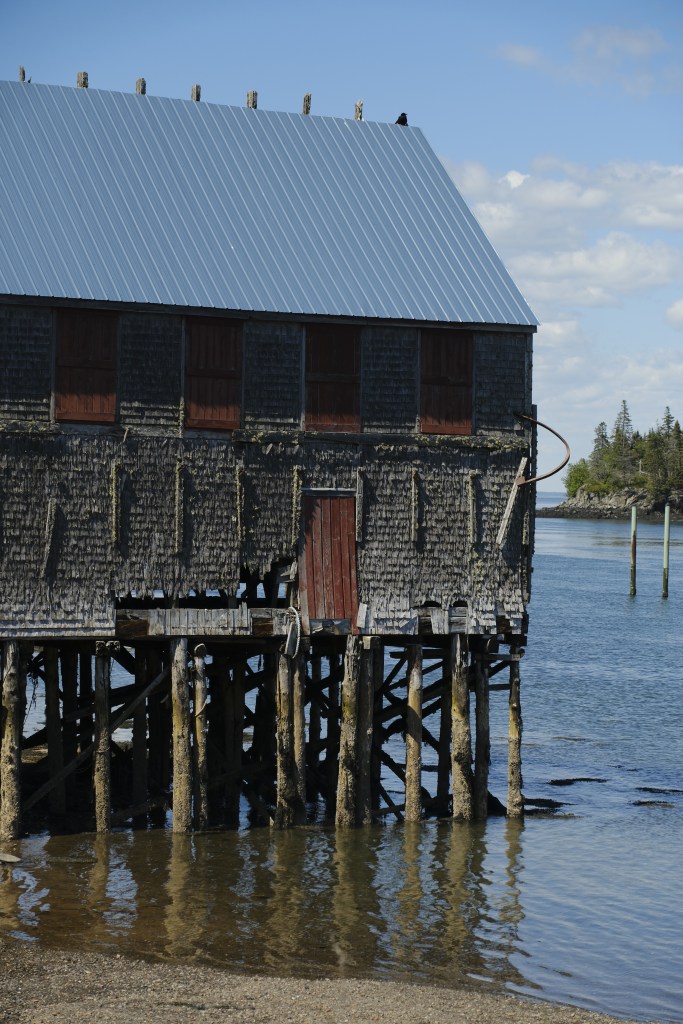
Not to be deterred, we head out across lots, as they say in the vernacular of New England, toward Machias, ME. One of my best friends comes from Machias and I am not sure she raves about it, but I will finally get a chance to see her hometown. Meanwhile, first stop at Front Seat coffee for a pastry and latte. I mean, it has been an hour since we had our first cup. And Shap can never pass this coffee shop without stopping.
Windshield wipers are going full tilt, as our trusty Red Toyota truck hugs the road, and the bikes in the back are loudly complaining of how wet they are. but we can’t see them so we ignore them like small children whining from the backseat. At mile whatever, I suggest an audio book since Shap and I seem to have run out of conversation. Remember those days when you could talk to each other, we were both so interesting and had so much to tell? Yeah that was 30 + years ago. Now, it is what book has the most murders, intrigue, gore and can be finished in 7 hours.
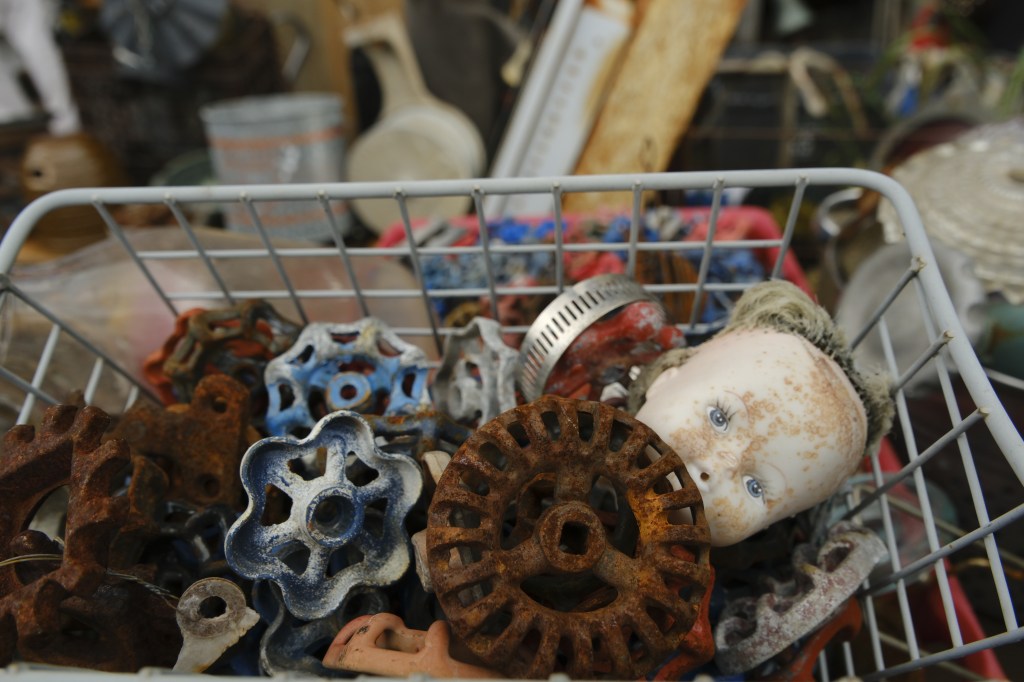
As we roll into Maine we pass one of our favorite haunts for photographs, the TREASURE HOUSE. If you have never been, this is a must. A three story barn, filled beyond its walls and spilling throughout the yard with everything that has ever been made since time began. Old plastic letters, hose bibs, radiators, car parts, faucets. etc. I could go on with the list, but you would stop reading.
Below are examples of the “stuff.” Here’s a good mystery to solve. Picture a basket full of those faucet heads you have on your outside water spigot to turn it off and on. Now picture a basket full of at least 400 of them in all colors. Interesting photo right? There are so many so you just put your eye to your camera, move it around to figure out how to arrange the picture and BANG, there is a decapitated doll’s head staring up at you. Seriously, who puts a decapitated doll’s head in a basket of faucets? Oh yes, I have included a picture.
Back in the car and on to Machias. All will be revealed of your childhood home, Bessie.
This will probably be my last post from Japan as we leave very early Tuesday morning to head back to Montreal and Stowe. Let’s talk about the train system in Japan. The trains arrive to the second, they are incredibly clean, and the signage where you need to stand to get into your particular car is excellent. The speed of the Shinkenhansen, the main train line between major cities, gets you to places so quickly you can understand why it is the way people travel throughout Japan. The tracks are smooth, the cars are immaculate and the seats are comfortable. I cannot understand why the U.S. does not make an investment in the rail system as it would solve so many issues with our crowded highways, and an alternative to flying. Even the local trains are fast, efficient, and clean.
Of course, one should know when someone says, “You won’t have any trouble finding your train”, you might as well figure the opposite will be true. You arrive at the train station, people are bombarding you from left, right and sideways, rushing toward some train, somewhere. Meanwhile you are standing, probably right in the way of people, gaping at the time table as it flashes at you in Japanese. Now you know it is surely going to change to English, as it does in every station, but until it does you might as well stop gaping and move aside so people can get around you. But you don’t. No, you stand there with your mouth open, schedule in hand, suitcase so embarrassed by you it is attempting to roll away and you pray the schedule will show up in English. When it does, your train or the name of your destination is not on the board. Seconds later it is back to Japanese and you are screwed until it rolls around again.
Eventually you see a time that looks like the time you are to board. If you are lucky you might recognize the name of your destination or else it doesn’t show at all and you have to figure out the final destination of the train, while determining if your stop is on the way. And throughout this process it has flipped to Japanese many times. As if this is not enough, you must buy your ticket. You have to find out where to buy the ticket, hoping you can find a ticket booth instead of approaching one of the many machines that spits out tickets. Those machines just act like sentinels of guards so foreboding you instinctively know you can’t conquer them.
You make it to the ticket booth, mind you, there is about 10 minutes between train transfers, and you desperately have to go to the bathroom, but you don’t even consider trying to find a bathroom because you might not make your train. The ticket taker points to the machine and there you are, back facing “The machine.” You approach and wow, you can select English as your language, you go through the menu, pick your destination, put your money in and out spits the ticket. All in about 5 minutes or less.
Then it is a dash to the right gate, get in line only to find you are not in the reserved ticket line, dash to the section of the train that has reserved seats, and throw yourself through the door as it is closing. Grab your seat, sit down and then you realize, you never went to the bathroom and you have an hour to your destination.
We met a thirty year old on our train to Uno who had just as much trouble figuring out the trains. So we know it is not our age. Did I mention that sometimes you have to carry your suitcase up and down many fights of stairs. Warning to all of you heavy, large bag travelers.
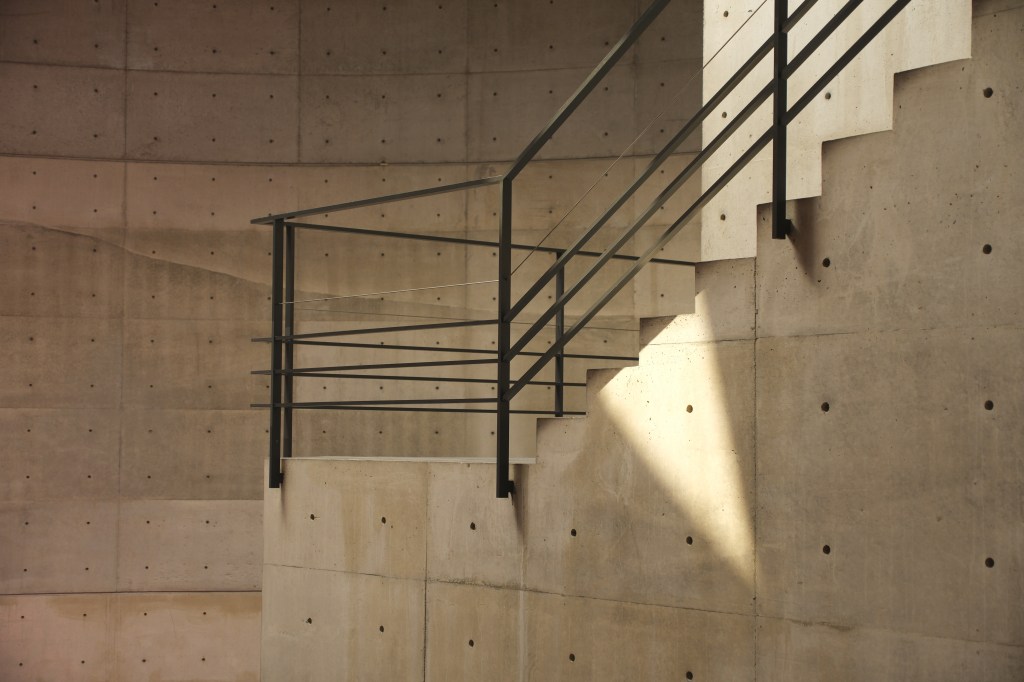
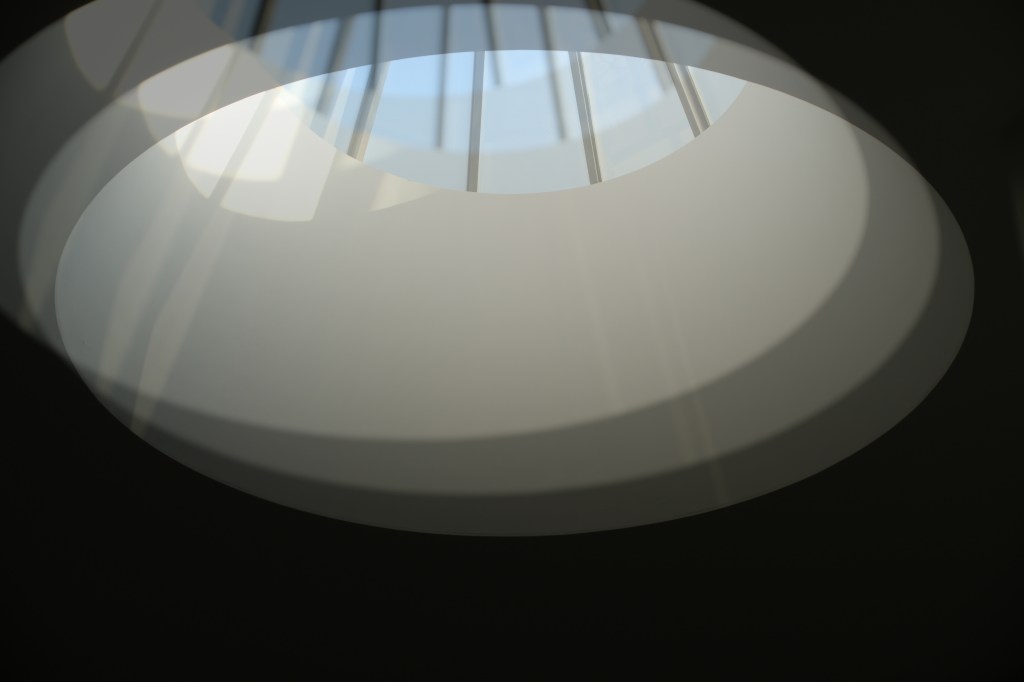
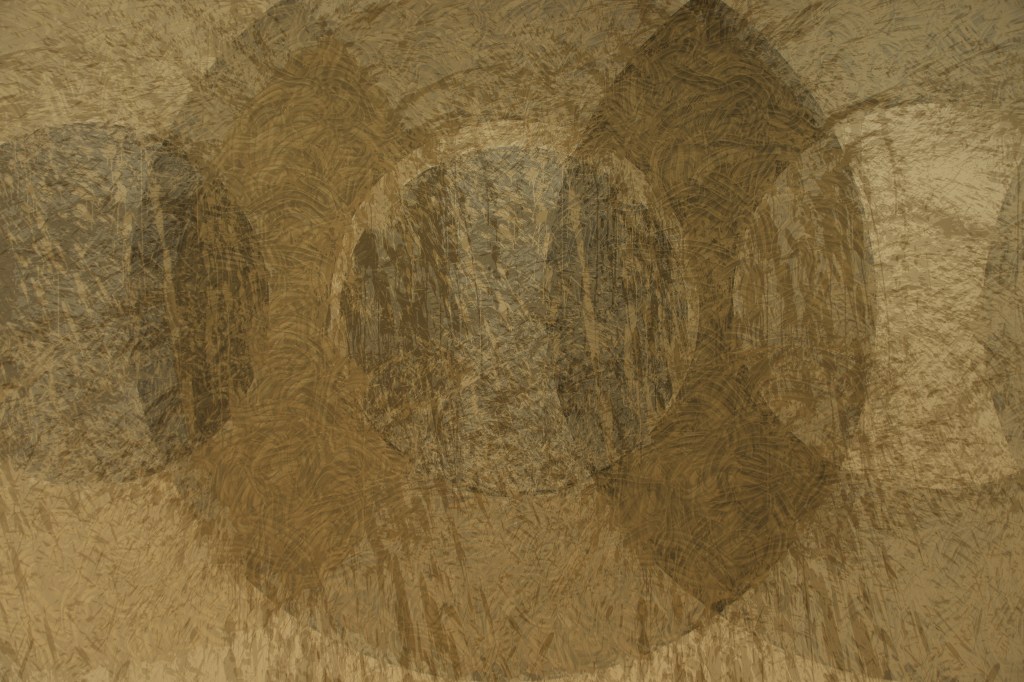
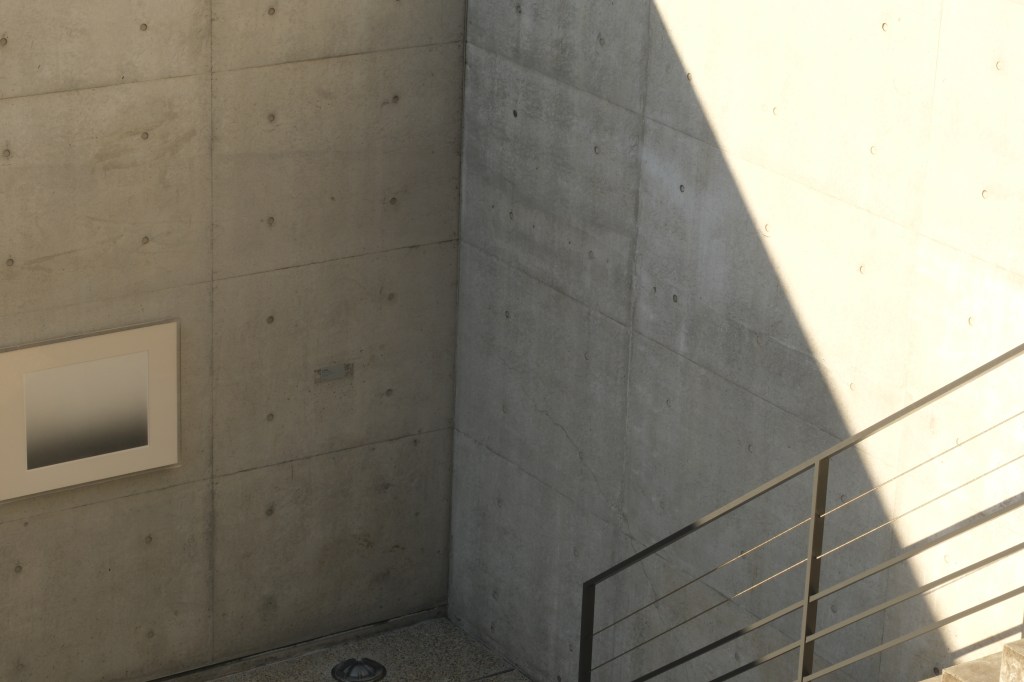
We were headed for Uno where we were catching the ferry to Naoshima Island for an afternoon of touring the island to see all of the famous outdoor sculptures and to go to the Benesse Museum. We really should have had several days, as the island is filled with museums, outdoor sculptures and magnificent views. The famous pumpkin sculpture by Yaoi Kusama is nearby the museum while the”cat” by Niki de saint Phalle stands along the roadside. Other beautiful sculptures dot the hillside looking toward the ocean. Inside the museum are some of my favorite artists, Frank Stella, Louise Nevelson, Giacometti, Lichtenstein, George Segal, and many more. What is truly amazing is the architecture of this museum designed by Tadao Ando. This museum was designed with large openings to allow the natural beauty of the island to be seen through large windows, or balconies therefore creating a space for nature to shine with the works of art.
I have included some of my multiple images as this building and the surrounds spoke to me to try to express this art differently. Of course, the pumpkin is so famous I did not have time to create a multiple image as there was a line of people waiting to have their picture taken in front of the pumpkin. I had seconds to try to get a picture without people .
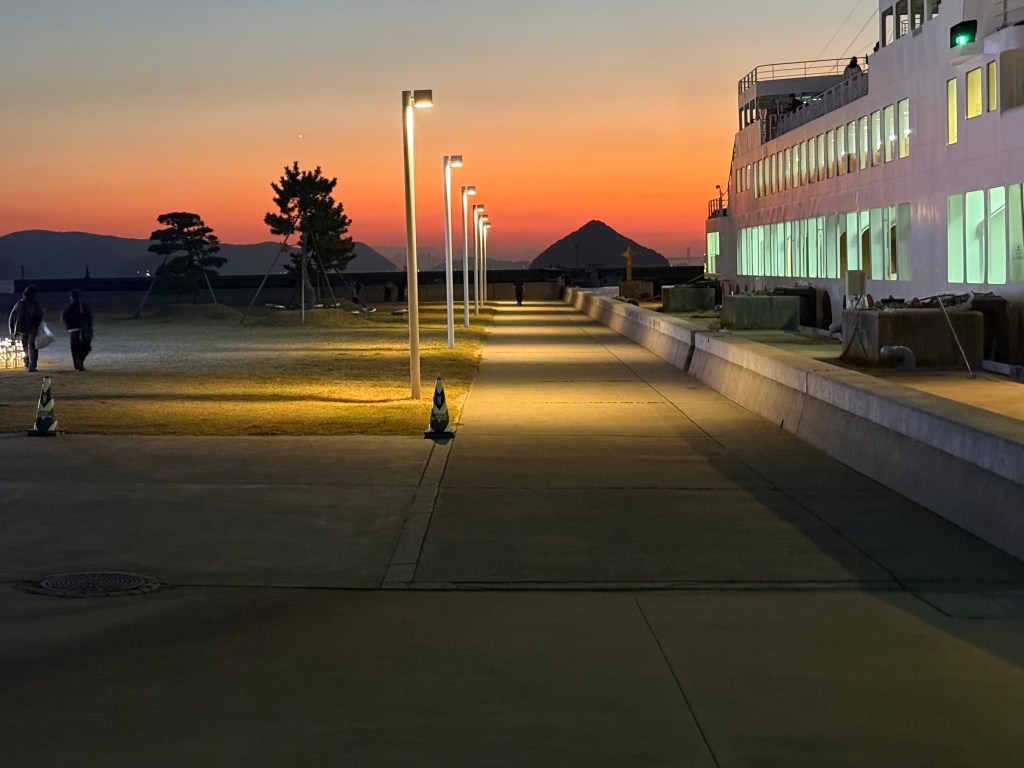
A ferry ride back to Uno in the dark, showed us the island in the last light as it pulled away from the terminal. Good-bye for now, perhaps you may get one more blog from me.
Yesterday was a travel day from Kizo-Fukushima to Nagoya, another major city which is known for its famous Nagoya Castle and the Atsuta Shrine. So there was not much to report except our excellent ability to navigate the train system.
The real reason we were in this city is because of the Arimatsu District, which was a town that was established in 1608 and was located along the Old Tokaido highway, a highway that connected Toyko and Kyoto. Unlike the Nakasendo Highway, this was used by the people of the area. The Nakasendo Highway was used by royalty such as the Samurai and the royal families. The old Tokaido was a pedestrian highway, few horses would pass by, and trade was done along the way by contracting people to take the wares to Kyoto or Toyko.
The town of this Arimatsu District was famous for the their unique form of tie-dyeing known as Shiborizome, or as we know it, shibori. This was one of the highlights of the trip for me. There is tie-dying we are familiar with on T-shirts, where we grab some material and tie rubber bands or string at various places and then dip the shirt in dye. Well, this method is like kindergarten to shibori. It was so much more complicated and the results were beyond beautiful.
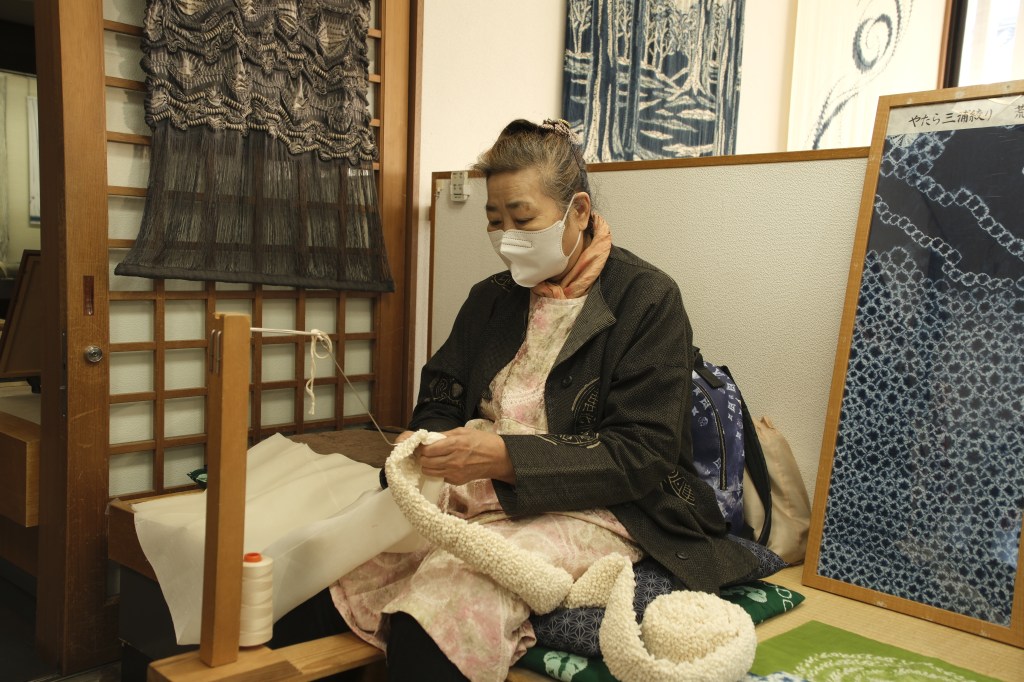
We went to a museum where there was a video of the shibori method, then examples through the history since before the 1600’s. There were two women demonstrating their methods. Each family has their own way of creating a pattern, none are written down but passed from generation to generation. If I developed a new pattern I could call it “Peggy Smith pattern.” I sat and watched while these women stitched the tiniest pieces of material together, pulling the stitch together in a circle and then wrapping the small piece of cloth that points out of the circle. It is hard to explain how it is done. They have just created this cone shape by bunching a small pinch of material together with a finger, wrapping it around a tiny wire and then winding thread around just the tip of the cone shape. Then they pull out the wire and go onto the next. Meanwhile every one of the “bumps” are in a straight line.
The other woman pleated the length of fabric, (precisely, I might add), wrapped it around a 1/2 inch round rope with a thin thread, then repeating, only this time she wrapped the material very tight with thread very close together. Then once it is tied to the rope, it is sent off to be dyed. I can’t even begin to explain it clearly but the tiny stitches and the painstaking preciseness amazed me.
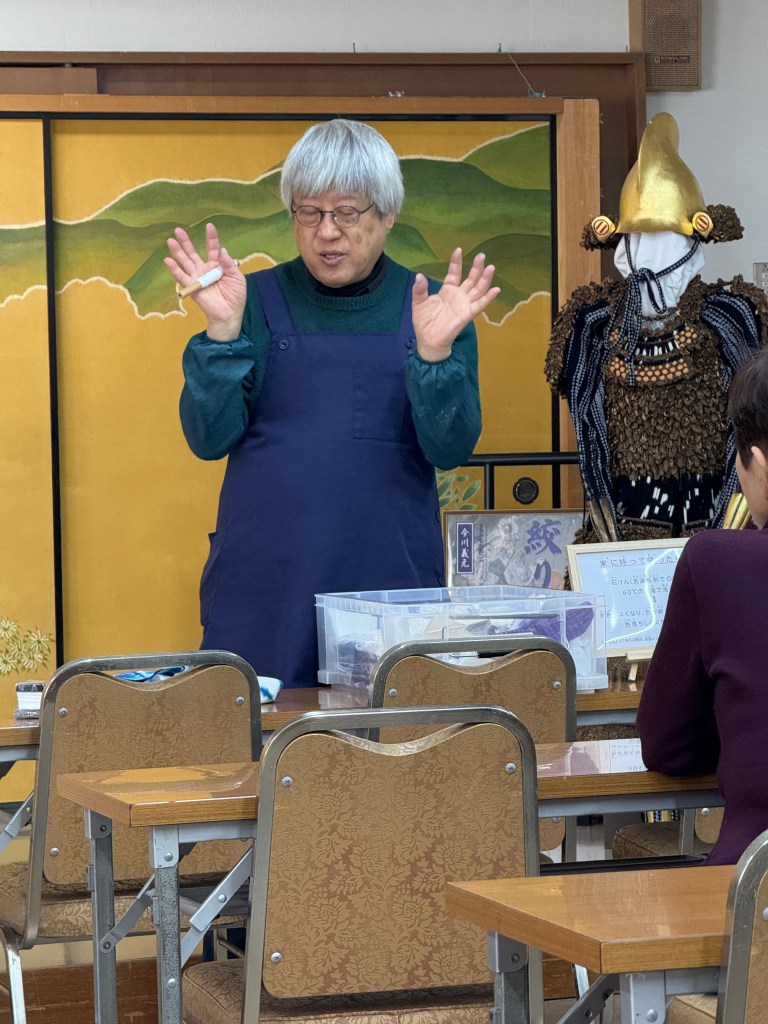
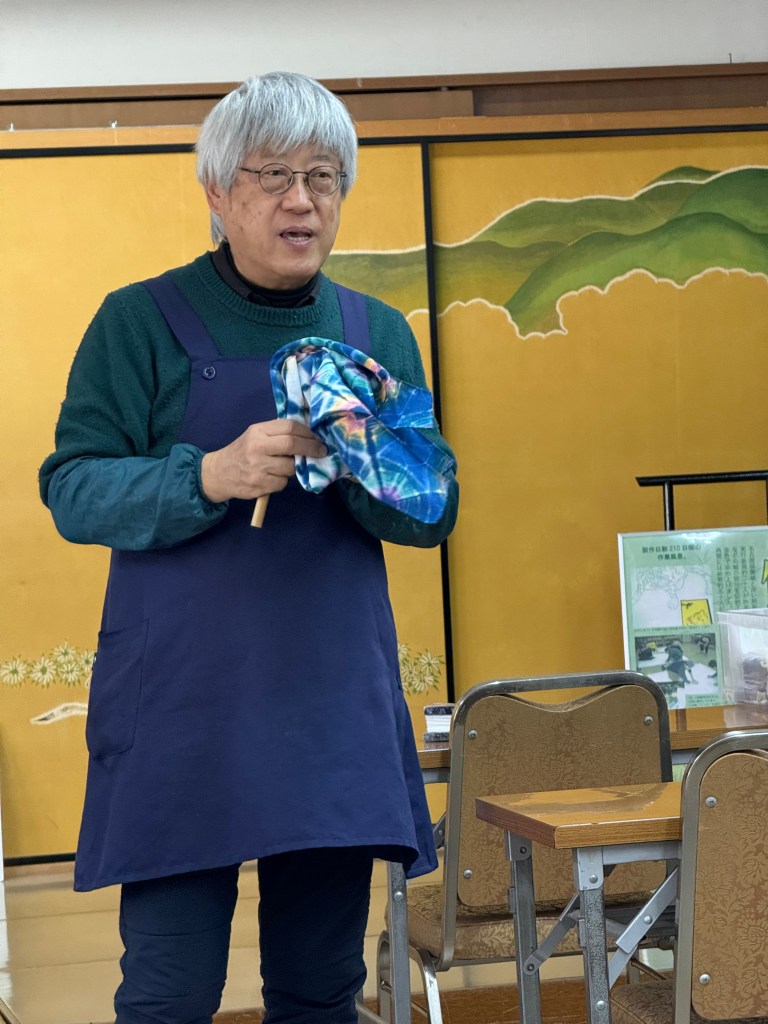
While this was going on, a classroom filled up with people. Our guide asked if I could join and I was excited to find out that I could. I was the only foreigner in the group. Our guide translated much of what he said, so I was able to learn about different methods and designs. We folded our fabric into fourths lengthwise, then folded it like a triangular, much like they fold the American flag. Next it goes between two plastic triangles, then to the basement where the dyes were waiting. Depending on how you dipped your triangle in the dye (and he had various colors) it would come out different ways. I wanted all blue. After you dipped it in the dye for a minute you take it out of the triangle and it is yellow in color. You wash the cloth and it turns blue due to the oxygenation from the air.
This was a dream come true, that I could join in this class. Along with this wonderful class, there were shops selling the most beautiful tie-dyed things, one more beautiful than than the next.
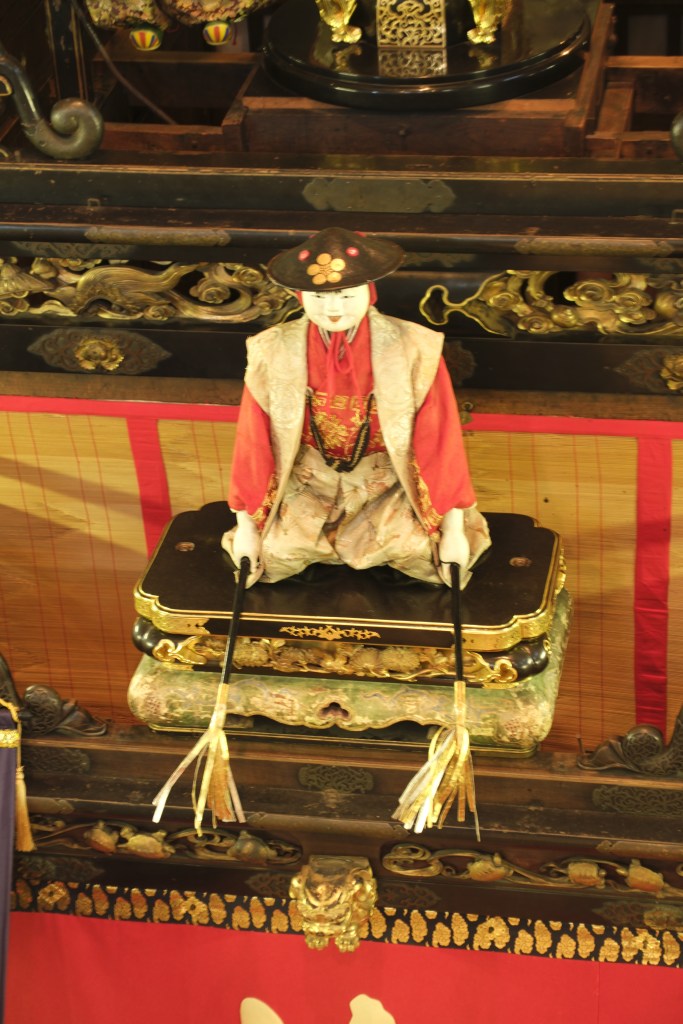
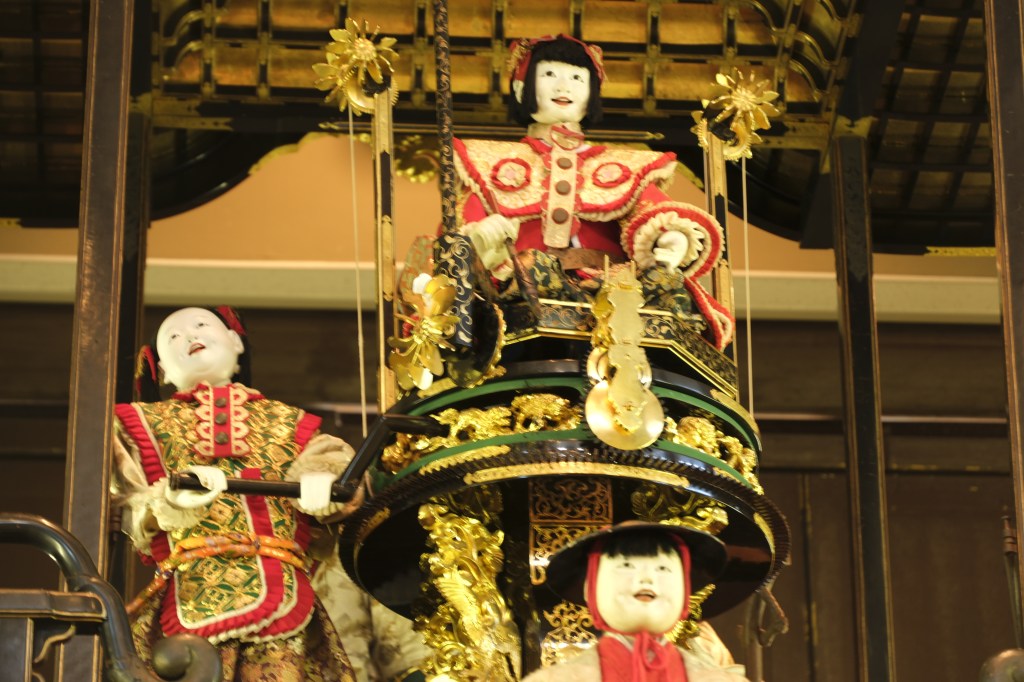
During the festivals in this area, there is a parade with a “float” that was built in the 1800’s that weighs many tons. It is carried by 20 men through the streets. In this district there are three floats, each different. The structure is made of wood beams lashed together with two long beams running lengthwise. The men put the float on their shoulders to carry it. I doubt one could even begin to call this a float. The floats have about three tiers, each getting smaller than the next. The float was covered with red and gold cloth with wooden puppets sticking out, depicting gods and Japanese people on each level. Inside there are 12 puppeteers to work the puppets who must walk at the same time they are moving the bodies and arms. The puppets move back and forth, they move their arms and hands and are quite life like.
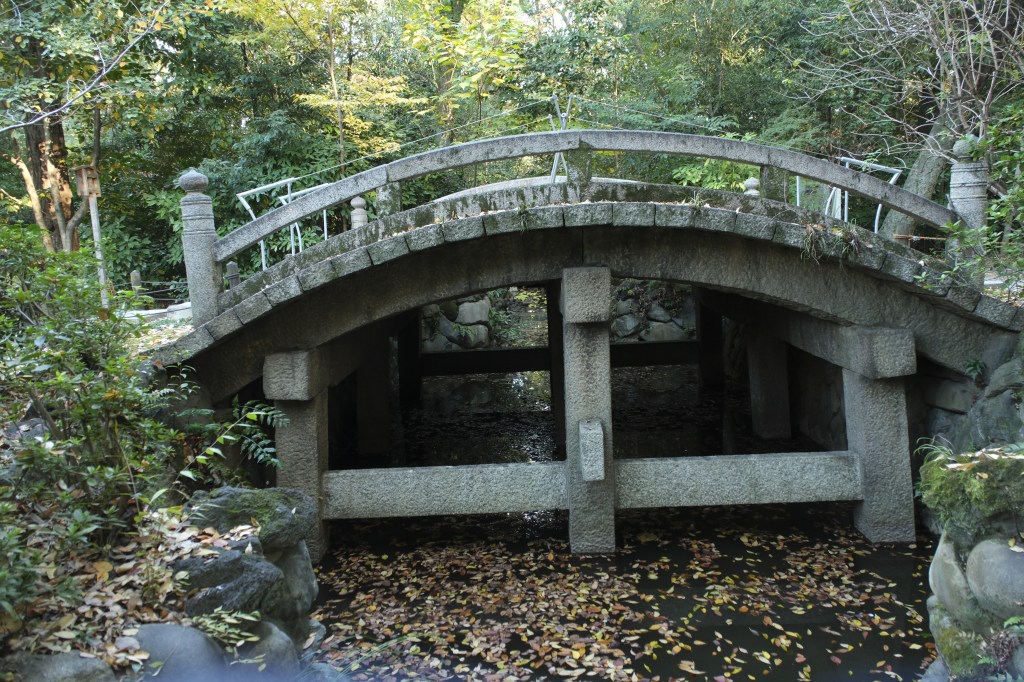
Later in the day, we went to a famous shrine that is suppose to hold the sword of a god who had to fight off demons and monsters with three weapons. One of them was a sword and supposing this sword rests in the Atsuta Jingu shrine. This shrine was founded around 2,000 years ago and enshrines this sword, known at the Kusanagi no Tsurugi sword, one of three sacred treasures of Japan. You cannot see the sword, it is in a box with electric wires around it. People come to the shrine to pray. I think the sword is like Jesus, no one knows what it /he looks like, but they believe in the powers anyway.
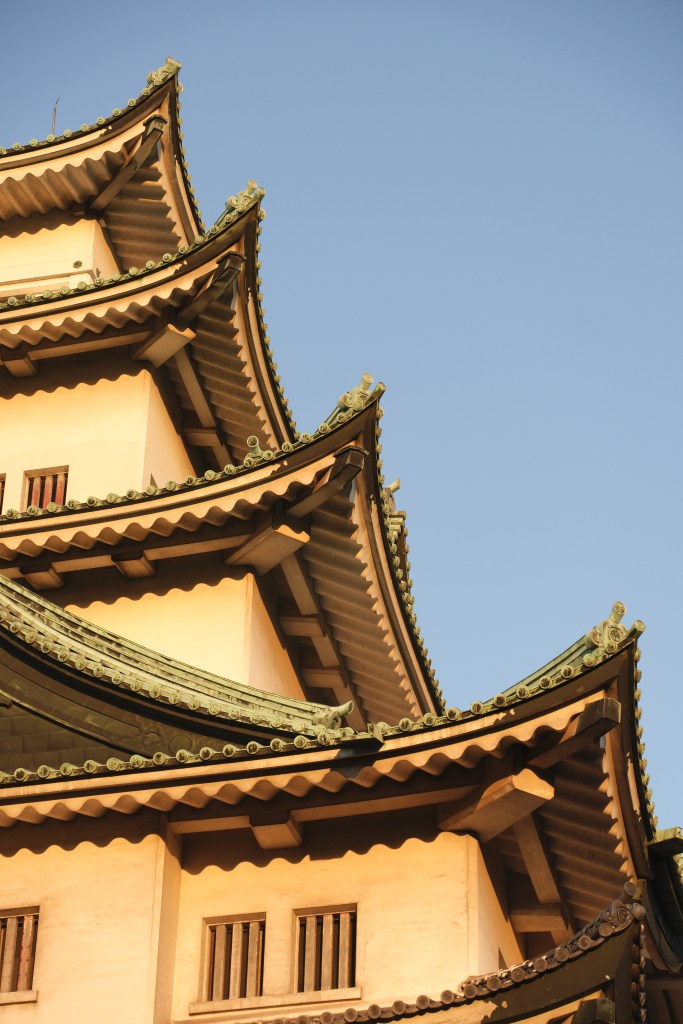
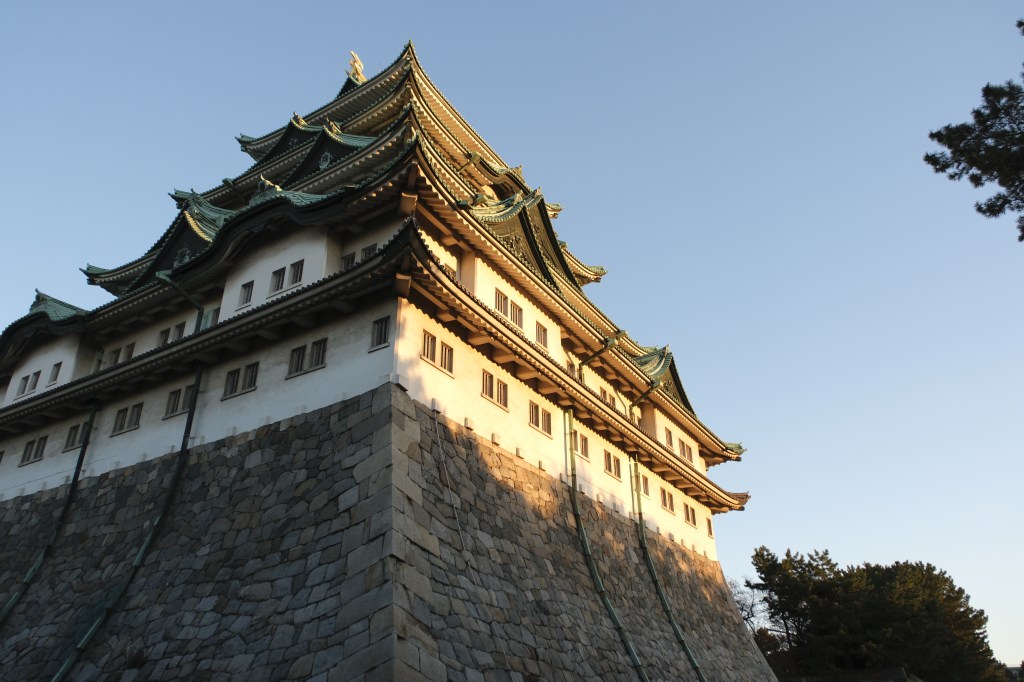
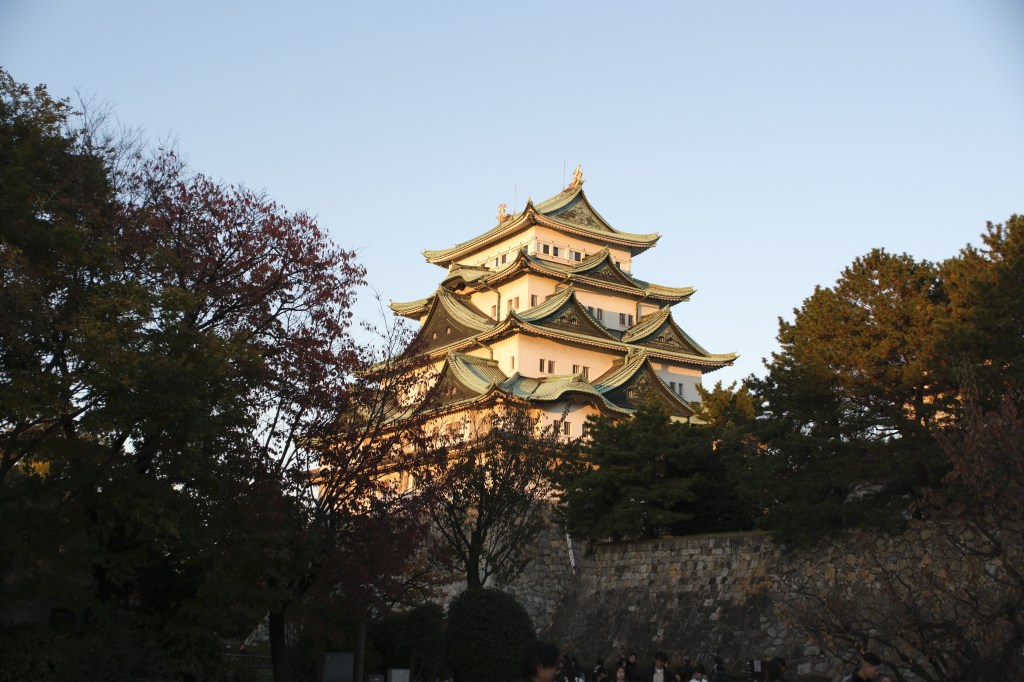
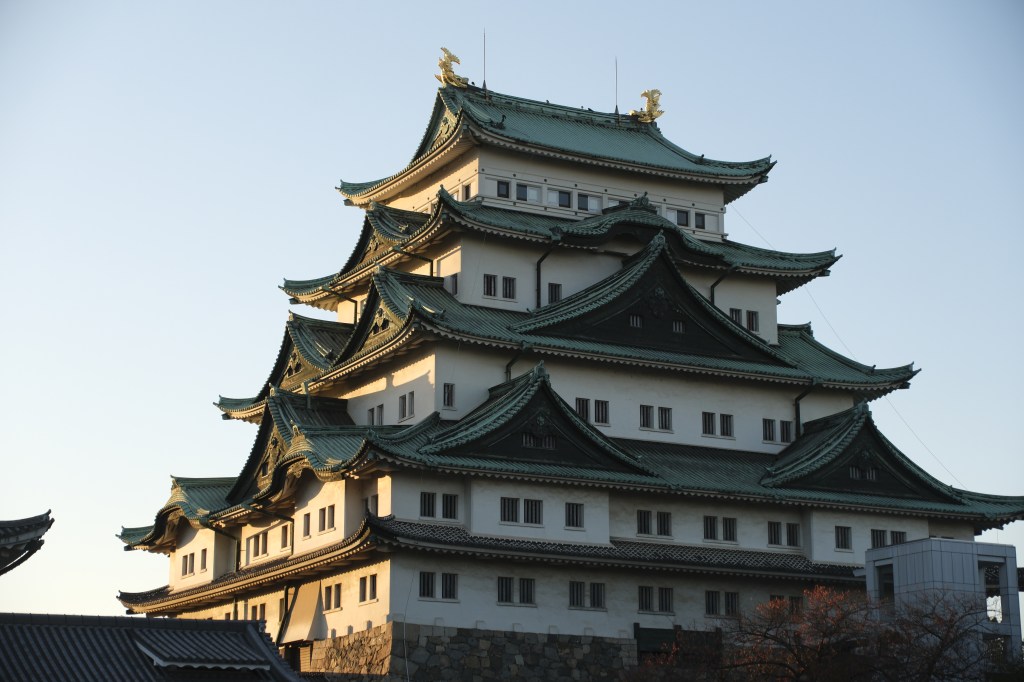
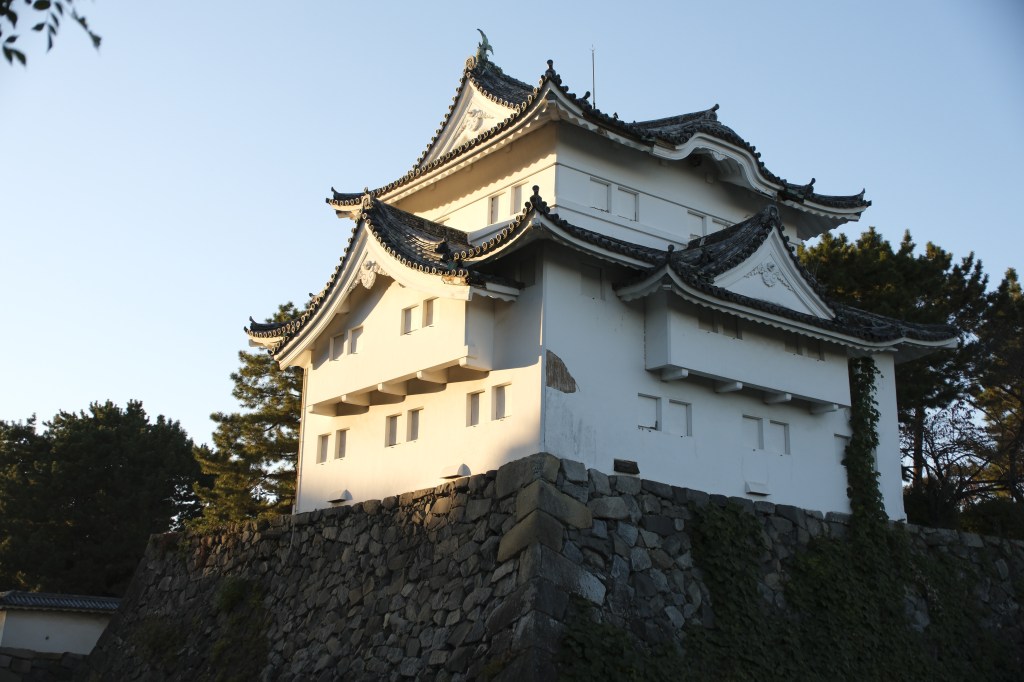
From there we went off to the castle of the Shogun, who 250 years or more, conquered all of Japan after defeating other shoguns. He and his ancestors reigned for 250 year afterwards and united Japan. In the pictures you will see the castle. The tower held the armor, and the weapons, so if there was an attack the soldiers would run up to the top floors to get their weapons. The small windows are for fighting the enemy who were trying to climb up the outside walls. If all else failed, there were small openings at the bottom of the towers where they could throw shit down the walls, making it slippery and of course disgusting. What a way to go, slipping down a wall of shit.
That is about it for the day. Our guide Saki Kelley is married to a man from Illinois, so her english was excellent. We were able to learn a lot and she was great.