Yesterday was a travel day from Kizo-Fukushima to Nagoya, another major city which is known for its famous Nagoya Castle and the Atsuta Shrine. So there was not much to report except our excellent ability to navigate the train system.
The real reason we were in this city is because of the Arimatsu District, which was a town that was established in 1608 and was located along the Old Tokaido highway, a highway that connected Toyko and Kyoto. Unlike the Nakasendo Highway, this was used by the people of the area. The Nakasendo Highway was used by royalty such as the Samurai and the royal families. The old Tokaido was a pedestrian highway, few horses would pass by, and trade was done along the way by contracting people to take the wares to Kyoto or Toyko.
The town of this Arimatsu District was famous for the their unique form of tie-dyeing known as Shiborizome, or as we know it, shibori. This was one of the highlights of the trip for me. There is tie-dying we are familiar with on T-shirts, where we grab some material and tie rubber bands or string at various places and then dip the shirt in dye. Well, this method is like kindergarten to shibori. It was so much more complicated and the results were beyond beautiful.
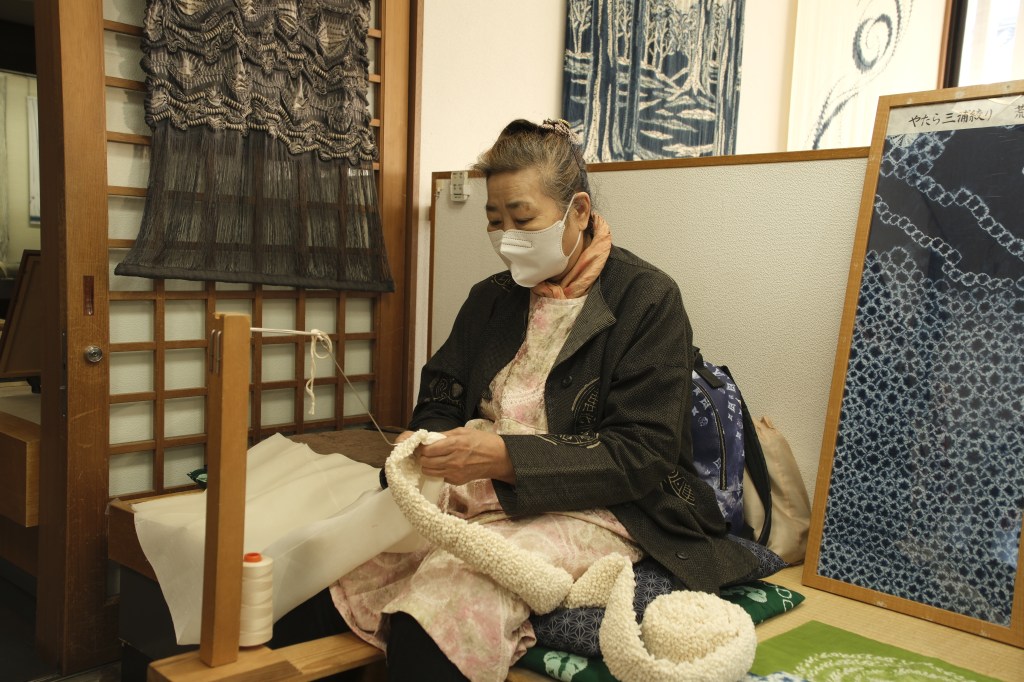
We went to a museum where there was a video of the shibori method, then examples through the history since before the 1600’s. There were two women demonstrating their methods. Each family has their own way of creating a pattern, none are written down but passed from generation to generation. If I developed a new pattern I could call it “Peggy Smith pattern.” I sat and watched while these women stitched the tiniest pieces of material together, pulling the stitch together in a circle and then wrapping the small piece of cloth that points out of the circle. It is hard to explain how it is done. They have just created this cone shape by bunching a small pinch of material together with a finger, wrapping it around a tiny wire and then winding thread around just the tip of the cone shape. Then they pull out the wire and go onto the next. Meanwhile every one of the “bumps” are in a straight line.
The other woman pleated the length of fabric, (precisely, I might add), wrapped it around a 1/2 inch round rope with a thin thread, then repeating, only this time she wrapped the material very tight with thread very close together. Then once it is tied to the rope, it is sent off to be dyed. I can’t even begin to explain it clearly but the tiny stitches and the painstaking preciseness amazed me.

While this was going on, a classroom filled up with people. Our guide asked if I could join and I was excited to find out that I could. I was the only foreigner in the group. Our guide translated much of what he said, so I was able to learn about different methods and designs. We folded our fabric into fourths lengthwise, then folded it like a triangular, much like they fold the American flag. Next it goes between two plastic triangles, then to the basement where the dyes were waiting. Depending on how you dipped your triangle in the dye (and he had various colors) it would come out different ways. I wanted all blue. After you dipped it in the dye for a minute you take it out of the triangle and it is yellow in color. You wash the cloth and it turns blue due to the oxygenation from the air.
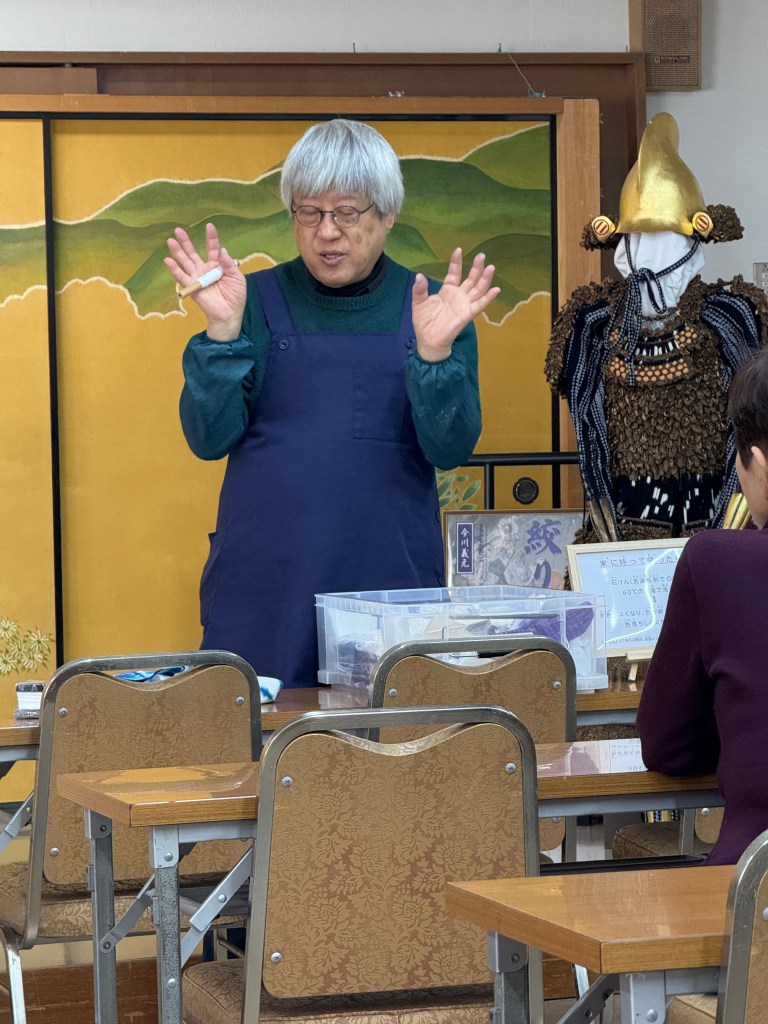

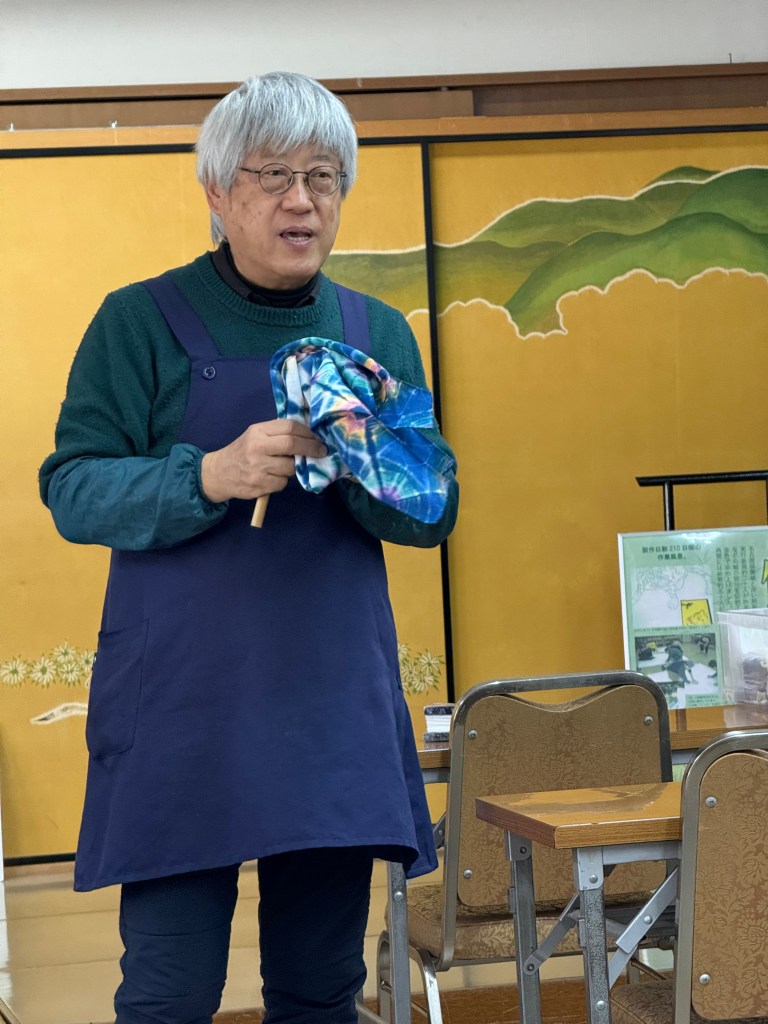
This was a dream come true, that I could join in this class. Along with this wonderful class, there were shops selling the most beautiful tie-dyed things, one more beautiful than than the next.
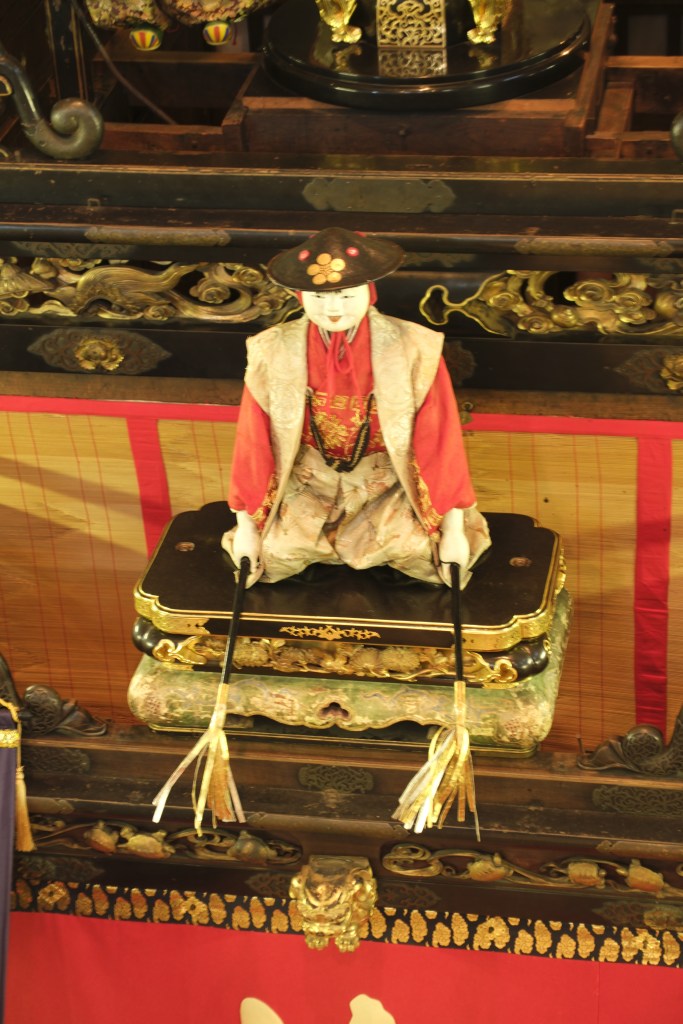
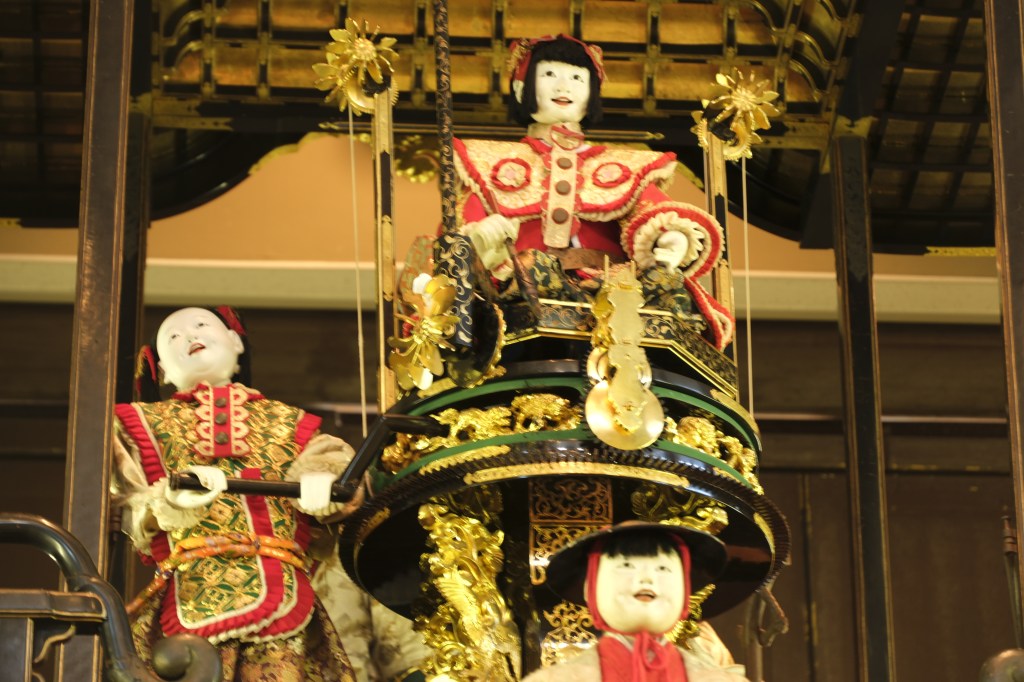
During the festivals in this area, there is a parade with a “float” that was built in the 1800’s that weighs many tons. It is carried by 20 men through the streets. In this district there are three floats, each different. The structure is made of wood beams lashed together with two long beams running lengthwise. The men put the float on their shoulders to carry it. I doubt one could even begin to call this a float. The floats have about three tiers, each getting smaller than the next. The float was covered with red and gold cloth with wooden puppets sticking out, depicting gods and Japanese people on each level. Inside there are 12 puppeteers to work the puppets who must walk at the same time they are moving the bodies and arms. The puppets move back and forth, they move their arms and hands and are quite life like.

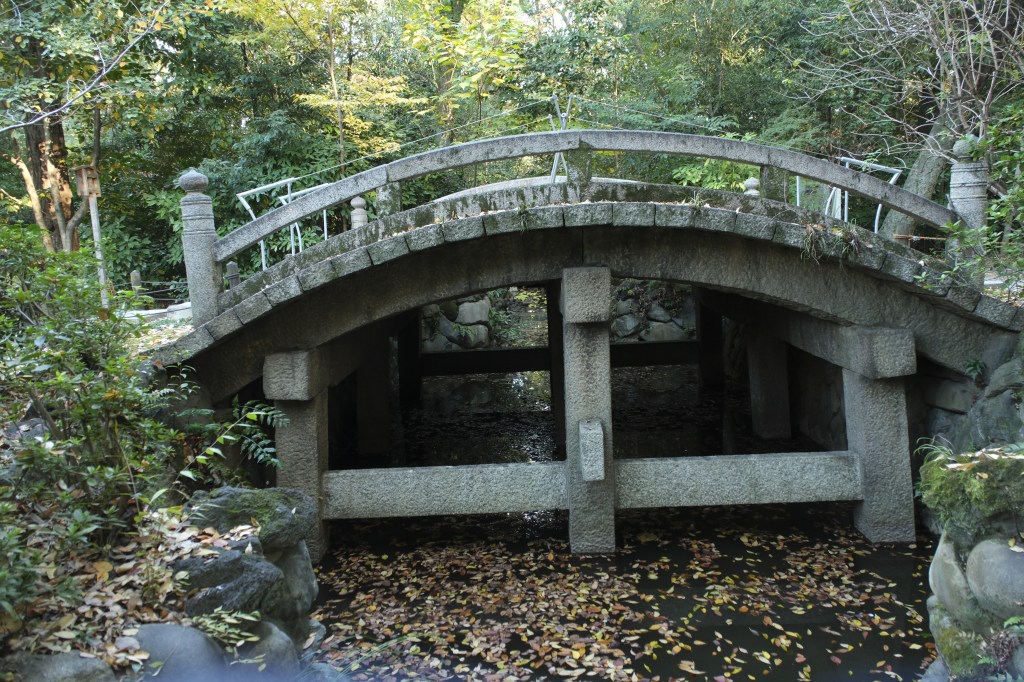
Later in the day, we went to a famous shrine that is suppose to hold the sword of a god who had to fight off demons and monsters with three weapons. One of them was a sword and supposing this sword rests in the Atsuta Jingu shrine. This shrine was founded around 2,000 years ago and enshrines this sword, known at the Kusanagi no Tsurugi sword, one of three sacred treasures of Japan. You cannot see the sword, it is in a box with electric wires around it. People come to the shrine to pray. I think the sword is like Jesus, no one knows what it /he looks like, but they believe in the powers anyway.
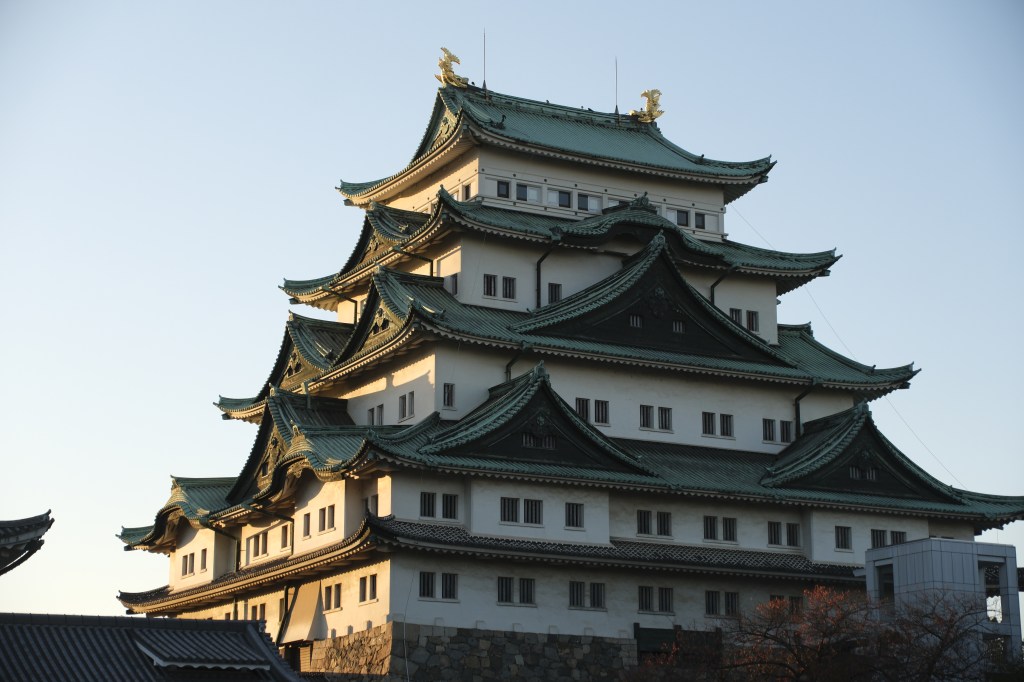
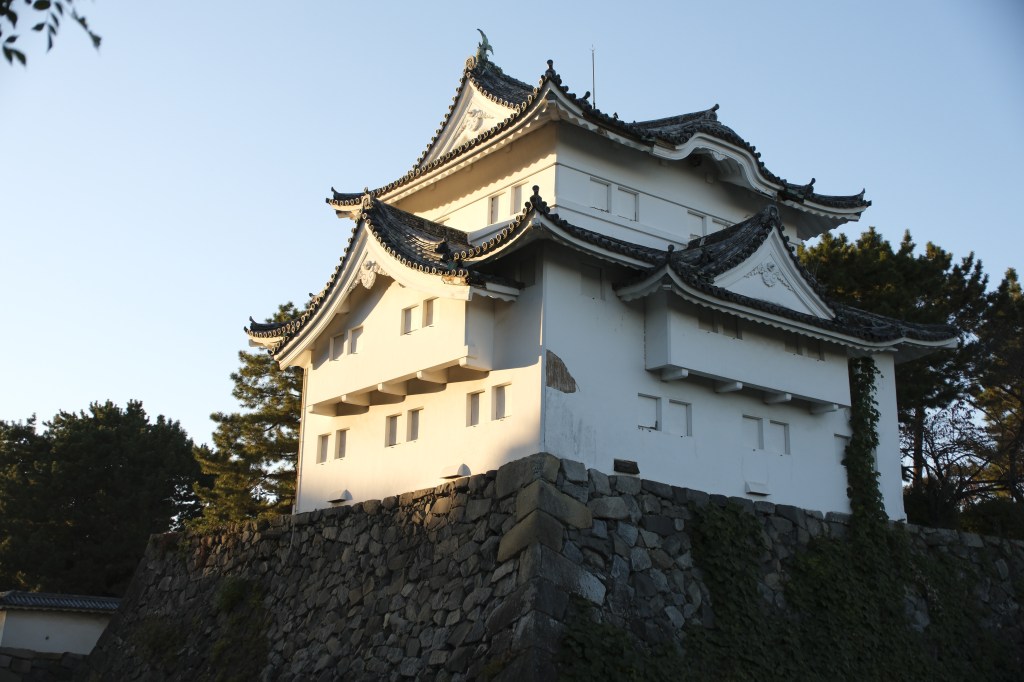
From there we went off to the castle of the Shogun, who 250 years or more, conquered all of Japan after defeating other shoguns. He and his ancestors reigned for 250 year afterwards and united Japan. In the pictures you will see the castle. The tower held the armor, and the weapons, so if there was an attack the soldiers would run up to the top floors to get their weapons. The small windows are for fighting the enemy who were trying to climb up the outside walls. If all else failed, there were small openings at the bottom of the towers where they could throw shit down the walls, making it slippery and of course disgusting. What a way to go, slipping down a wall of shit.
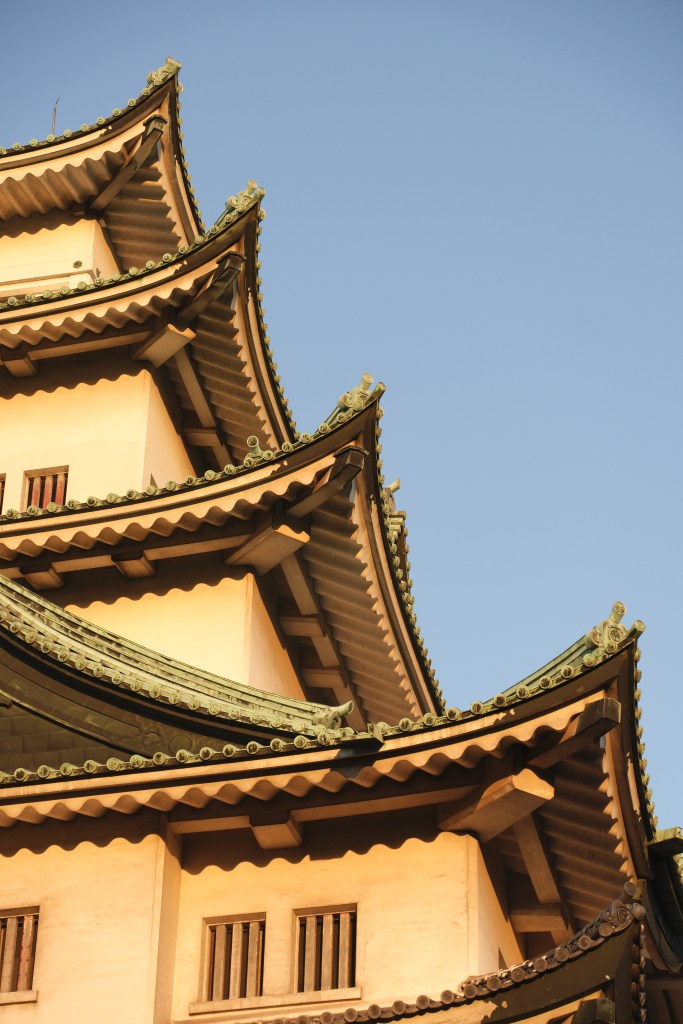
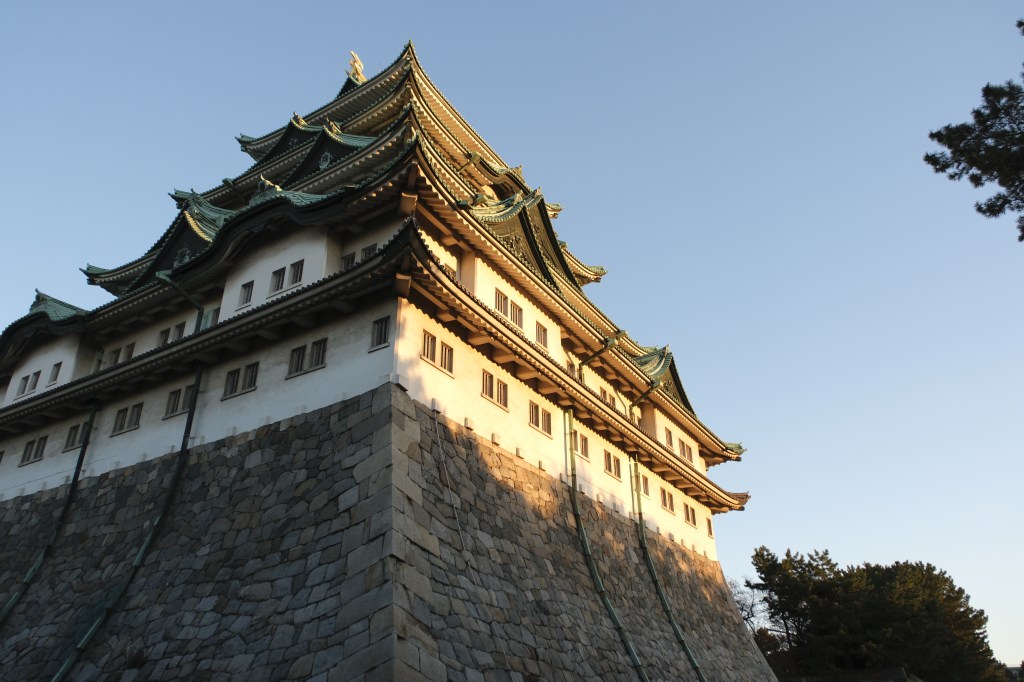
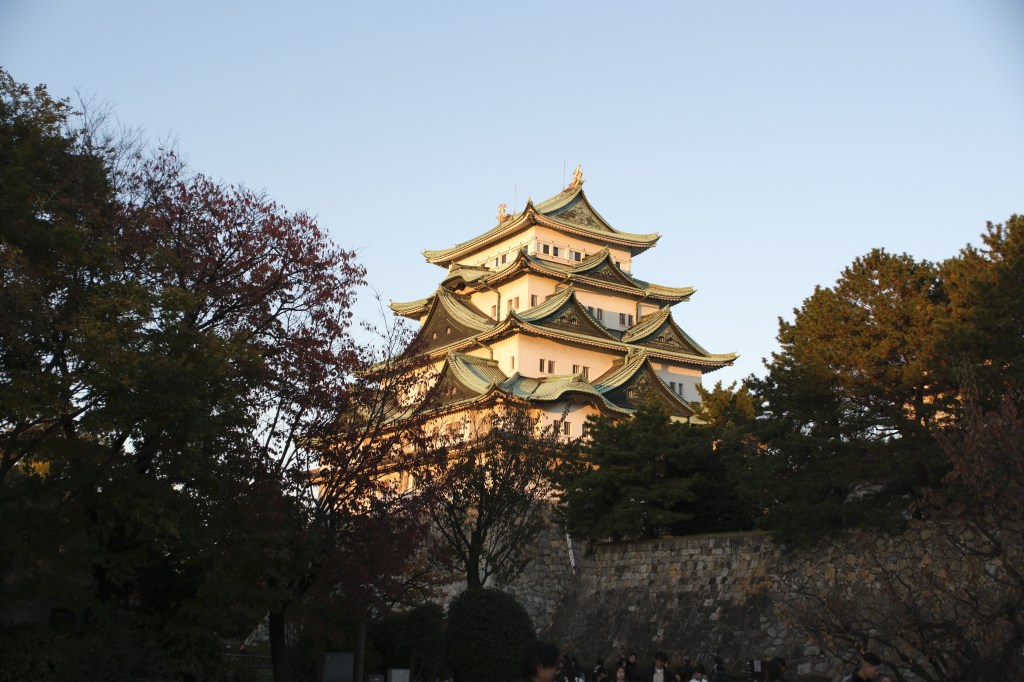
That is about it for the day. Our guide Saki Kelley is married to a man from Illinois, so her english was excellent. We were able to learn a lot and she was great.
 Go wild with the Smith's
Gre
LikeLike
Wow is all I can say. I have followed every post and have been so entertained along the way. your shiborizome experience is really fabulous. Fabulous th
LikeLike