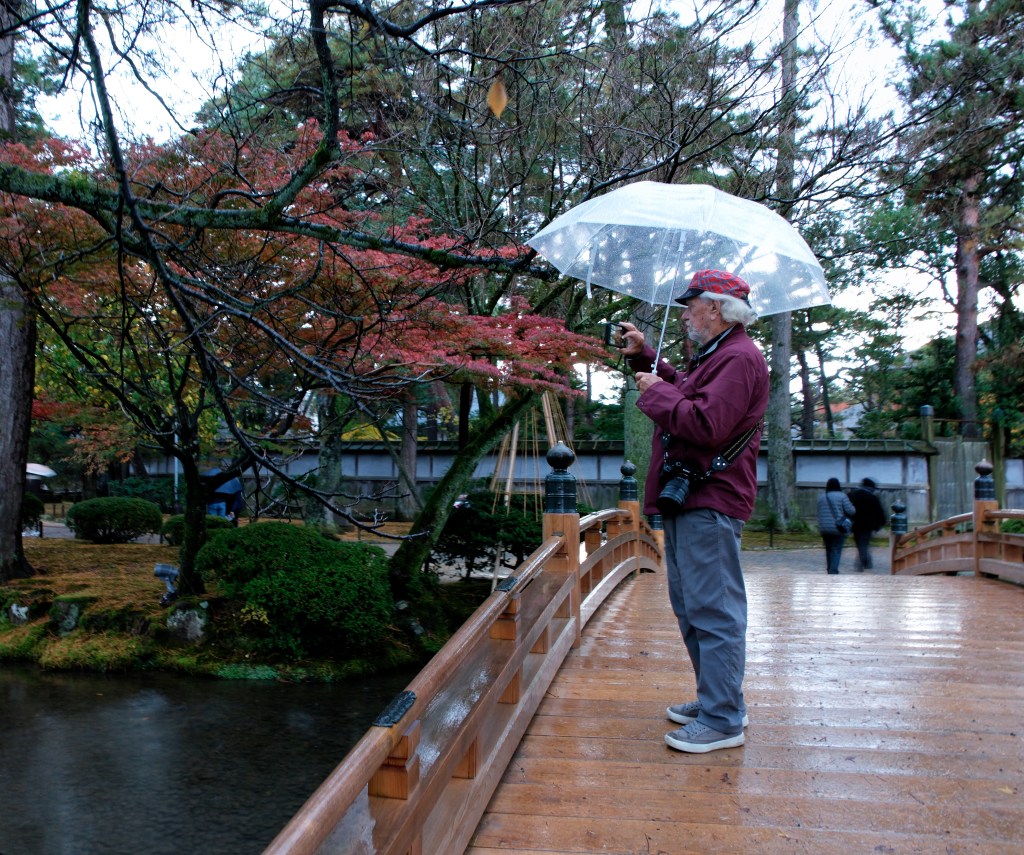
Rain, 100% rain, who knew that Kanazawa was known for rain. Our guide told us the saying goes,”You can forget your lunch, but don’t forget your umbrella.” The hotel lent us see through umbrellas, I have never been so glad to have one that came down past my shoulders. Torrential downpours as we walked through the streets of the Geisha section of Kanazawa. This is also know as one of the best places to see artisans work. Our guide spoke excellent English having worked as an ambassador to the Empress. She seemed delighted to be leading us down the narrow streets in the pouring rain, pointing out different houses from different eras. As if there was not enough water on the streets already, they have these small round steel circles squirting water out of them. They were like small springing fountains squirting water out the sides creating just enough water to make sure the tops of your shoes throughly soaked. I was told they were testing these to make sure they worked for the winter snow. Because the ground water is a warmer temperature than the outside, it melts the snow. I wonder what it would be like to have these in Stowe. Somehow I can’t see it working, just creating a skating rink on our sidewalks.
Despite the fact it was raining, we managed to enjoy the area. She assured us we were good and early because soon the tourists would be coming despite the rain and we would not be able to take pictures. This is a busy tourist season. Sure enough, by 10:00 the buses had arrived and people were roaming the streets fighting for room for their umbrellas. We were on our way out of the area at this time to go to an artist who painted designs for kimonos on silk.
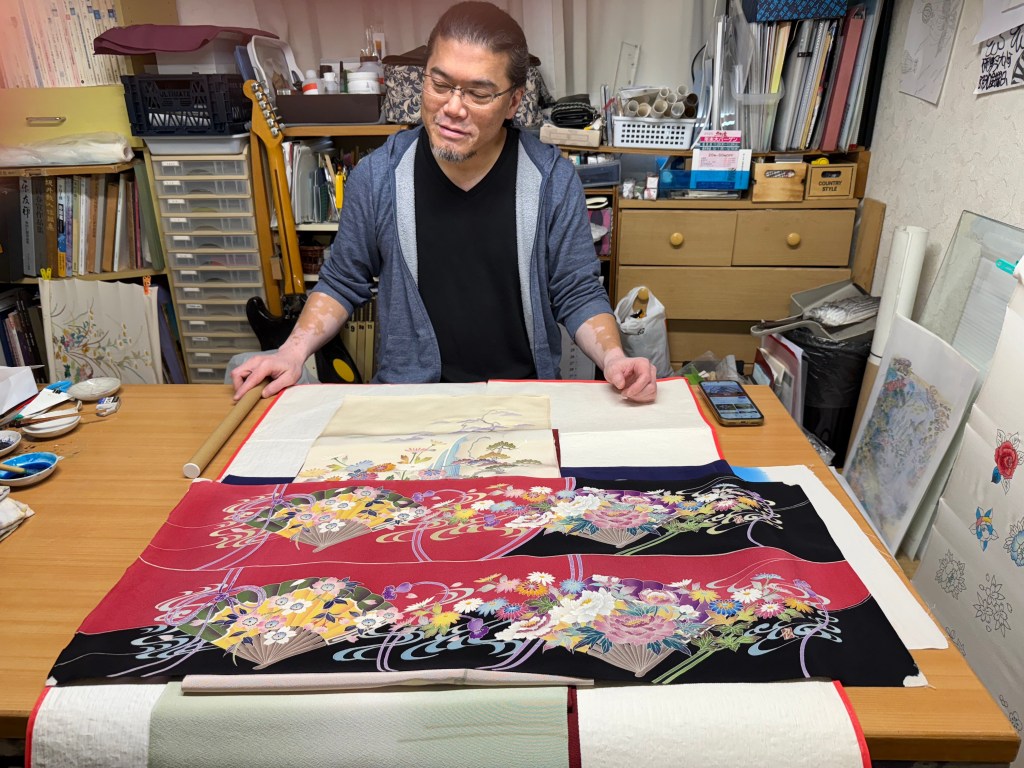
Up a narrow staircase in the artists house, we opened a door to his studio to see the most magnificent kimono hanging on the wall. He greeted us and began to explain how he painted the silk. First he drew ideas as a concept, then folded paper in a kimono shape and created the design on the small paper kimono. Once he had approval from his client, he drew the design on a life size paper kimono making sure that each design would fit with each panel of the kimono. Then he began to draw with a paste on the silk. The paper design is below him and he has a light which allows the silk to be transparent so he can see his design below. He begins painting using commercial dyes, holding the brush straight up. He is able to paint without the paint running into the next part of the design because the paste prevents the ink from running. Both Shap and I tried our hand at it. It is tedious and if I sat on the bench he sat with his legs folded I am sure I would not be able to unwind myself at the end of the day. He says he works 12 hours a day. Oh think of the cramps.
Once the design is done, it needs to be steamed to set the dye. From there it goes through another process of covering the whole design with the paste he used in the beginning, then shaking wood dust over it and steaming it again. After that it gets washed and the wood dust and paste go away. The water that washes the cloth must be running otherwise it will cause the dyes to run. Not sure I got that concept.
It must dry on a rack where no part of the silk touches the other part to prevent dye from getting where it should not be. It then goes to the tailor who fits the dress to the person. The designs must line up with each other. The kimono is one size for all. You make it fit by rolling it up to the right length and tying it. Hence, the reason for the sash.
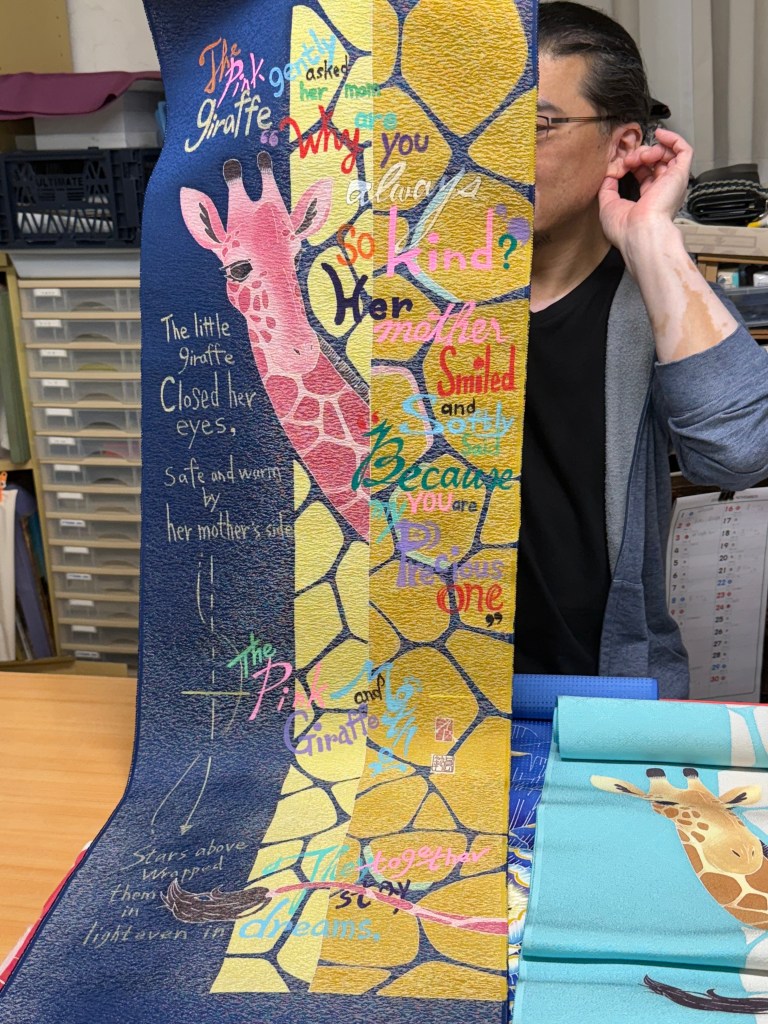
The artist showed us many designs of various sashes he has made and his award winning ones, such as the giraffe below. For each kimono, women like to have three sashes. It takes about one hour to dress in a kimono. It also takes about one year from design to finish to make a kimono.
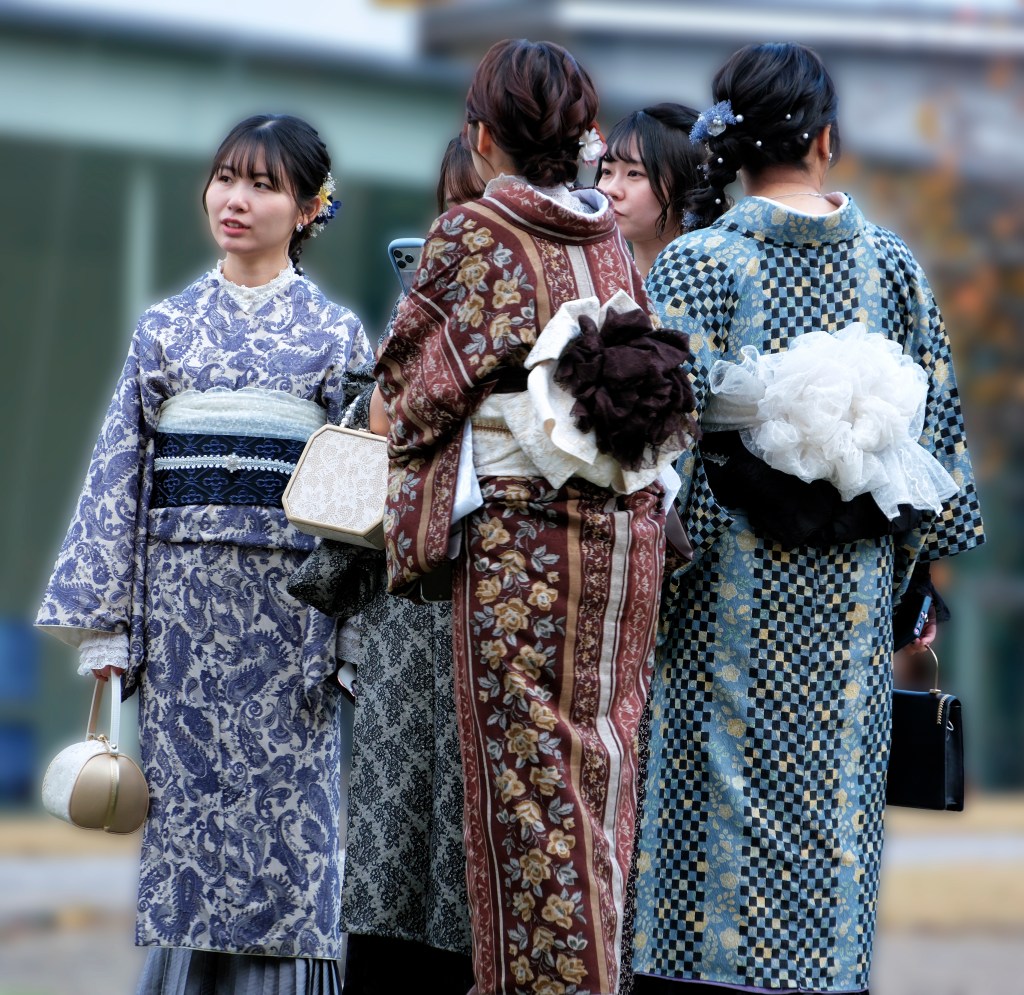
The kimonos of Kyoto were very different as they were woven instead of painted. These kimonos were worn by the royalty of the Emperor. The kimonos of Kanazawa were for the Samurai women. These were painted and not as flashy as the woven kimonos. Although I was never intrigued by kimonos I have come to see them in a new light. They are truly works of art and to be treasured.
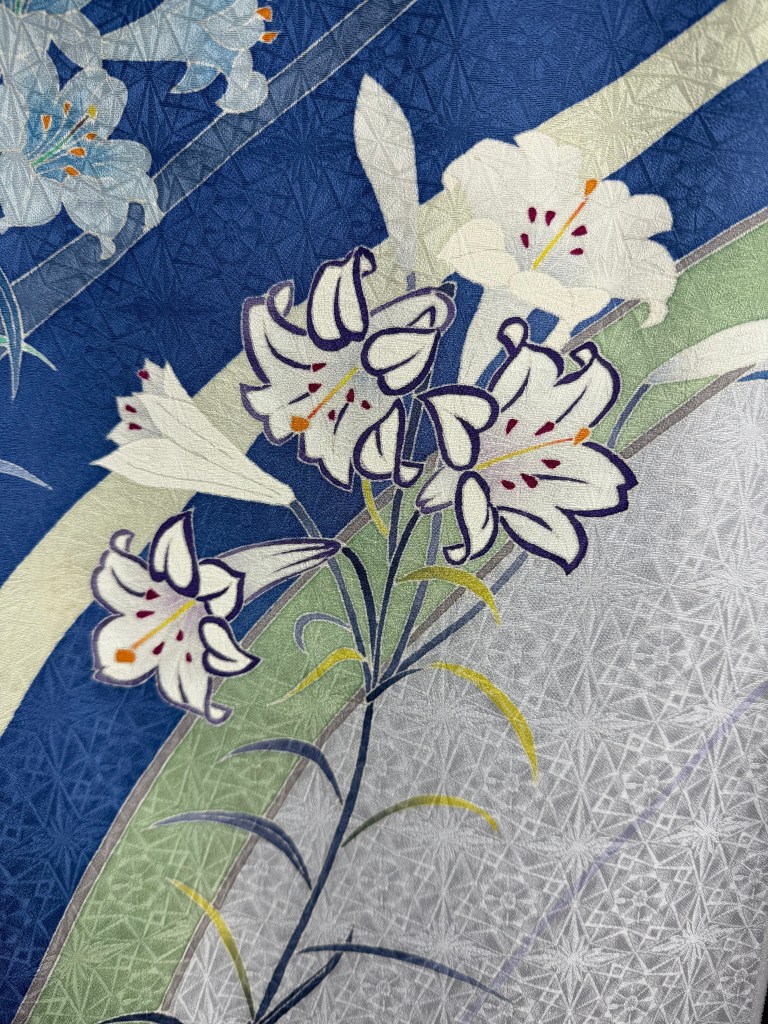
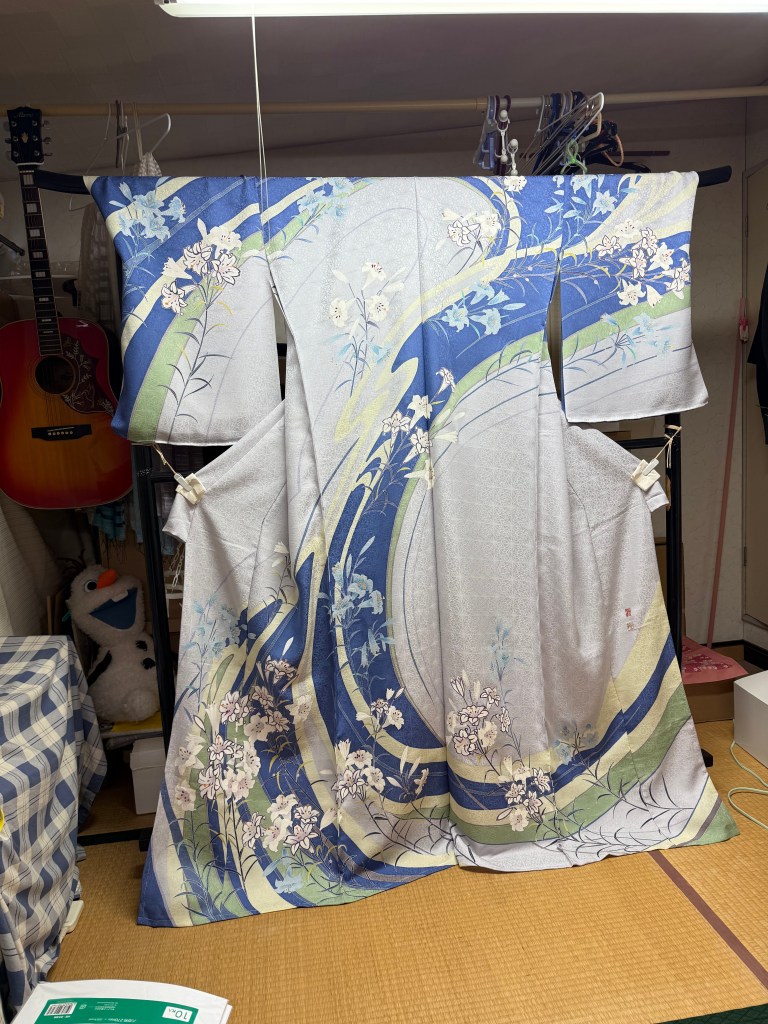
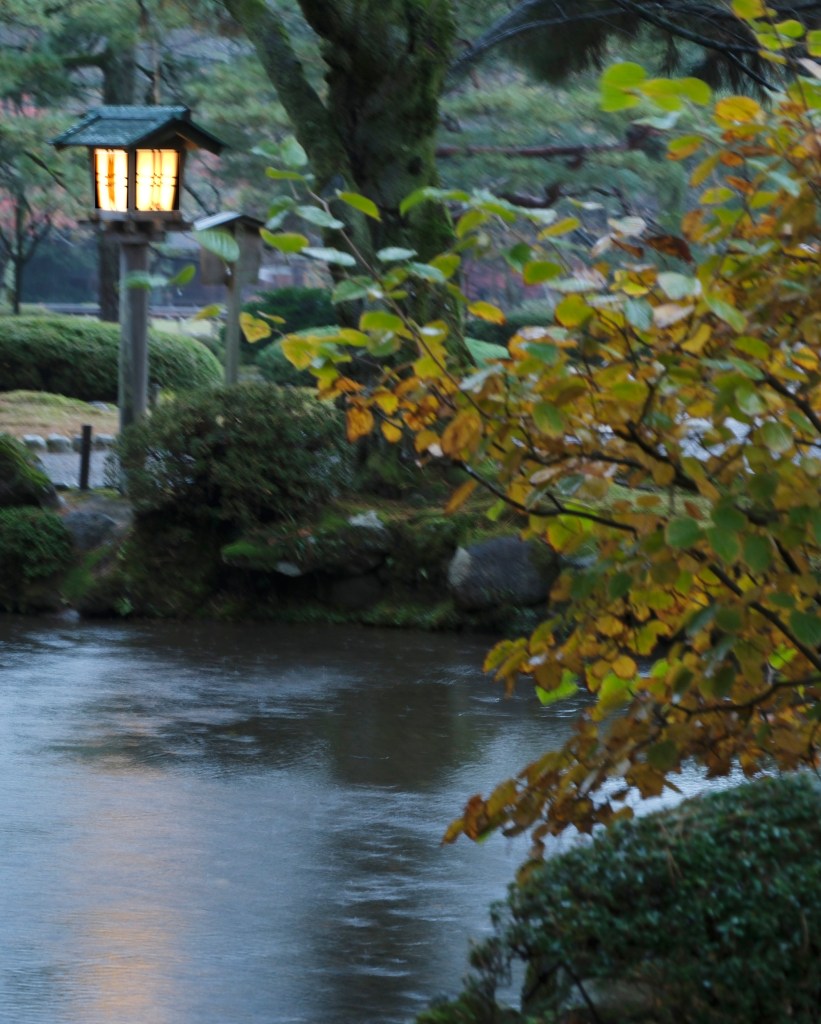
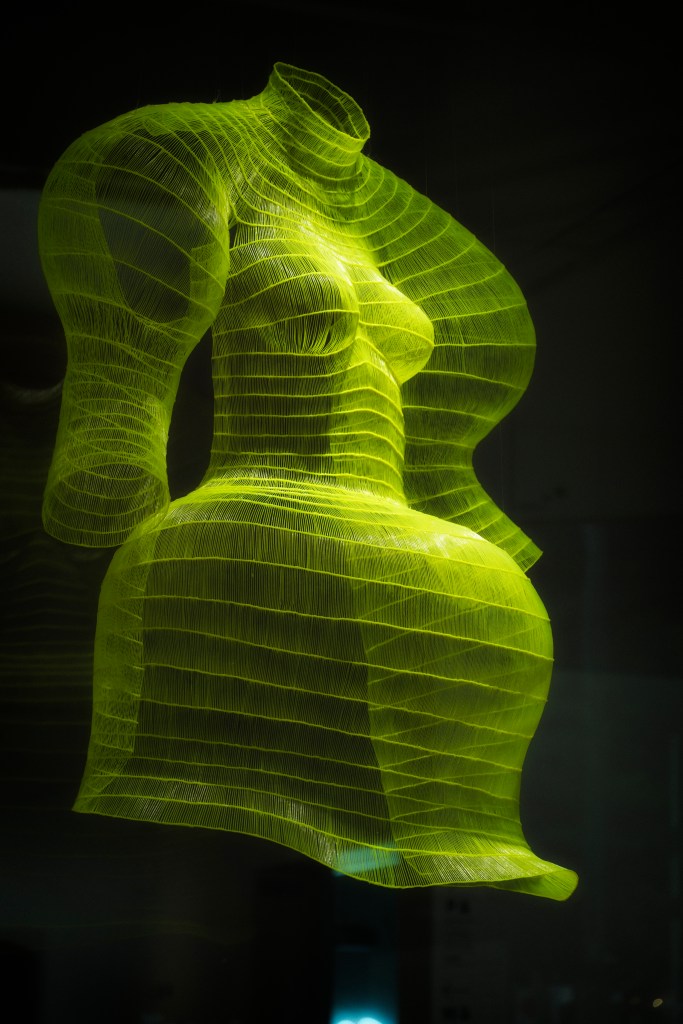
Below you can see some of his work and scenes from today in the rain.


 Go wild with the Smith's
Love the kimonos. Never knew how to shorten th
LikeLike