Actually it is Sunday November 16th, but I was beyond exhausted last night so here I am at 9:30 AM writing yesterday’s blog. We have already been up since 6 AM to get to the bamboo forest before the crowds. More on that later.
Hana, our guide greeted us at 9 AM and off we went to the first of two sights of cultural importance. Our first stop , Nijo Castle, was built to protect the power and wealth of the Shogun. This was the beginning of the Tokugawa Shogunate in 1603 and its end in 1867, when the last shogun, Tokugawa Yoshinobu, returned political power to the Emperor within the castle’s Ninomaru Palace. What I did not understand was the difference between the Emperor and the Shogunate. I thought he Emperor held all the power and the Shogun was the military wing under the direction of the Emperor. It was the opposite. In 1603 the Shogun became the power and they kept the Emperor as a figure head as many people felt the Emperor was a god. Because the Emperor at that time lived in Kyoto and the Shogun lived in Tokyo, it was important for the Shogun to have a residence in Kyoto when he visited the Emperor. Today the Emperor has the power.
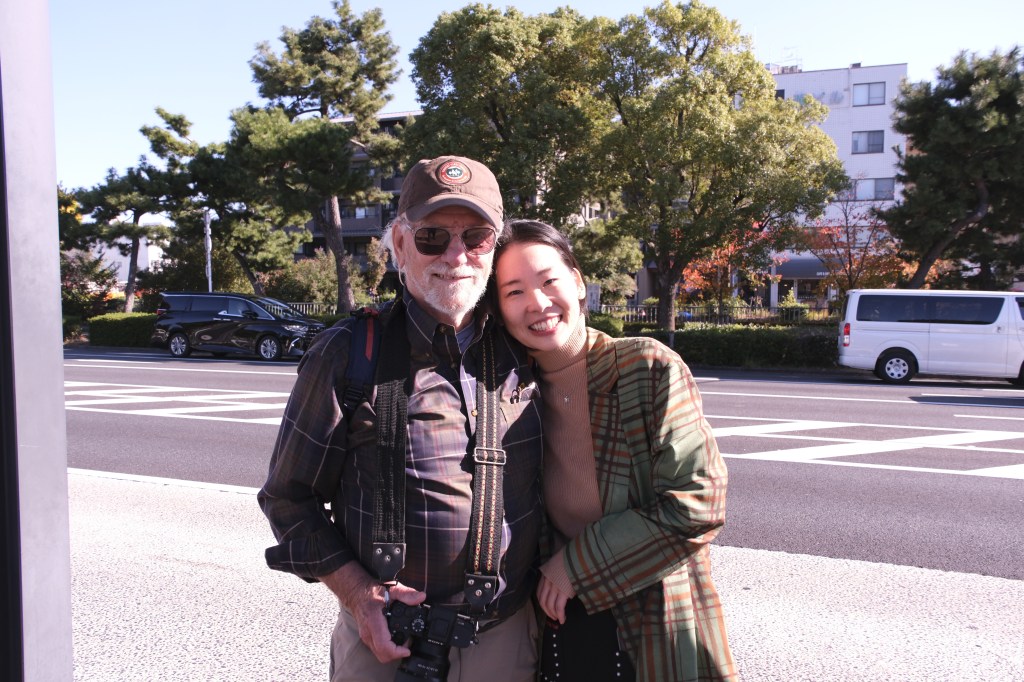
The palace was very interesting architecturally, as it was built with a series of box like structures placed on a diagonal in order to bring sunlight into all of the rooms, as there was not electricity when the palace was built. As we walked the floors squeaked. These were the famous “Nightingale Floors.” The squeak was put in the floors so no one could advance into the residence without notice. I would have had Shap fix the floor.
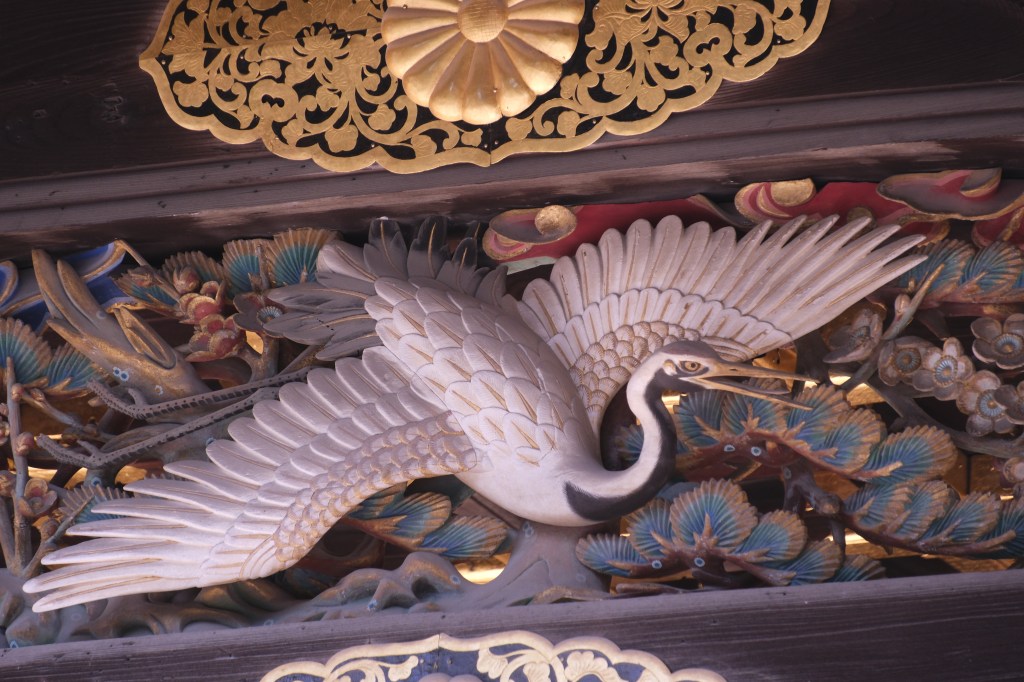
There were many waiting rooms with beautiful decorations of tigers, trees, flowers, etc. It seems you might have to wait for days to see the Shogun, advancing from one room to the next. They did have a senior citizens room, but it did not look anymore comfortable. What happened if you were old and creaky and could not sit long? No women were allowed to see the Shogun, so at least I would not have had to bring my knitting and lunch.
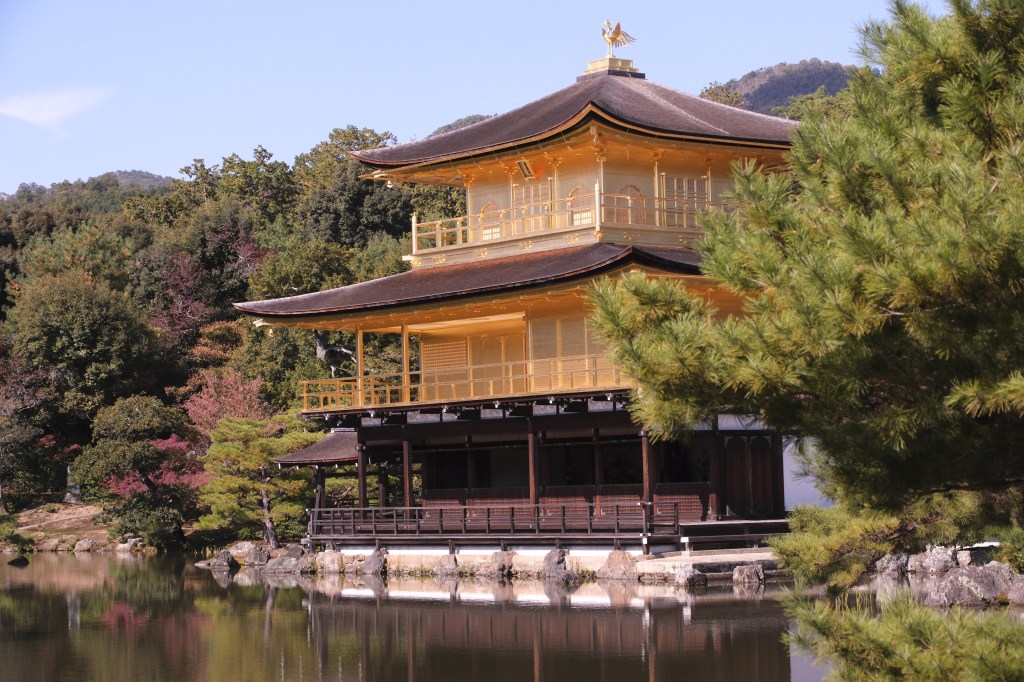
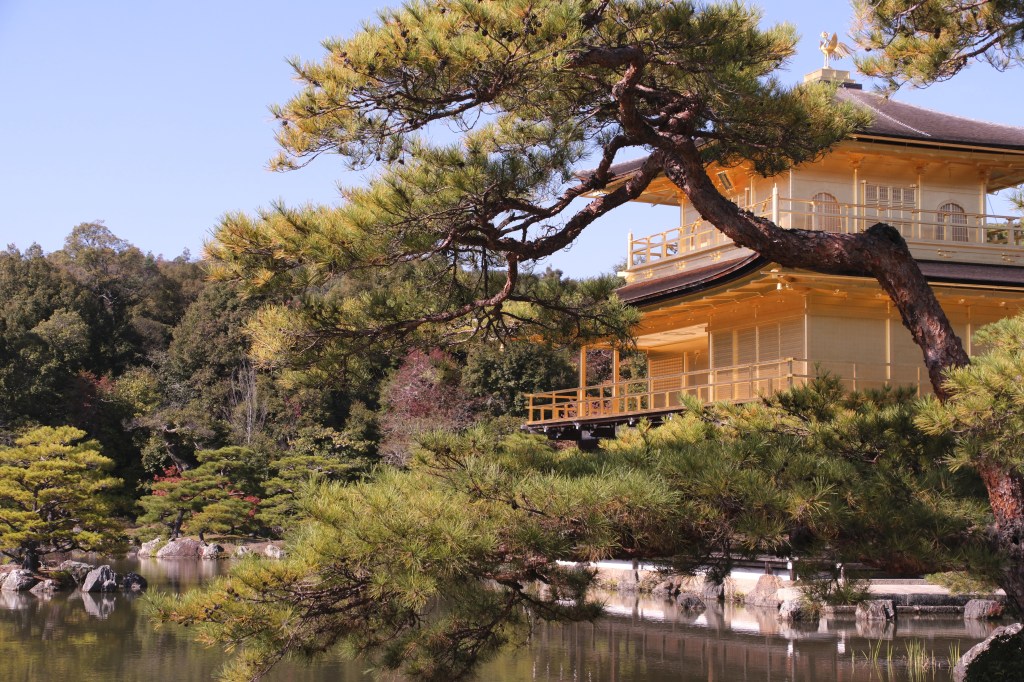
On to the Kinkaku-ji Temple known as the Golden Stupa. It was built in 1397 and was a residence until the Shogun died and gave it as a temple. It was beautifully situated in the center of a pond with islands of trees surrounding it. The entire building represents 3 architectural styles on three levels, and is painted with entirely in gold. An amazing site. Here I bought talisman or prayers for friends who are sick, for good health, for dreams to come true and said a prayer to send to the universe for all my friends who are sick or recovering from surgery or illness.
Hana then took us on a 30 minute bus ride to the Gion section where many of the geisha’s perform, train, and live and the most famous temple,Kennin-ji Temple, is located. Taking the bus reminds me of the circus cars where many clowns would explode from the car. As you get on (only by the back door) there are already too many people crowded together for anyone to fit in, but fit in you do. You are now standing inch to inch when the bus stops and someone from the very back has to try to make their way to the front of the bus weaving and pushing people aside.Why not go out the back door you ask? Because you do not pay when you get on the bus, you pay when you get off.
When we exploded from the bus, Hana took us on a short walk, and thanked us for a nice time. Whoa, wait a minute, “Where are we?” She gets out her phone and shows us and then gives instructions on how to get to our hotel or to the place we are meeting in the afternoon for a class. “Oh you take the #12 bus and go two stops and you will be near the ceramic place. ” Hana was lovely and very helpful, her English was very good. She had more confidence in our abilities than we did. But how hard could this be? After all we have made our way through Russia, getting arrested and in Berlin being evacuated from the train for not having a ticket, and we survived.
After a lunch of “pizza bread ” for Shap. Interesting looking for sure, and Japanese noodles for me we decided to take the #12 bus to our Kintsugi class. This is the method of repairing ceramics by adhering the pieces together and then finishing the lines with gold or silver. Google did not help us and we ended up off the grid. We got off, looked at the walking map (25 minutes) and began our trek. Straight up, up, and up and all of a sudden we were in the Nishiki market. All of Kyoto’s tourists must have been on this covered street with food vendors hawking their wares, and smells of every kind offending your senses. Try moving through a crowd to get somewhere fast with people coming at you, stepping in front of you, pushing you to the side and eating food in the middle of the path. This went on for blocks and blocks. Finally we are 10 minutes away meaning we would be on time. Racing along the street, turning right into a parking garage where we are suppose to have our class. After many attempts with Google, I asked two ladies on the street. Ten minutes later they figured where we should be and took us directly there. We would never have gotten there on our own.
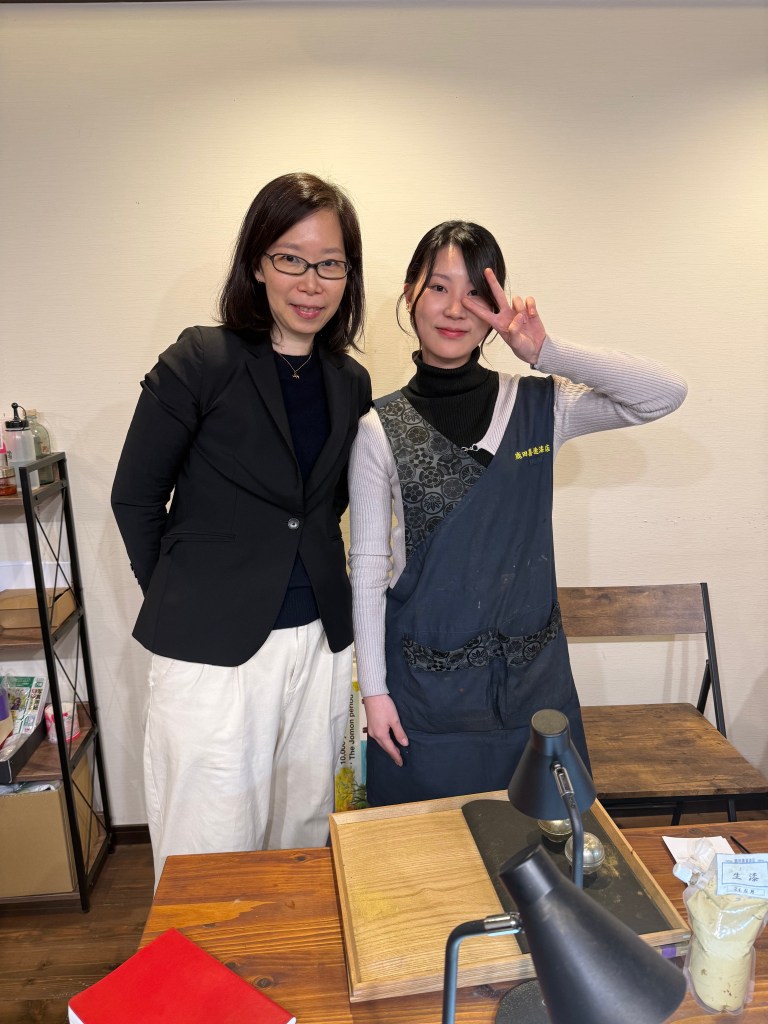
The class was amazing. After all the hustle and bustle of the outside world, we entered a small studio with our Interpreter and our instructor Two amazingly patient women who for two hours taught us this method and educated us on the history and the special glue from the trees that is used. Shap and I were so happy with our results and are coming home with a “cooler” of our work. Apparently you have to “cure” it in an even temperature, and keep it moist for two weeks. So we have it all packed in a “cooler” they gave us, wrapped in a plastic bag ready to go home. We were so busy I forgot to take pictures.

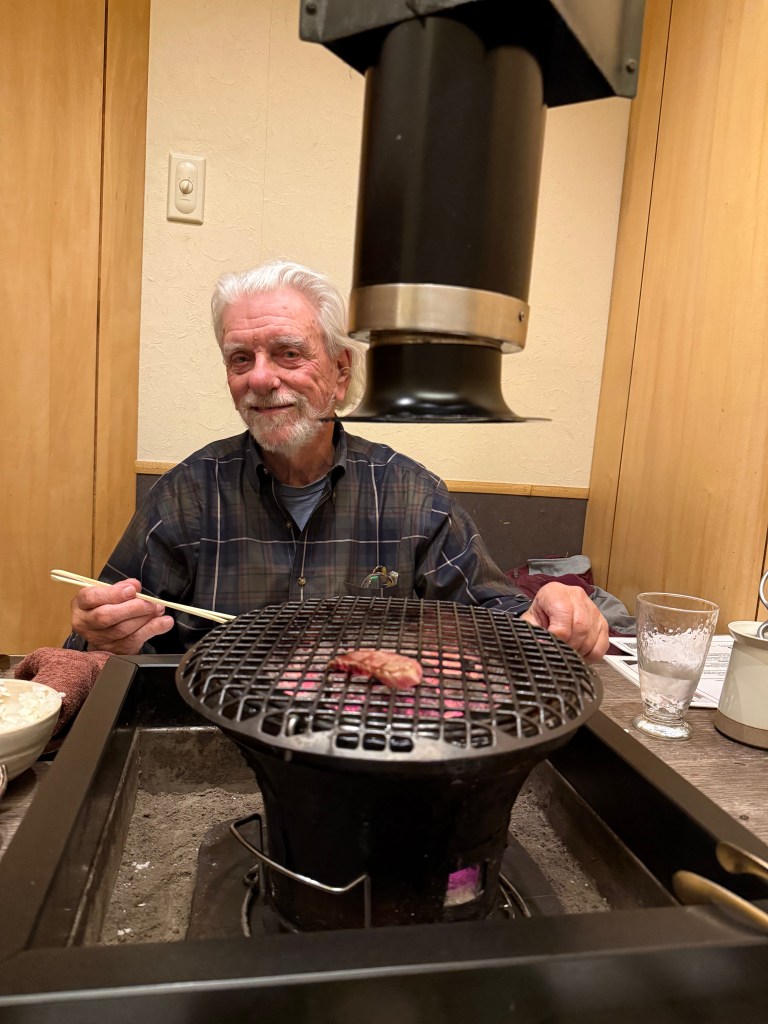
Dinner at a “beef” restaurant in our own little room and our own hibachi, another long walk back to the hotel. 15, 400 steps today. Now you know why I could not do my blog last night
 Go wild with the Smith's